
Day Tour to Big Almaty Lake from Almaty
From $78 per person


Overview
Is this hike right for you?
Perfect if you…
No experience needed
Description
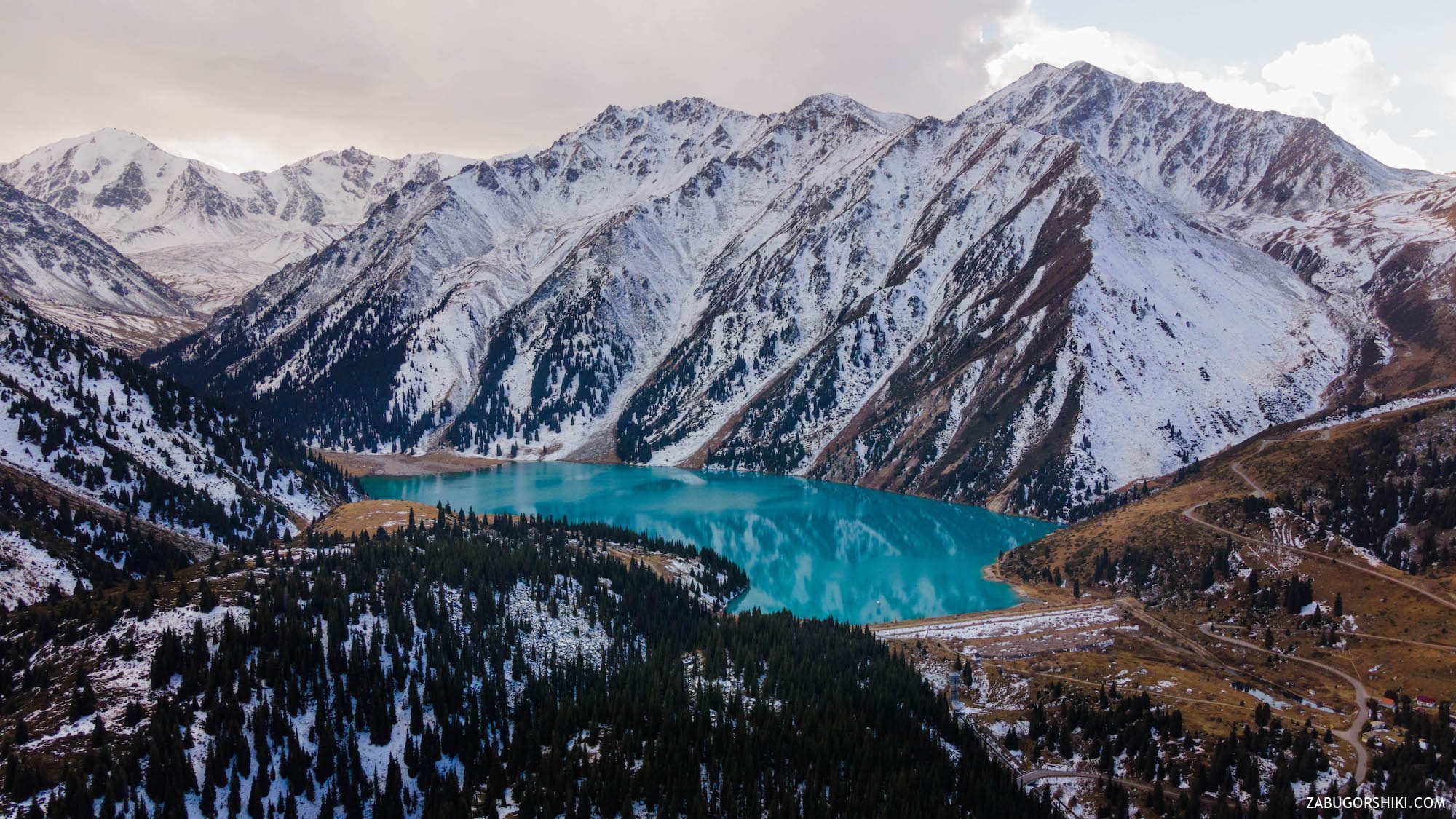
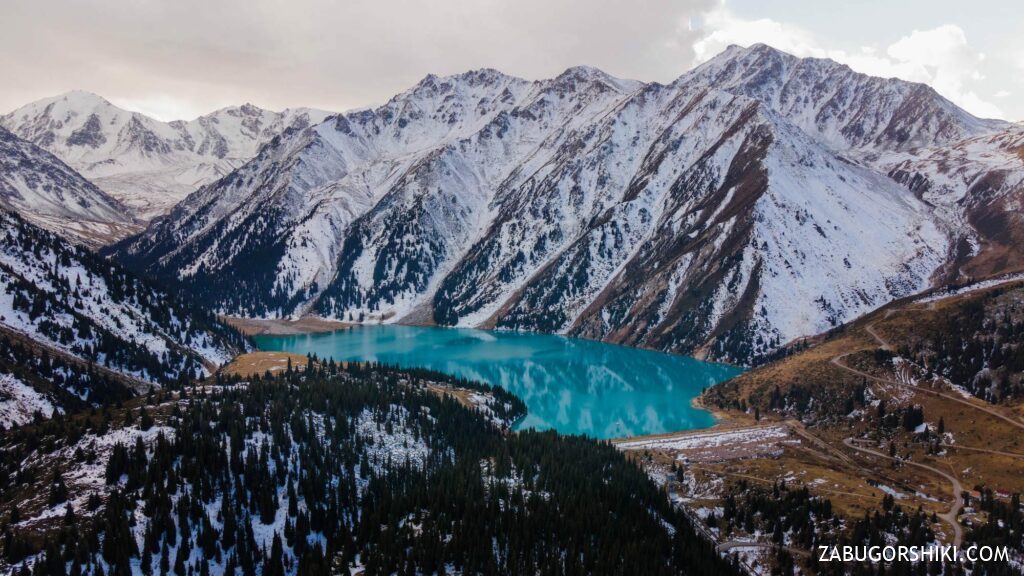
A guided day tour from Almaty to Big Almaty Lake (BAO) — a turquoise glacial reservoir at 2,511 m in the Ile-Alatau National Park, surrounded by peaks above 4,000 m, just 15 km south of the city. BAO is the most photographed natural landmark in the Almaty mountains and the single most popular day trip for international visitors.
What to expect on the Big Almaty Lake tour
Big Almaty Lake is a body of water 1.6 km long, up to 1 km wide, and 30–40 m deep, cupped in a basin formed roughly 2,000 years ago when an earthquake triggered a landslide that dammed the Bolshaya Almatinka River. The lake’s colour shifts from pale green to intense turquoise depending on the season, weather, and the glacial sediment (glacial flour) suspended in the water — finest particles ground from rock by the glaciers above, which scatter sunlight and reflect blue-green wavelengths. The turquoise is most vivid in late spring and summer as snowmelt feeds fresh glacial sediment into the lake.
The lake is ringed by three main peaks visible from the northern dam: Sovetov/Satpayev Peak (4,317 m) to the southeast, Ozerny Peak (4,110 m) directly south, and Tourist Peak (3,954 m) to the southwest. The pyramid of Big Almaty Peak (3,681 m) is visible above the eastern ridge.
BAO is a major drinking water source for Almaty. Swimming is strictly prohibited, and access to the lakeshore itself is controlled — you view the lake from designated viewpoints above the dam. Security guards enforce this.
Big Almaty Lake at a glance
| Altitude | 2,511 m above sea level |
| Distance from Almaty | 15 km from the city edge (40-60 min drive to the gorge) |
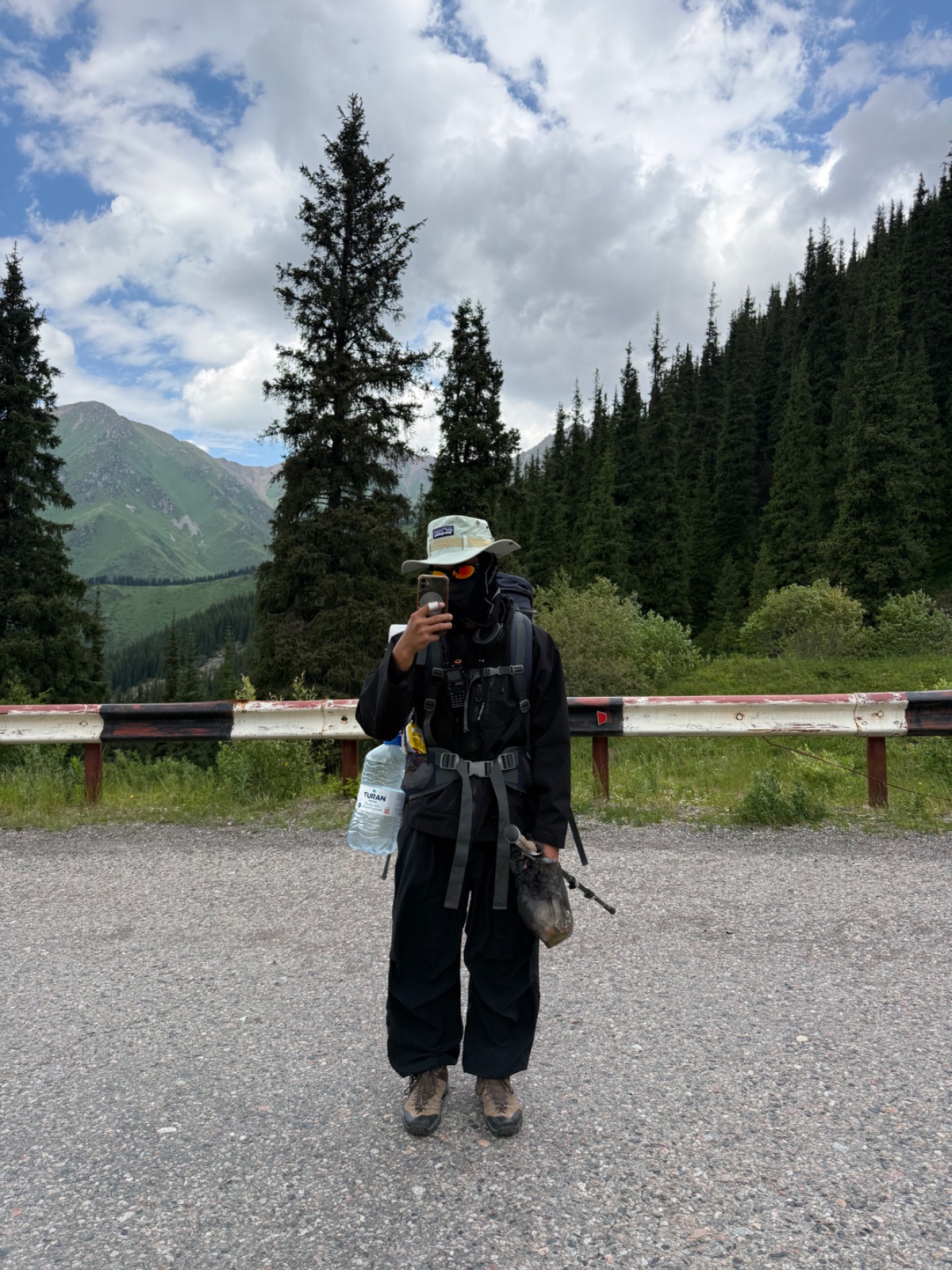
| Walk from the barrier | 7 km one way, 2.5-4 hours – the road has been closed to private cars since 2020 |
| Eco-fee | 648.75 ₸ per person (Ile-Alatau National Park, 2026 tariff) |
| Documents | Passport required – the lake sits in a border zone and checks do happen |
| Swimming | Prohibited – the lake is Almaty’s drinking-water reservoir (fishing and fires too) |
| Best time | May-October; turquoise water in summer, deep blue in autumn |
| Peaks around it | Sovetov (4,317 m), Big Almaty Peak (3,681 m), Turist (3,954 m), Ozerny |
Detailed itinerary (guided tour)
Transfer from Almaty to Big Almaty Gorge (40–60 minutes)
Pickup from your Almaty accommodation. Drive south on Navoi Street toward the mountains, passing through the Al-Farabi / Navoi intersection. At the “Deer” junction, the road forks: left goes to Prohodnoe gorge (Alma-Arasan), right continues into the Big Almaty Gorge. We take the right fork. The Ayusay visit centre with its “Three Bears” sculpture marks the gorge entrance.
Approach to the lake (varies by current access)
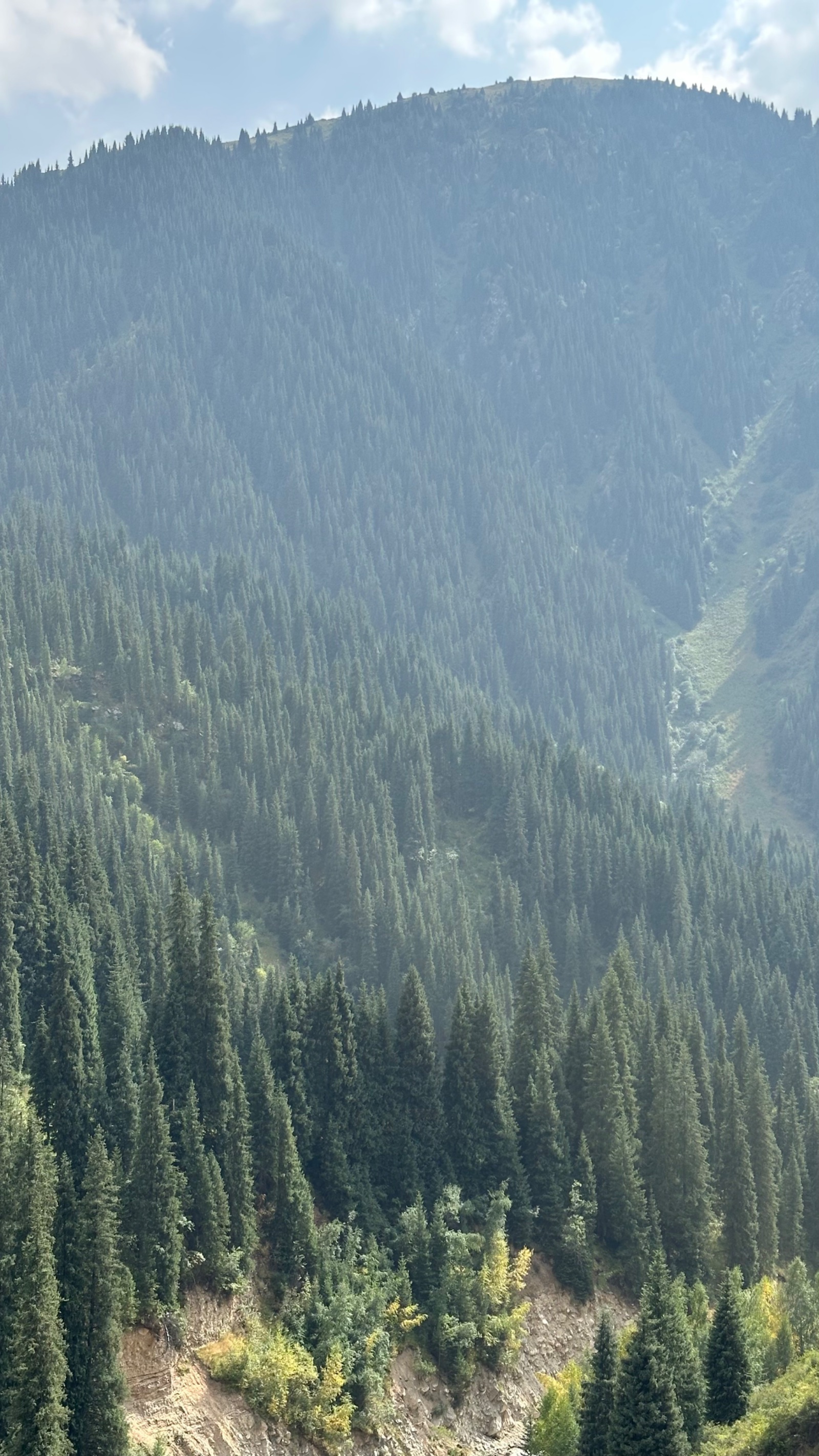
The trail climbs through dense spruce forest, past the Ayusay waterfall area and Hobbit’s Waterfall, then opens onto the upper gorge with views of the hydroelectric pipeline and the peaks above. The gradient is steady — the road gains approximately 600 m over 7 km of switchbacks.
En route you pass the GES-1 hydroelectric station — built in 1948, it uses the lake’s water to generate power on its way down to the city.
Big Almaty Lake viewpoint (45–90 minutes)
The first full view of the lake hits at the dam — and it’s worth the effort. The turquoise water, framed by snow-capped peaks on three sides, is one of those views that genuinely stops conversation. The colour is most vivid on sunny days between June and September.
Walk along the dam and the viewpoints above the northern shore. The lake’s surface changes minute by minute as clouds pass over the peaks. Photography is best in the morning (before 11 AM) when the sun illuminates the western peaks and the water is calm.
You cannot access the lakeshore — security guards enforce this. The viewpoints above the dam provide the best angles anyway.
Optional extension: Tien Shan Astronomical Observatory
For groups with energy remaining, the road continues above the lake to the Tien Shan Astronomical Observatory (approximately 2,700 m) — a working Soviet-era facility that monitors near-Earth asteroids. The observatory viewpoint offers a higher angle on the lake with the full ring of peaks visible. Further up, the road reaches the Cosmostation (3,340 m) — the cosmic-ray research station that serves as a base for Tourist Peak, Big Almaty Peak and other high-altitude hikes.
Return to Almaty
Descend via the same route. Return to Almaty by late afternoon or evening depending on how far above the lake you ventured.
Big Almaty Lake: quick answers
What is the altitude of Big Almaty Lake?
2,511 m above sea level. That altitude is why the weather up here runs 8-10 degrees colder than Almaty and can turn in minutes – bring a layer even in July.
What is the water temperature? Can you swim?
The lake is fed by glacial streams, so the water stays bitterly cold all year – even in high summer it rarely feels warmer than single digits Celsius. Swimming is prohibited in any case: Big Almaty Lake is the drinking-water reservoir for the city, and the ban is enforced.
How far is Big Almaty Lake from Almaty, and how long does a visit take?
The gorge entrance is 15 km from the city edge. Since the road closure, private cars stop at the barrier and the last 7 km are on foot – 2.5-4 hours up at a comfortable pace. Count on 6-8 hours door to door for the full trip.
Why does the colour of the lake change?
Glacial sediment. The lake shifts from bright turquoise in summer to a deep, dark blue by autumn as the melt slows – no filters involved, it genuinely looks like that.
Do I need my passport?
Yes. The lake lies within a border zone (Kyrgyzstan is just over the ridge), and border guards check documents on the road and at the lake. Foreign visitors should carry their passport, not a copy.
Itinerary
Detailed itinerary will be provided upon booking. Our typical tour includes daily hikes through diverse terrains and cultural experiences.
Pricing
100% private tour — prices are per person based on group size. The more friends you bring, the less everyone pays!
What's Included
Included
Not Included
Our Guarantee
If weather forces a cancellation, you choose a free reschedule or a full refund. If you're not satisfied with your experience, we'll work with you to make it right. No questions, no hassle.
Private tours only (max 6) · Reschedule or full refund if weather cancels · No payment until confirmed
Traveler Stories
Sarah K.
Our guide was incredible - he adjusted the pace perfectly for our group and knew exactly where to stop for the best photos. The whole experience felt effortless, like everything was taken care of before we even thought to ask.
Marco T.
We were a group of 4 friends and the per-person price made it a no-brainer. Private 4x4, lunch included, and the canyon was breathtaking. Way better than the big bus tours we saw there.
Anna W.
Solo traveler here. I was nervous about hiking alone in a foreign country but the guide made me feel completely safe. The trail to Kok-Zhailau was beautiful and the photos he took of me were amazing. Only wish the hike was longer!
Share Your Experience



66+ hikers
completed this trail
Tour At A Glance
Book This Tour
Private tours run any day of the week — weekends fill up fastest, so book early
Pay securely after confirmation




Weather Forecast
clear sky
H: 7°C
L: 7°C
Thu, Sep 24
overcast clouds
8°C
5° / 10°
Fri, Sep 25
light rain
6°C
3° / 8°
Sat, Sep 26
light rain
5°C
4° / 7°
Tour Location
Similar trails
From $78
per person · weather refund
Complete Your Booking
Tour:
Date:
Participants
Add-ons
You're Almost There!
We'll contact you within 24 hours to confirm your spot and share everything you need to prepare for your adventure.
Request sent
We confirm your spot
within 24 hours
Summoning perfect weather
Hit the trail
On the channel



83 h
Drone flight hours

What we’ve filmed
59
Hikes filmed
704 km
Kilometers covered

44,439 m
Elevation gained

27
Countries visited

Plan your hike with us
A few quick questions and we will email you a tailored hike plan & quote.
When do you want to hike?
What's your experience?
How many of you?
Where do we send your plan?
Private guided hikes · no obligation.