
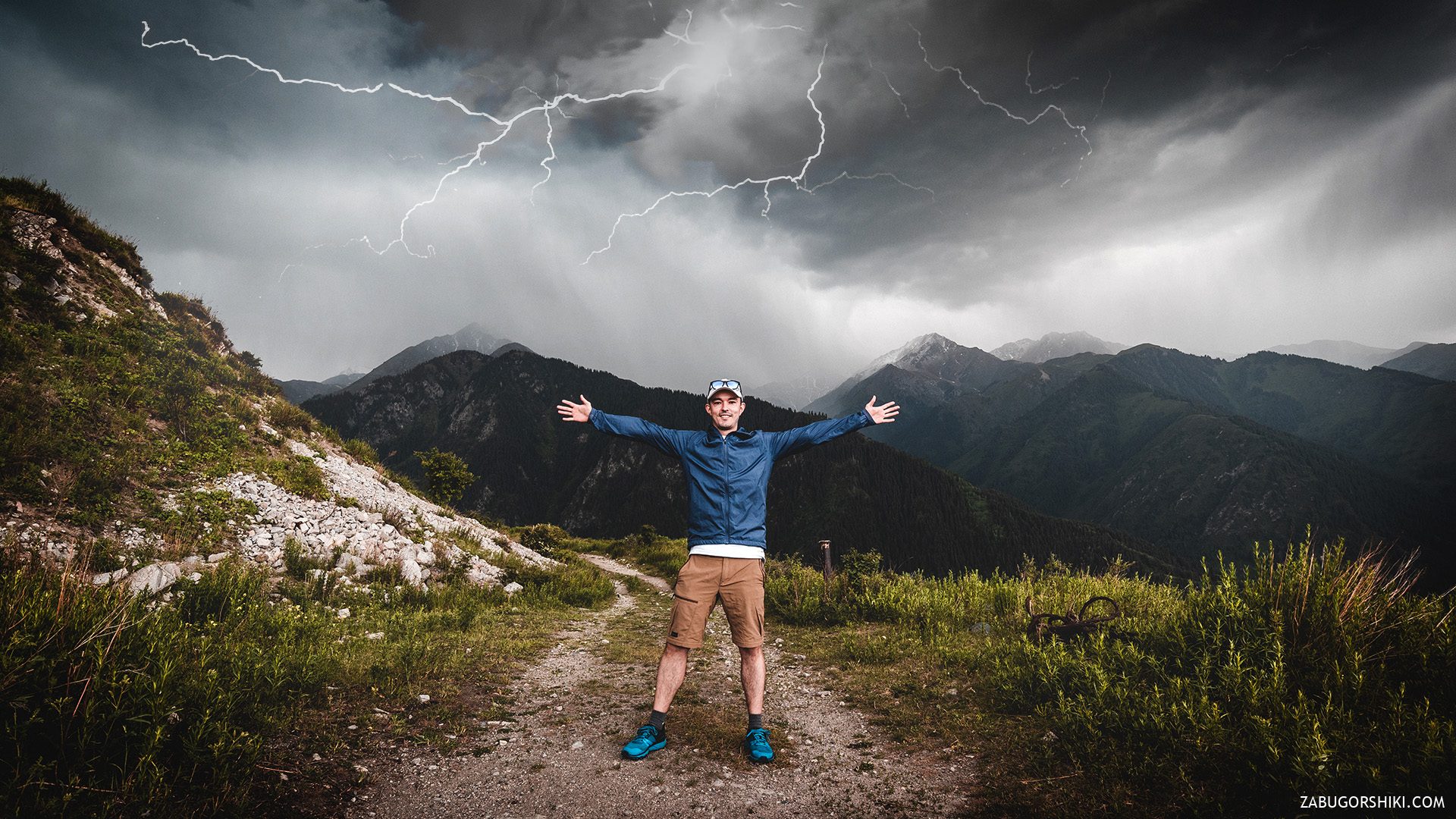
Day Hiking Tour on the Old Japanese Road from Almaty
From $65 per person
Overview
Is this hike right for you?
Perfect if you…
No experience needed
Description
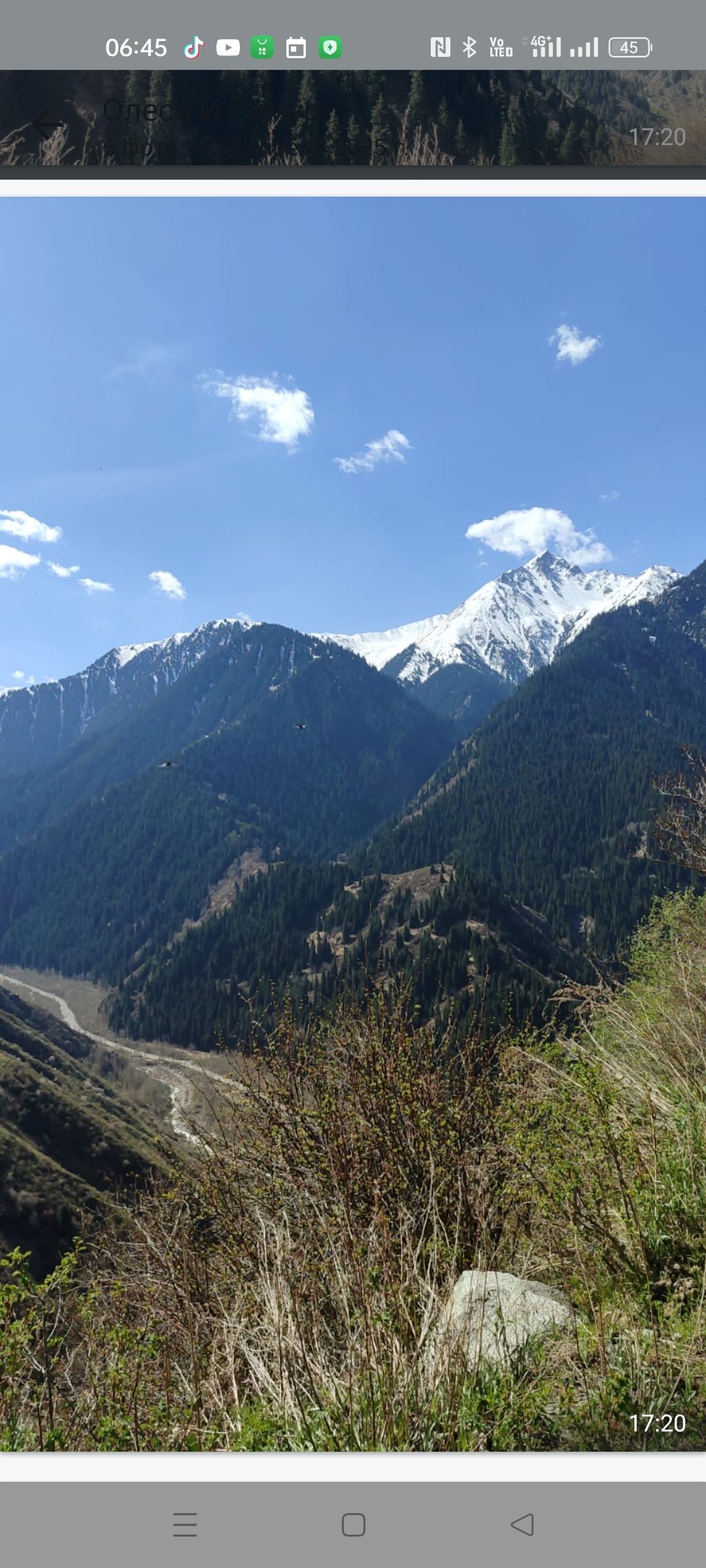
An easy guided day hike along the Old Japanese Road — a historic mountain serpentine on the western slope of the Big Almaty Gorge, with panoramic views of Big Almaty Peak (3,682 m) and Sovetov/Satpayev Peak (4,317 m), abandoned mining adits, and WWII-era ruins. Suitable for beginners and families.
What to expect on the Japanese Road hike
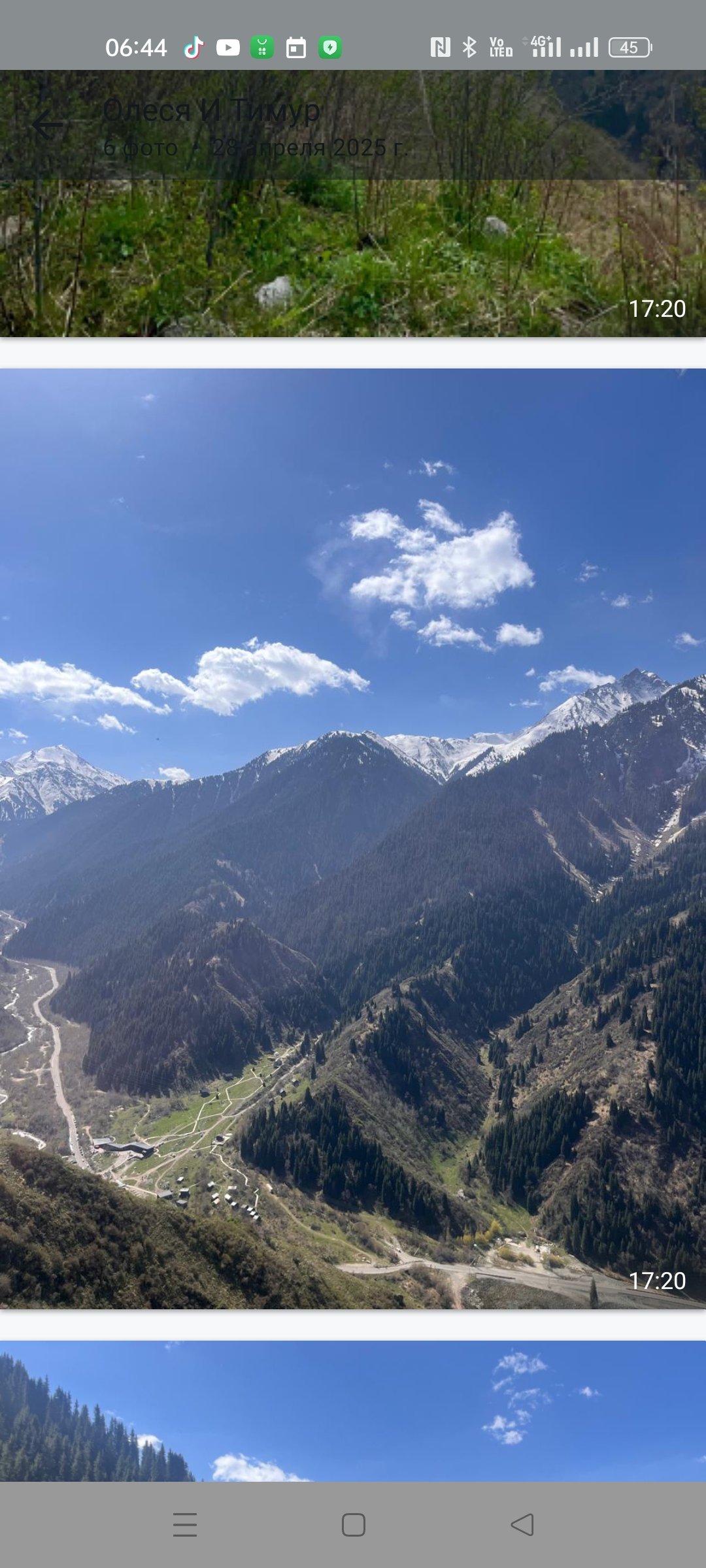
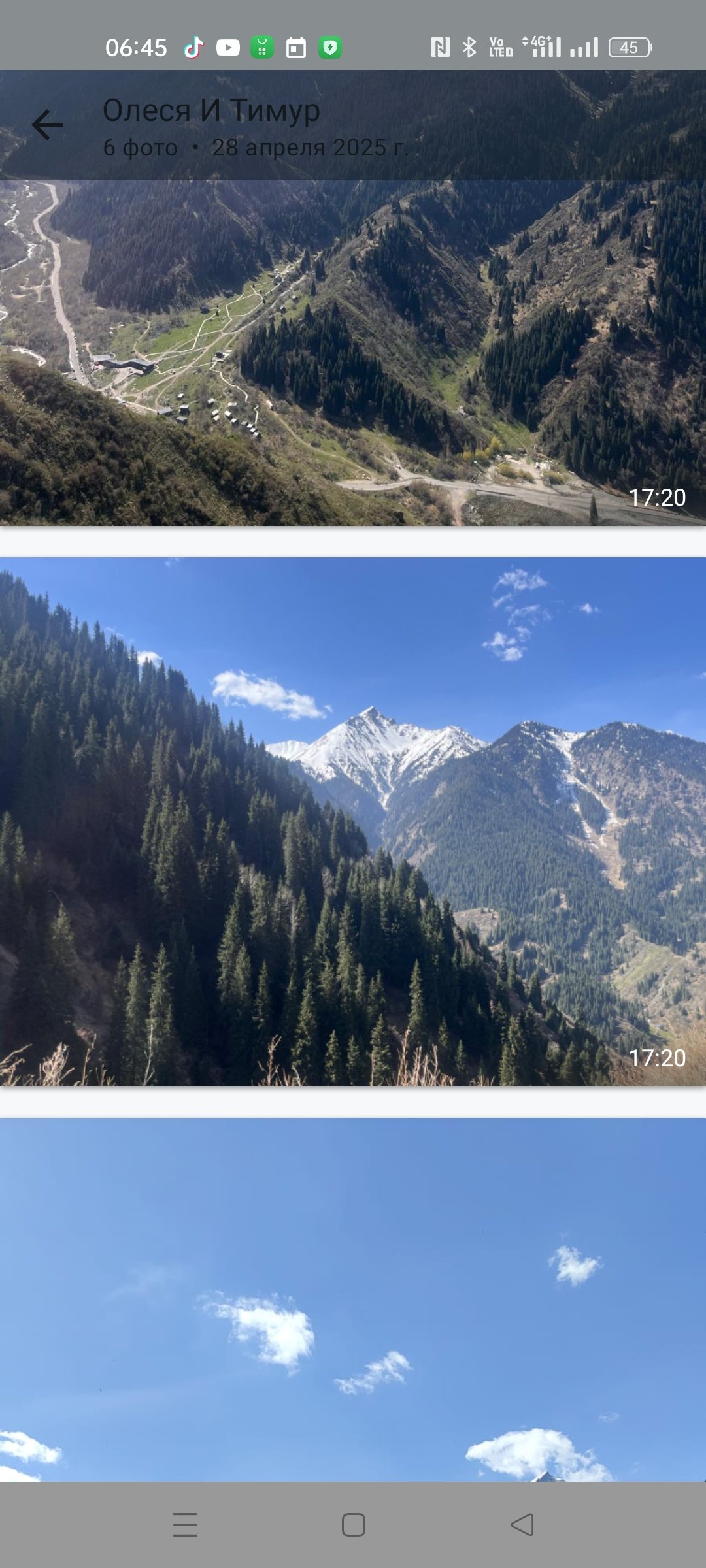
The Old Japanese Road hike is one of the most accessible mountain experiences near Almaty — and one of the most historically layered. You walk along a wide, gentle road carved into the steep western slope of the Big Almaty Gorge at around 1,900 metres, with the entire gorge spread below you and some of the highest peaks in the Zailiyskiy Alatau framed ahead. No scrambling, no altitude sickness, no technical skills required. Just walking, views, and a strange wartime story that nobody can quite verify.
The “Japanese Road” is actually a technological road built in the late 1940s–1950s to service an underground water conduit connecting the cascade of hydroelectric power stations on the Bolshaya Almatinka River. The name comes from local folklore: after the Soviet defeat of the Japanese army in Manchuria in August 1945, over 575,000 Japanese prisoners of war were transported to forced labour across the USSR. Camp No. 40 was located in Alma-Ata (present-day Almaty), and Japanese POWs were used in the construction of buildings and infrastructure across the city — including, according to popular belief, this mountain road and the HPP facilities.
Whether Japanese POWs actually built this specific road is debated. The cascade construction began in 1943 using citizens, military personnel, and prisoners. Some sources claim the road was built entirely by Soviet convict labourers, not Japanese POWs. What is not debated: the road exists, it was hand-built in extraordinarily difficult mountain conditions, and the small stone buildings where the builders lived are still visible along the route. The name has stuck for decades, and today the Japanese Road is one of the most popular hiking trails in Almaty’s mountains.
Along the way, you pass abandoned mining adits (tunnels) partially flooded with water, ruins of stone worker housing, a decommissioned cable car house with its steel hauling drum still inside, and the massive pipe that drops 38–40 metres from HPP-1 to HPP-2 — a pipe you climb alongside at the start of the route. The industrial archaeology is unusual for a mountain hike and gives the trail a character entirely different from the alpine meadows and glaciers of the Small Almaty Gorge.
Detailed itinerary
Meeting and transfer to the trailhead
We meet at your hotel or a designated meeting point in Almaty at 8:00 AM. The drive to the Big Almaty Gorge takes approximately 30 minutes. We pass through the ecological checkpoint of the Ile-Alatau National Park (entry fee included) and continue to our starting point.
Option A: Start from Kazachka Gorge (recommended for guided tours)
The trail begins from the Kazachka hotel area, at the mouth of Kazachka Gorge — a small side valley branching off the main Big Almaty Gorge road, about 500 metres past the national park ecological post.
Kazachka to the top of the Japanese Road (1–1.5 hours)
The first kilometre is the steepest section of the entire day — a climb through wild apple and apricot gardens along a serpentine path that follows the pipeline. The vegetation here is distinctly Central Asian foothill: dense fruit trees giving way to Tien Shan spruce as you gain altitude. After the initial push, the gradient eases and the trail becomes the wide, gentle road that gives this hike its reputation for accessibility.
The serpentine winds pleasantly through the spruce forest and delivers you to the highest point of the Japanese Road at approximately 1,900 metres. From here, the climbing is over. The entire rest of the day is flat or gently downhill.
Walking the Japanese Road (2–2.5 hours)
This is the heart of the experience. The road traverses the western slope of the Big Almaty Gorge from southeast to northwest at a nearly constant altitude of 1,900 metres. It’s wide enough for a vehicle (it was built for one), which means you can walk side by side, talk comfortably, and take in the views without watching your footing.
The panorama unfolds to the south and east:
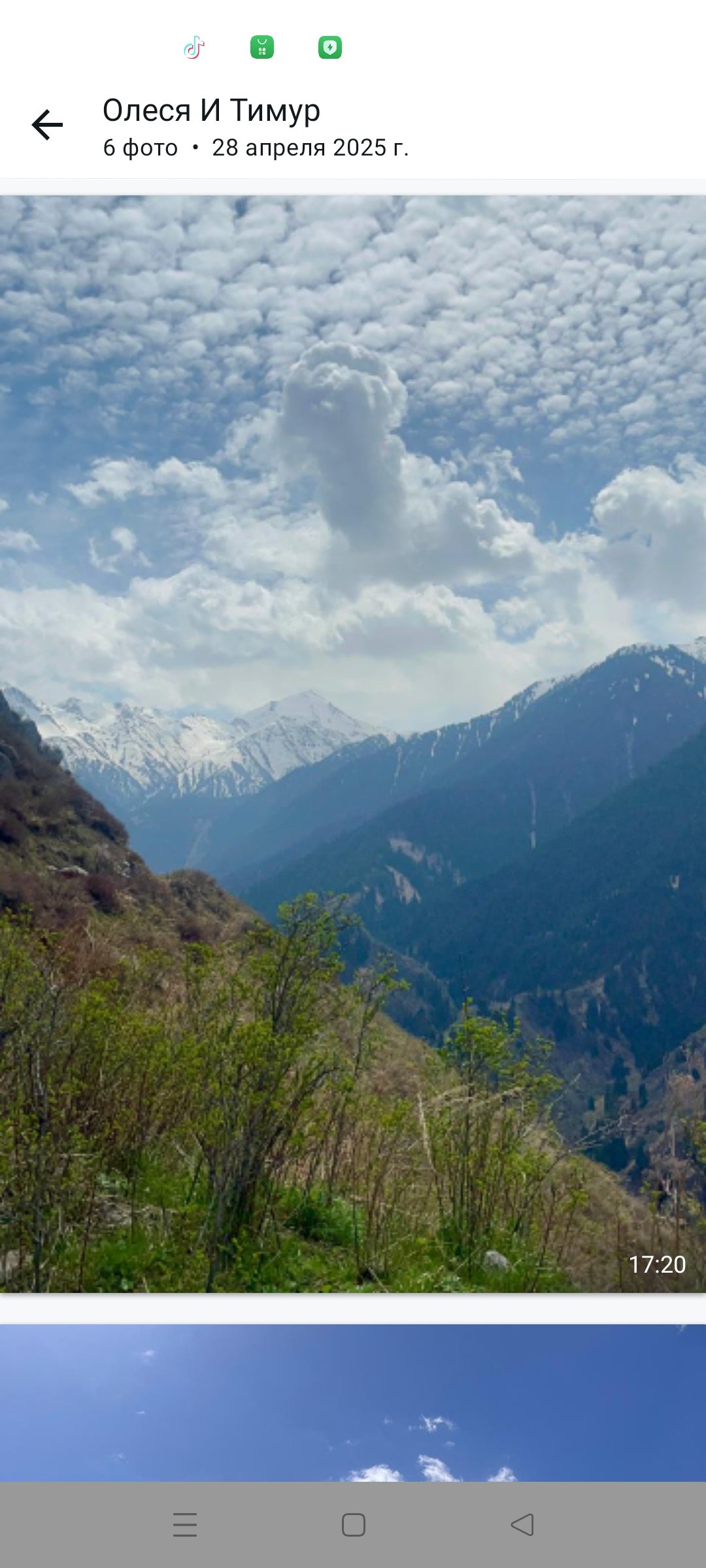
- Big Almaty Peak (3,682 m) — the prominent pyramid directly ahead, visible from Almaty city
- Sovetov/Satpayev Peak (4,317 m) — the highest summit in the Big Almaty spur
- Molodezhniy Peak (4,147 m)
- Ozerny Peak (4,110 m)
- Kargalinsky Peak (3,675 m)
- Pila Peak (3,790 m)
- Kamensky Peak (3,627 m)
On clear days, you can see Almaty city spread across the northern plain behind you. The contrast between the urban grid and the wild gorge is striking.
Along the road, you encounter the history:
Stone ruins: Small buildings made of local stone — the housing for the workers who built the road and the underground water conduit. Roofless now, walls still standing. The construction quality is remarkably precise for structures built at altitude with hand tools.
Mining adits (штольни): Several tunnel entrances are visible along the route, sealed or partially collapsed, some flooded with clear water. These were excavated as part of the underground water conduit project — a 7 km tunnel cut through the mountain to transport water between the power stations. The tunnel still functions.
Cable car house: A decommissioned structure housing a massive steel drum and cable system that was used to haul construction materials up the mountainside in wagons. The industrial archaeology is surprisingly intact.
We stop for a picnic lunch at the most scenic viewpoint along the road — a spot with unobstructed views down the entire Big Almaty Gorge. Tea, sandwiches, and time to absorb the scenery.
Descent to Ayusai Visitor Centre (30–45 minutes)
At the northwestern end of the Japanese Road, a short serpentine descent brings you down to the main asphalt road of the Big Almaty Gorge (the road that continues to Big Almaty Lake). From here, it’s a 15–20 minute walk downhill to the Ayusai (Bear Gorge) Visitor Centre.
Ayusai Waterfall visit (optional, 30–45 minutes)
If energy and time permit, we make a short detour into the Ayusai Gorge to see the Bear Waterfall — a small but attractive cascade in a narrow side gorge. This adds minimal distance and provides a nice finale to the day.
Return to Almaty
From the Ayusai Visitor Centre, we arrange transport back to Almaty. The drive takes approximately 30–40 minutes. Return to your hotel by mid-afternoon — leaving the rest of your day free.
Why book a guided Japanese Road hike?
The history needs a storyteller. Without context, the stone ruins are just rocks and the tunnel entrances are curiosities. With a guide who knows the WWII-era history of the HPP cascade construction, the Japanese POW story, and the engineering of the underground water conduit, the trail transforms from a pleasant walk into a narrative experience. This is one of the few hikes near Almaty where the human history is as compelling as the natural scenery.
Logistics are simpler than they appear. The trail is a traverse, not an out-and-back — you start in one location and finish in another. Without arranged transport at both ends, you’re either backtracking (doubling your distance) or trying to hitch a ride from the Ayusai Visitor Centre. A guided tour handles both pickups seamlessly.
Accessible but remote. The trail is easy enough for beginners, but you’re still in the Ile-Alatau National Park at 1,900 metres, with no cell service on parts of the route. A guide provides safety, navigation, and peace of mind.
The history behind the name
The Big Almaty Gorge HPP cascade is one of the most remarkable engineering stories in Kazakhstan’s modern history. In 1942, with factories evacuated from European Russia to Alma-Ata during WWII, the city faced an acute electricity shortage. The USSR State Defence Committee ordered the construction of a cascade of hydroelectric power stations on the Bolshaya Almatinka River.
Construction began in April 1943. Over 6,000 people worked on the project: Almaty citizens, military personnel, prisoners of war, and convicts. The work was barely mechanised — nearly everything was done by hand, at altitude, in severe mountain conditions. Remarkably, HPP-11 was operational by April 1944 — just one year after construction began. By March 1948, ten power stations had been completed. In October 1953, the highest-pressure plant in the cascade — Ozernaya HPP-1 — was commissioned with Italian Ansaldo San Giorgio turbines that still operate today.
The “Japanese” attribution comes from the documented presence of Japanese POWs in Alma-Ata after 1945. Camp No. 40 held Japanese soldiers captured in Manchuria. They are known to have worked on construction projects in the city, including buildings on what is now Dostyk Avenue. Whether they worked specifically on this mountain road or only on the HPP facilities below remains a matter of local legend rather than confirmed historical record. The name endures regardless, and the stone buildings along the route — whoever built them — stand as testimony to the brutal conditions of post-war forced labour in the Soviet mountains.
When to hike the Japanese Road
Spring (April–May): Wildflowers in the lower sections, apple and apricot trees blooming in Kazachka. Can be muddy/slippery after rain. Snow may linger in shaded sections early April.
Summer (June–August): Ideal conditions. Warm, dry, long daylight. The sun-exposed road can be hot in July — bring hat and sunscreen. Early morning start recommended in peak summer.
Autumn (September–October): Stunning colours as the apple trees and deciduous forest turn golden. Cooler temperatures, shorter days. October can bring early snow on higher sections.
Winter (November–March): Possible but with caveats. The road is on a south/west-facing slope and receives good sun, so snow melts faster here than in the gorge below. January hikers report warm conditions on sunny days. However, the initial staircase from GES-2 can be icy, and some sections may be slippery.
Frequently asked questions
How hard is the Japanese Road hike? This is one of the easiest mountain hikes near Almaty — rated 1.5/5. The only challenging section is the first kilometre from Kazachka, which is steep. After that, the road is flat and wide. Anyone with average fitness can complete it, including children aged 9 and older.
How is this different from the Big Almaty Lake tour? Completely different experience. The Big Almaty Lake tour drives up a paved road to a turquoise alpine lake at 2,511 m — it’s scenic but primarily a vehicle-based experience. The Japanese Road is a walking trail at lower altitude (1,900 m) with WWII history, industrial ruins, and panoramic mountain views. The two can be combined in a full day: Japanese Road in the morning, drive to Big Almaty Lake in the afternoon.
Can I reach the Japanese Road by public transport? Yes. Bus #28 from First President’s Park terminates at GES-2 (HPP-2) in the Big Almaty Gorge. From there, climb the steep iron staircase alongside the pipe (1.2 km) to reach the road. The staircase is functional but old — welded from rebar, with some steps missing. Not for those uncomfortable with heights or unstable structures.
Are the mining tunnels safe to enter? No. The adits are sealed, collapsed, or flooded. They are not safe for entry. You can observe them from the outside, which is interesting enough — the tunnel entrances and the scale of the underground conduit are impressive even from a distance.
Can I combine this with other hikes? Yes. From the highest point of the Japanese Road, a trail continues up to Smotrovaya (Viewpoint Mountain, 2,360 m) — a more demanding extension with even better panoramic views of the entire Big Almaty Gorge and peaks up to Sovetov (4,317 m). The Ayusai waterfall at the end of the route is a natural add-on. For a longer day, continue up the gorge road to Big Almaty Lake.
Were Japanese prisoners really involved? This is genuinely debated. Japanese POW Camp No. 40 existed in Alma-Ata, and Japanese prisoners are documented to have worked on city construction projects. Whether they worked on this specific mountain road or only on the HPP facilities below is unclear — some local historians argue the road was built by Soviet convict labourers, not POWs. The name “Japanese Road” has been used for decades and is now firmly established regardless of the answer. A Japanese Prisoners of War Cemetery exists in Almaty, testifying to the broader presence of Japanese POWs in the region.
Itinerary
Detailed itinerary will be provided upon booking. Our typical tour includes daily hikes through diverse terrains and cultural experiences.
Pricing
| Group Size | 1 person | 2 people | 3 people | 4 people | 5 people | 6 people Best value |
|---|---|---|---|---|---|---|
| Standard | $144 $144 total | $97 $194 total | $81 $243 total | $73 $292 total | $68 $340 total | $65 $390 total |
100% private tour — prices are per person based on group size. The more friends you bring, the less everyone pays!
What's Included
Included
Not Included
Our Guarantee
If weather forces a cancellation, we reschedule at no cost. If you're not satisfied with your experience, we'll work with you to make it right. No questions, no hassle.
Private tours only (max 6) · Free cancellation up to 48 hours before · No upfront payment
Traveler Stories
Sarah K.
Our guide was incredible - he adjusted the pace perfectly for our group and knew exactly where to stop for the best photos. The whole experience felt effortless, like everything was taken care of before we even thought to ask.
Marco T.
We were a group of 4 friends and the per-person price made it a no-brainer. Private 4x4, lunch included, and the canyon was breathtaking. Way better than the big bus tours we saw there.
Anna W.
Solo traveler here. I was nervous about hiking alone in a foreign country but the guide made me feel completely safe. The trail to Kok-Zhailau was beautiful and the photos he took of me were amazing. Only wish the hike was longer!
David R.
Third time booking with these guys. Butakovka, Big Almaty Lake, and now Titov Peak. Every single time the service is flawless. The fact that it's always private and max 6 people makes such a difference compared to other operators.
Share Your Experience



8+ hikers
completed this trail
Tour At A Glance
Book This Tour
Weekend slots fill up fast — book early to get your preferred date
Pay securely after confirmation




Weather Forecast
broken clouds
H: 6°C
L: 5°C
Tue, Mar 31
overcast clouds
11°C
4° / 17°
Wed, Apr 1
overcast clouds
11°C
8° / 14°
Thu, Apr 2
scattered clouds
13°C
9° / 16°
Tour Location
Similar trails
Day Hiking Tour to Peak of Memory (Pik Pamyat) from Almaty
From $70/person
Day Hiking Tour to Kairak Waterfall in Turgen Gorge from Almaty
From $70/person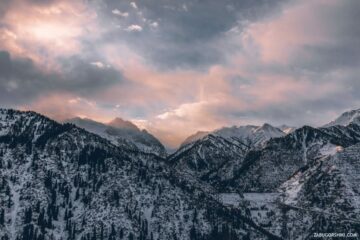
Day Hiking Tour to Serkebay Mountain from Almaty
From $60/person
From $65
per person · free cancellation
Complete Your Booking
Tour:
Date:
Participants:
Price:
You're Almost There!
We'll contact you within 24 hours to confirm your spot and share everything you need to prepare for your adventure.
165
Videos on the channel

13,000+

16,000+

59
Hikes Filmed
704,000 m
Total Distance

44,439 m
Total Elevation Gain

812 cups
Grand Cru Tea Cups

27
Countries Visited

83 hours
Drone Flight Hours

10 videos
Sports: Running, Snowboard

3 videos
Healthy Eating

1
Living on the Edge