
Day Tour to Issyk Lake from Almaty
From $82 per person
Overview
Is this tour right for you?
Perfect if you…
No experience needed
Description
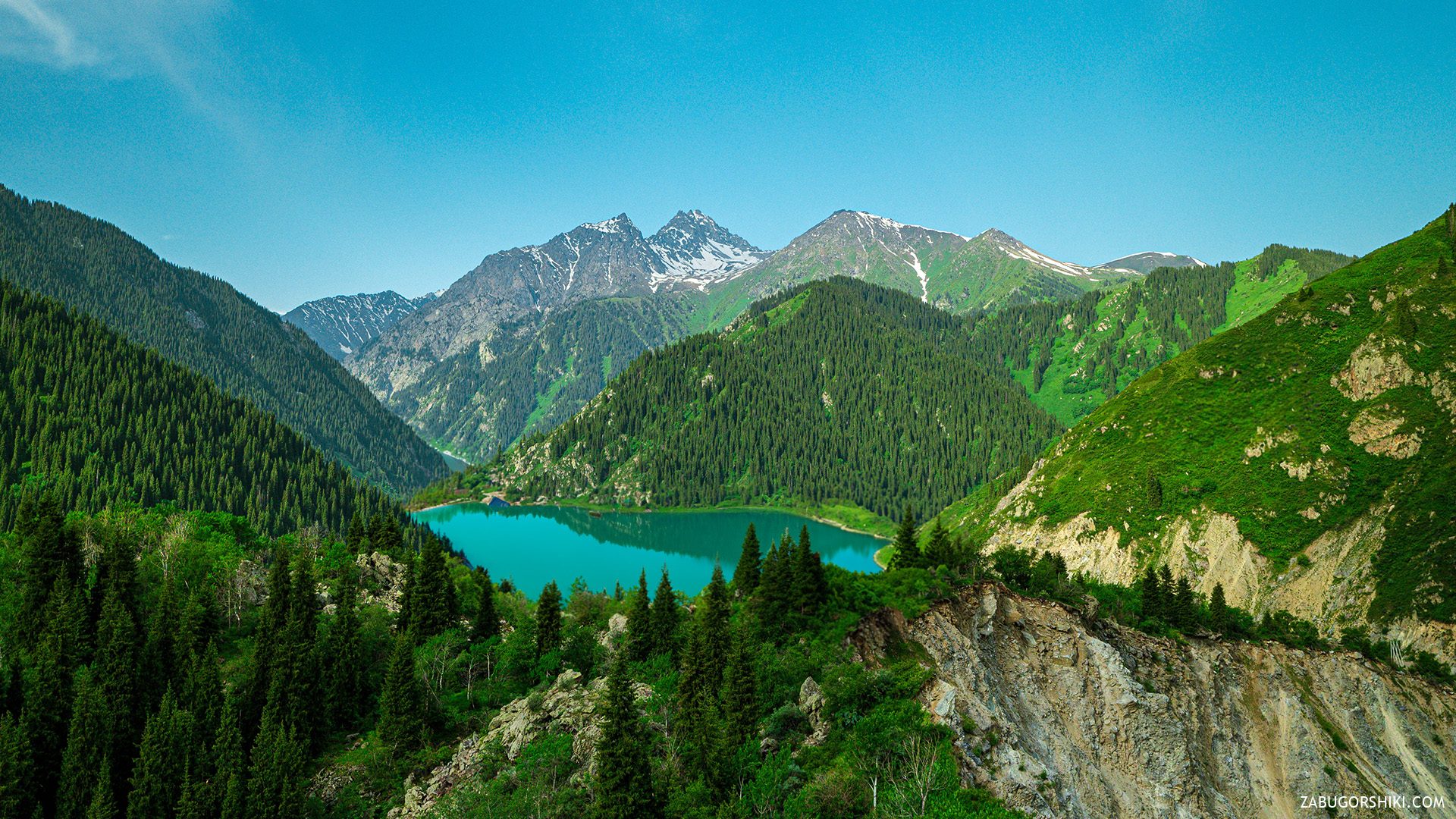
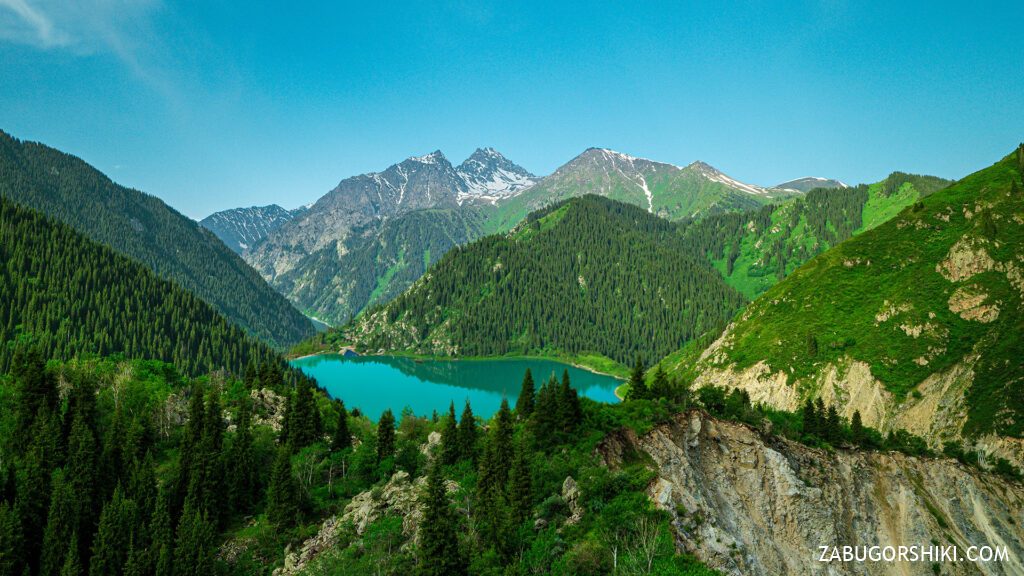
A full-day guided tour from Almaty to Issyk Lake (1,756 m) — a turquoise alpine lake with a dramatic history of destruction and recovery — with optional stops at the Golden Man museum and Issyk Gorge viewpoints, 70 km east of the city.
What to expect on the Issyk Lake tour from Almaty
The Issyk Lake tour from Almaty takes you to the only alpine lake near the city that was destroyed and rebuilt within living memory. On July 7, 1963, a glacial mudflow swept down from the upper reaches of the Issyk River, broke through the lake’s 300-meter-high natural dam, and emptied the entire lake in about four hours. The disaster — one of the largest mudflows in Soviet history — devastated the town of Esik below and killed an unknown number of people; estimates range from dozens to over a thousand, because Soviet authorities suppressed the news for weeks.
The lake you see today is a reconstruction. By the early 1990s, the dam was restored and the lake refilled, though it is now roughly half the size it was before the disaster. That history is part of what makes this place compelling. You’re looking at a body of water that nature created 8,000 to 10,000 years ago, nature destroyed in a single afternoon, and humans rebuilt over decades. A memorial cross on the hillside above the lake marks the tragedy.
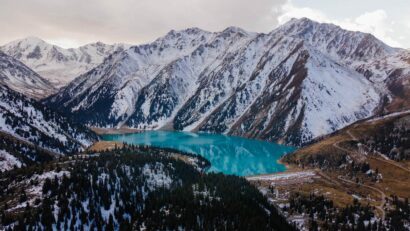
But Issyk Lake is not just a history lesson. The turquoise water, framed by spruce-forested slopes and the peaks of the Zailiyskiy Alatau, is genuinely beautiful — and at 1,756 m, it’s far more accessible than the high-altitude lakes to the south. The gorge itself is one of the most scenic east of Almaty, and the drive passes through the Saka burial grounds where the Golden Man — Kazakhstan’s most important archaeological discovery — was unearthed in 1969.
Issyk Lake at a glance
| Altitude | ~1,760 m above sea level |
| Distance from Almaty | ~70 km east (1.5-2 hours by car); the town of Esik, then 14 km of mountain road |
| Entry | Ile-Alatau National Park eco-fee at the checkpoint – 648.75 ₸ per person (2026 tariff, the same as the Big Almaty gorge) |
| Origin | Formed ~10,000 years ago when a rockfall dammed the Issyk river with a 300 m natural wall |
| The 1963 disaster | On 7 July 1963 a mudflow burst the lake; before it, the lake measured 1,850 m long and up to 79 m deep. Partially restored by an artificial dam |
| Swimming | Not permitted – protected water area |
| Best time | May-October |
Issyk, Esik or Есік – which is right?
All of them. “Есік” is the Kazakh name – it means “door”, for the gorge’s role as a gateway into the mountains – and it reaches English as either Esik or the older Russian-influenced spelling Issyk. You will see “Lake Issyk”, “Esik Lake” and “Issyk-Kol” on maps and signs; they are the same lake. Two things it is not: the town of Esik (14 km below the lake, where the Golden Man was found), and Kyrgyzstan’s giant Issyk-Kul, four hundred kilometres away.
Detailed Itinerary
Drive from Almaty to Esik (1–1.5 hours)
We pick you up from your accommodation and head east along the Kuljinsky Tract — the old road toward China that once carried Silk Road caravans. The drive passes through the suburbs and into the agricultural flatlands east of the city, with the Zailiyskiy Alatau rising to the south.
Optional stop: Golden Man Museum. In the town of Esik (Issyk), we can stop at the State Historical-Cultural Museum-Reserve “Issyk.” This is the site of the Saka burial grounds — a necropolis of approximately 80 kurgans (burial mounds) dating to the 4th–3rd centuries BCE. In 1969, archaeologists discovered the burial of a young warrior dressed in over 4,000 gold ornaments — the “Golden Man” (Altyn Adam), now one of Kazakhstan’s national symbols. The original artifacts are in Astana, but the museum displays a detailed replica of the golden armor, along with artifacts from the excavations and exhibits on Saka culture. An 8-meter statue of the Golden Man stands at the museum entrance. The visit takes roughly 30–40 minutes. Note: English-language signage is limited, so your guide’s explanations are essential here.
Drive through Issyk Gorge to the lake (30–40 minutes)
From Esik, the road enters the Issyk Gorge and begins climbing through the Trans-Ili Alatau. The gorge is narrower and more dramatic than the Big Almaty Gorge — steep forested slopes close in on both sides, with the Issyk River running below. You pass through an eco-post (national park entry fee handled by us) and continue up the winding road past alpine meadows with wildflowers in season.
The road ends on the ridge of the reconstructed dam. Parking is organized directly on the dam crest, which was resurfaced in 2019 with picnic infrastructure — gazebos, benches, and fire pits.
At the lake (1.5–2.5 hours)
From the dam, it’s a short walk of roughly 10 minutes down to the lakeshore. The lake reveals itself suddenly as you descend — the turquoise water appears between the trees, backed by mountain walls.
What you can do at the lake:
Lakeside walk and picnic. The shoreline is accessible in several spots. We bring food for a lakeside picnic, or you can explore the walking paths along the water. The color shifts from turquoise to deep blue depending on the season and light — spring and summer tend toward vivid turquoise, while autumn brings deeper tones.
Memorial cross viewpoint. A short uphill walk leads to the Poklonnaya Cross on the hillside above the lake, erected in memory of the 1963 disaster victims. From here, you get a wide view of the lake and can see the scale of the original lake bed — trees now grow where water once stood, and massive boulders deposited by the mudflow are still visible on the lower lakeshore.
Kremlin Walls hike (optional, add 2–3 hours). For those who want more than a stroll, a trail continues deeper into the gorge to a striking cliff formation locally known as the “Kremlin Walls” — vertical rock faces rising above the valley. This extends the lake visit into a proper half-day hike.
Signs of the disaster. Your guide will point out the evidence of the 1963 event that’s still visible: the rebuilt dam, the reduced lake level, the boulders and debris fields, and the young-growth forest on the former lake bed. Understanding what happened here transforms the visit from scenic to meaningful.
Return to Almaty (1–1.5 hours)
We drive back through the gorge and along the Kuljinsky Tract to Almaty. Optional stop at a local restaurant in Esik for traditional Kazakh food if time and interest allow.
A lake destroyed and rebuilt: the 1963 Issyk mudflow
The story of Issyk Lake cannot be told without the disaster. The lake existed for roughly 8,000 to 10,000 years — formed when an earthquake collapsed part of the gorge wall, creating a natural dam about 300 meters high that blocked the Issyk River. By the mid-20th century, it was one of the most popular recreation spots near Almaty. A tourist park with a hotel and restaurant opened in 1959. The lake appeared on Soviet postcards. Nikita Khrushchev and Ho Chi Minh visited.
On July 7, 1963, intense heat accelerated glacier melt in the upper reaches of the Issyk River. A moraine lake above the valley overflowed, triggering a massive mudflow that descended on the main lake in successive waves. Within four to five hours, the mudflow had broken through the natural dam and displaced the entire volume of the lake. The wall of water, mud, and boulders continued downstream, devastating the town of Esik.
Soviet newspapers did not report the event for nearly three weeks. The first article, published on July 25, was a generic piece titled “What is a mudflow?” — it barely mentioned the Issyk disaster. To this day, the death toll remains uncertain. Official Soviet statistics cited “over a hundred.” Later estimates range from several hundred to over a thousand. The true number may never be known.
The lake eventually refilled behind a reconstructed dam, completed by the early 1990s. Today it’s roughly half its original size, but the water quality and color have returned. The disaster directly influenced the decision to build the Medeo mudflow dam above Almaty — a controlled explosion in 1966 created the massive dam that protects the city to this day.
The Golden Man: Kazakhstan’s most famous archaeological find
The town of Esik, at the mouth of the Issyk Gorge, sits among one of the most significant Saka (Scythian) burial grounds in Central Asia. The necropolis contains approximately 80 kurgans stretching for about three kilometers. In 1969, archaeologist Kemal Akishev discovered an intact side burial in one of the mounds — a young person (age estimated at 16–18; sex uncertain) dressed in armor decorated with over 4,000 gold pieces. The discovery was Kazakhstan’s archaeological sensation: the first unlooted Saka royal burial in Central Asia.
The “Golden Man” (Altyn Adam) became a national symbol. The winged horses from the warrior’s headdress appear on Kazakhstan’s coat of arms. A golden replica crowns the Independence Monument in central Almaty. The original armor is in Astana; the museum at the discovery site in Esik houses a replica and contextual exhibits about Saka culture.
The burial also contained a silver bowl with an inscription — one of the earliest known examples of a Central Asian script, potentially linked to the Saka languages. The text has never been fully deciphered.
Why book this guided Issyk Lake tour?
Two reasons beyond logistics. First, the history at this site — both the 1963 disaster and the Saka burial grounds — is almost invisible without a guide who can explain it. There are no English-language signs at the lake, no interpretive panels explaining the mudflow, and the museum in Esik has minimal English labeling. Without context, Issyk Lake is a pretty lake; with context, it’s one of the most historically layered sites near Almaty. Second, combining the lake with the Golden Man Museum into a coherent day requires local knowledge of timing, road conditions, and seasonal access — particularly in shoulder seasons when the gorge road may be restricted.
FAQ: Issyk Lake Tour
How does Issyk Lake compare to Big Almaty Lake? They’re very different experiences. Big Almaty Lake (2,511 m) is higher, more remote, and currently requires a significant hike to reach due to road closures. Issyk Lake (1,756 m) is lower, more accessible by vehicle, and surrounded by denser forest. Both have stunning turquoise water. Issyk Lake adds the historical dimension — the 1963 disaster and the nearby Golden Man site — that Big Almaty Lake doesn’t have. If you can only do one lake tour, choose based on whether you want a mountain hike (Big Almaty) or a scenic cultural day trip (Issyk).
Can I swim in the lake? Swimming is technically possible but the water is cold, even in midsummer. There are no lifeguards or facilities. Unlike Big Almaty Lake, there is no prohibition on approaching the water — Issyk Lake is not a drinking water reservoir.
Is the Golden Man Museum worth visiting? Yes, particularly with a guide who can provide context. The museum is small (30–40 minutes is enough) but the Saka burial grounds surrounding it — approximately 80 kurgans — are impressive in scale. The replica of the golden armor is well-made. If you’re specifically interested in the original artifacts, those are in Astana at the National Museum.
Is this tour suitable for children and older adults? Yes. The basic lake visit involves a short, gentle walk and is suitable for almost anyone. The Kremlin Walls extension is steeper and longer, more appropriate for active hikers.
What happened to the lake water level recently? In 2019–2020, private hydroelectric plants built downstream used the lake’s water discharge to generate power, causing the water level to drop sharply. Public outcry from environmentalists and Esik residents followed. The situation drew media and government attention. Water levels have since partly recovered, but it remains a sensitive issue. Your guide can explain the current situation in detail.
Can I combine Issyk Lake with Turgen Gorge waterfalls? Yes, and this is one of our most popular combined day trips. The Bear Waterfall in Turgen Gorge is about an hour’s drive from Issyk Lake. The combination makes for a full but varied day — lake, history, and waterfall hiking.
When is the best time to visit? Late spring through early autumn (May–October) for the best color and weather. The lake is at its most vivid turquoise in June–July. Autumn (September–October) brings golden larches and deeper blue tones. Winter visits are possible when the road is clear but the lake may be partly frozen.
Is this the same as Issyk-Kul in Kyrgyzstan? No. Issyk-Kul is a massive saline lake (182 km long) across the border in Kyrgyzstan. Lake Issyk in Kazakhstan is a small alpine lake near Almaty. The names share a Turkic root but they are completely different bodies of water.
How far is Issyk Lake from Almaty?
About 70 km east of the city – 1.5 to 2 hours by car via the Kuljinsky highway or the Talgar road, the last 14 km on a winding mountain road above the town of Esik. There is no practical public-transport option to the lake itself, which is why most visitors come by tour or taxi.
How high is Issyk Lake?
Around 1,760 m above sea level – high enough for spruce forest and cool air, low enough that the season is long and the road stays open from late spring to autumn.
Itinerary
Detailed itinerary will be provided upon booking.
Pricing
100% private tour — prices are per person based on group size. The more friends you bring, the less everyone pays!
What's Included
Included
Not Included
Our Guarantee
If weather forces a cancellation, you choose a free reschedule or a full refund. If you're not satisfied with your experience, we'll work with you to make it right. No questions, no hassle.
Private tours only (max 6) · Reschedule or full refund if weather cancels · No payment until confirmed
Traveler Stories
Sarah K.
Our guide was incredible - he adjusted the pace perfectly for our group and knew exactly where to stop for the best photos. The whole experience felt effortless, like everything was taken care of before we even thought to ask.
Marco T.
We were a group of 4 friends and the per-person price made it a no-brainer. Private 4x4, lunch included, and the canyon was breathtaking. Way better than the big bus tours we saw there.
Anna W.
Solo traveler here. I was nervous about hiking alone in a foreign country but the guide made me feel completely safe. The trail to Kok-Zhailau was beautiful and the photos he took of me were amazing. Only wish the hike was longer!
Share Your Experience
Tour At A Glance
Book This Tour
Private tours run any day of the week — weekends fill up fastest, so book early
Pay securely after confirmation




Weather Forecast
clear sky
H: 14°C
L: 4°C
Mon, Sep 28
overcast clouds
9°C
2° / 13°
Tue, Sep 29
overcast clouds
12°C
8° / 15°
Wed, Sep 30
light rain
12°C
8° / 16°
Tour Location
Similar trails
From $82
per person · weather refund
Complete Your Booking
Tour:
Date:
Participants
Add-ons
You're Almost There!
We'll contact you within 24 hours to confirm your spot and share everything you need to prepare for your adventure.
Request sent
We confirm your spot
within 24 hours
Summoning perfect weather
Hit the trail
On the channel



83 h
Drone flight hours

What we’ve filmed
59
Hikes filmed

704 km
Kilometers covered

44,439 m
Elevation gained

27
Countries visited

Plan your hike with us
A few quick questions and we will email you a tailored hike plan & quote.
When do you want to hike?
What's your experience?
How many of you?
Where do we send your plan?
Private guided hikes · no obligation.