Guided Climb to Satpayev Peak (4,317 m) from Almaty
From $147 per person
Overview
Is this hike right for you?
Perfect if you…
Be prepared
Description
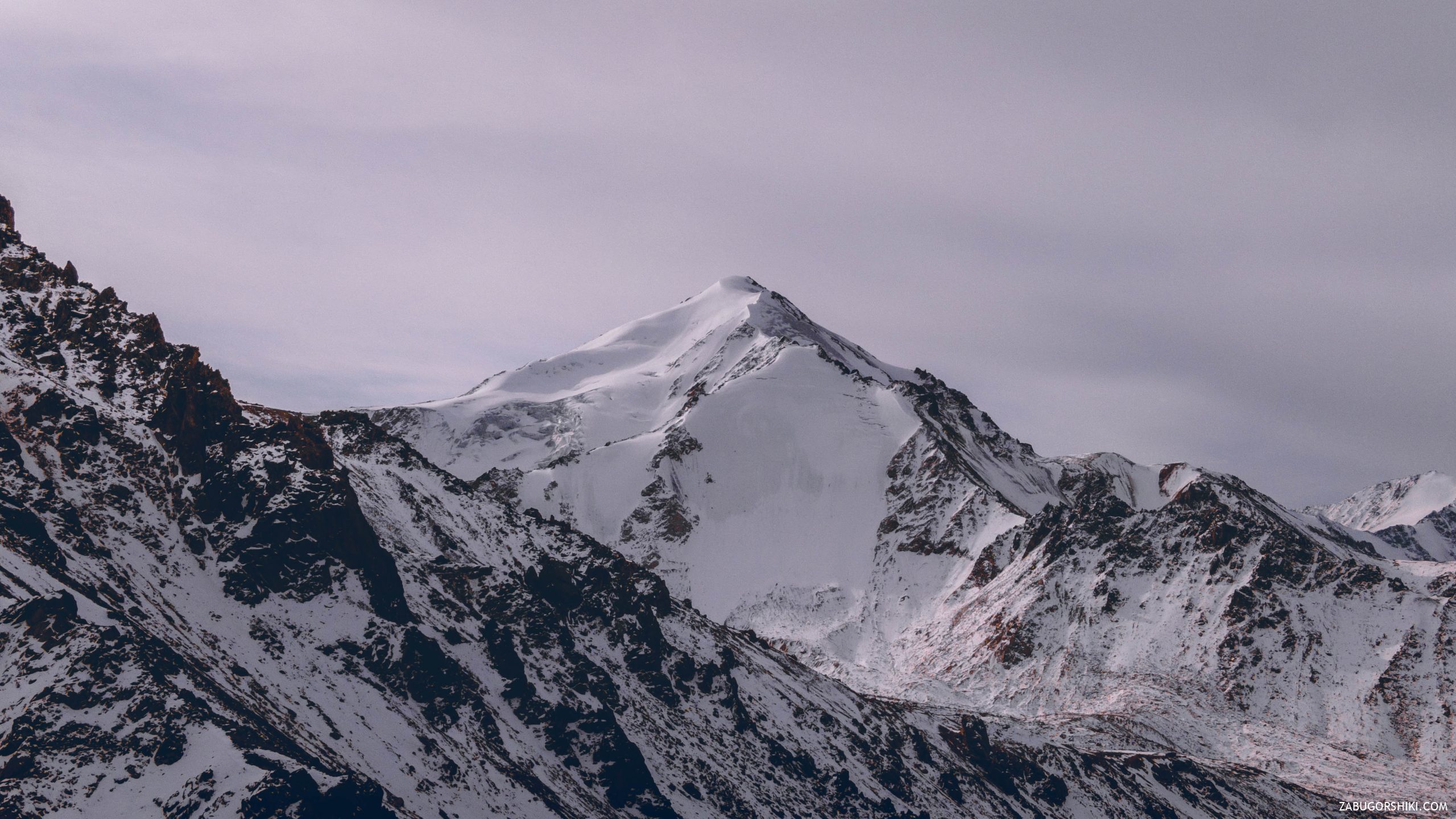
A guided 2-day mountaineering tour from Big Almaty Lake (2,511 m) to the summit of Satpayev Peak (4,317 m) — the dominant pyramid visible from the lake and from Almaty itself — via the southwestern ridge (mountaineering category 1A).
What to expect on the Satpayev Peak climb
If you’ve visited Big Almaty Lake, you’ve already seen Satpayev Peak. It’s the massive pyramid that dominates the southern skyline from the lake’s dam — the tallest of the three peaks (Sovetov/Satpayev at 4,317 m, Ozerny at 4,110 m, Tourist at 3,954 m) that frame the lake’s turquoise waters. From certain parts of Almaty city, particularly the western districts, the peak is visible on clear days — a sharp triangular summit above the gorge.
This climb takes you to the top of that pyramid.
Satpayev Peak — formerly and still commonly known as Sovetov Peak (Peak of Soviets) — was renamed in honour of Kanysh Satpayev (1899–1964), arguably the most significant scientist in Kazakhstan’s history. Satpayev was the first qualified ethnic Kazakh mining engineer and geologist, the founder and first president of the Kazakhstan Academy of Sciences, and the man whose geological exploration of Zhezkazgan proved it to be one of the world’s largest copper deposits — a discovery that transformed Kazakhstan from an agrarian territory into an industrial power. UNESCO declared 1999 as the Year of Kanysh Satpayev. A mineral (satpayevite), an asteroid, a city, a university, and this peak all bear his name. He is buried in Almaty.
The climbing route follows the southwestern ridge at mountaineering difficulty category 1A — the simplest technical grade. This means the ascent involves steep scree, loose rock, some scrambling through rock groups, and significant altitude exposure, but does not require ropes, ice axes, or technical climbing skills in normal summer conditions. What it does require is exceptional fitness and altitude tolerance: you gain approximately 1,300 metres from base camp to summit, at elevations where every step is an effort.
The first ascent was made in August 1938 by climbers from the Kazakh Pedagogical Institute — D. Tuganbaev, S. Semin, and L. Ignatov, led by V. Zimin — via the more difficult northwestern ridge (category 1B). Your route follows the easier southwestern ridge, first climbed later.
Detailed itinerary
Day 1: Almaty to Base Camp (7 km, +550 m, 3–4 hours hiking)
We meet at your hotel at 7:00 AM. Drive to Big Almaty Lake (2,511 m) — approximately 1 hour via the Big Almaty Gorge road. At the lake, we take in the iconic view: turquoise water, the dam, and Satpayev Peak’s pyramid dominating the skyline directly ahead.
From the lake, we continue on foot along the road past the dam and up the valley of the Ozernaya River (Lake River) — the stream that feeds Big Almaty Lake from the glaciers above. The trail follows the river south into increasingly alpine terrain. Vegetation thins as we gain altitude. The path is well-defined — this is the established approach for all climbing routes in the upper Big Almaty cirque.
After approximately 7 km and 3–4 hours of moderate hiking, we reach the base camp area at roughly 3,050 m. Camp is set up on a flat area with water access from the river. For groups using the mnt.kz-style route, overnight accommodation is in mountain huts rather than tents — check availability when booking.
Evening is spent acclimatising, eating well, hydrating, and preparing gear for the summit push. Your guide briefs the group on tomorrow’s route, timing, and turnaround protocol. Weather is assessed — the summit attempt only proceeds in clear conditions.
Day 2: Summit Day and Return (~15 km, +1,300/-1,850 m, 10–12 hours)
Wake at 3:00–4:00 AM. Pre-dawn start is essential to maximise time on the mountain, avoid afternoon weather, and have daylight margin on the descent. Cold breakfast, headlamps on, and we begin climbing in darkness.
3,050 m – 3,500 m (1.5–2 hours): The initial section follows a large couloir (rupture/gully) climbing steeply above camp. The terrain is loose scree and rock — the “slide-rocks of the southern slope” described by climbers. Footing is unstable. Trekking poles and patience are essential. Headlamp illumination makes the rocks look more treacherous than they are (and they are treacherous enough in daylight).
3,500 m – 4,000 m (2–3 hours): The route continues through increasingly rocky terrain, weaving through groups of rocks. The air thins noticeably. Your guide sets a deliberately slow, steady pace. Rest stops every 20–30 minutes. Hydration and calorie intake are monitored. The sun rises during this section — the light hitting the peaks around you is extraordinary.
4,000 m – 4,317 m (1–1.5 hours): The final push along the southwestern ridge to the summit. The terrain becomes exposed — you’re on the ridge with drops on both sides. Scrambling over rock outcrops. The altitude makes every movement effortful. Focus, steady breathing, deliberate footwork.
Summit (30–60 minutes): The top of Satpayev Peak is the highest point in the Big Almaty spur. The panorama is among the finest in the Zailiyskiy Alatau:
- South: The main ridge of the Zailiyskiy Alatau with Almaty Peak (4,376 m), Pogrebetsky Peak (4,231 m), and glaciers stretching to the horizon
- Southeast: Talgar Peak (5,017 m), the highest point of the range, visible on clear days
- East: Amangeldy Peak, Abai Peak (4,010 m, three-headed), Ordzhonikidze Peak
- North/Northeast: Big Almaty Lake far below — a turquoise jewel in a grey-green valley. The Big Almaty Gorge leading to Almaty city
- West: Ozerny Peak (4,110 m), Tourist Peak (3,954 m), and the slopes leading to the Prohodnoye Gorge
Descent (3–4 hours to camp, then 2–3 hours to BAL): We retrace the ascent route carefully. Scree descent is harder on the knees than the climb. From camp, we pack gear and hike back down the Ozernaya valley to Big Almaty Lake. Vehicle transfer back to Almaty. Return to hotel by late afternoon or evening.
Why book a guided Satpayev Peak climb?
This is mountaineering, not hiking. Category 1A means the route involves steep scree, exposed ridge walking, loose rock scrambling, and 4,300 m altitude. While no ropes or ice axes are needed in normal summer conditions, the terrain is serious. People have died on this mountain. A certified mountain guide assesses conditions, manages the route, and makes critical decisions — including turning back.
Altitude management is the primary challenge. At 4,317 m, most lowland visitors experience some degree of altitude sickness. Your guide controls the pace, enforces hydration, monitors symptoms, and carries medication. The difference between a miserable summit and a transcendent one is often just pace management.
Weather assessment. Satpayev Peak’s exposed ridge is dangerous in storm conditions. Your guide checks forecasts, monitors the sky, and cancels or delays the summit push if weather threatens. The mountain will be there next time; you need to be too.
Navigation on summit day. The couloir and rock groups above 3,500 m look different in pre-dawn darkness, cloud, or whiteout conditions. Your guide knows the route by feel and landmark.
When to climb
July – August: The only reliable window. Minimum snow on the route, warmest temperatures at altitude, longest daylight hours. Even in August, expect freezing temperatures above 4,000 m at dawn.
Late June / Early September: Possible but snow may remain on the route, adding difficulty and requiring crampons. Weather is less stable.
September – June: Not recommended without full winter mountaineering equipment and experience. The route is snow-covered and avalanche risk increases significantly.
Frequently asked questions
How hard is this compared to Big Almaty Peak? Significantly harder. Big Almaty Peak (3,682 m) is a day hike rated 4/5 with ~1,200 m gain. Satpayev Peak (4,317 m) is a 2-day climb rated 4.5/5 with 1,300 m gain on summit day alone, starting from a higher and more remote base camp. The additional 635 m of altitude between the two summits makes an enormous physiological difference — you’re well into the zone where altitude sickness affects most people.
Do I need climbing experience? No technical climbing experience required for the 1A route. You do need strong fitness, altitude tolerance (ideally tested on a previous high hike like Big Almaty Peak, Kumbel, or Mynzhylki), and mental resilience for a 10–12 hour summit day.
Can it be done in one day? Technically possible if you leave Almaty at 3 AM, arrive at Big Almaty Lake by 4–5 AM, and summit by midday. WildTicket and some local climbers report this. However, it’s extremely demanding (1,800 m gain in one push at altitude) and leaves zero margin for error or weather. The 2-day format with acclimatisation at base camp is strongly recommended.
Who was Kanysh Satpayev? (1899–1964) The first ethnically Kazakh mining engineer and geologist, founder and first president of the Kazakhstan Academy of Sciences. His discovery of the Zhezkazgan copper deposit — which he proved to be one of the world’s largest, contradicting English and Soviet sceptics — transformed Kazakhstan’s economy. He published over 640 scientific works. UNESCO declared 1999 as his commemorative year. He died in Moscow and is buried in Almaty. A mineral, an asteroid, a city, a university, and this peak honour his legacy.
Why is it still called “Sovetov” by many people? The renaming to Satpayev Peak is relatively recent, and decades of climbing literature, maps, and guidebooks reference “Sovetov.” Both names are correct and in use. The article uses “Satpayev” as the primary name with “Sovetov” noted for SEO and recognition.
What can I see from the summit? The 360° panorama includes: Nursultan Peak (4,376 m), Talgar Peak (5,017 m) on clear days, Abai Peak (4,010 m), Amangeldy Peak, Ozerny Peak (4,110 m), Big Almaty Lake directly below, and the city of Almaty on the northern plain. On exceptional days, the Kapchagai reservoir is visible.
Is this in a border zone? Big Almaty Lake and the area above it are in a restricted zone. You must carry your passport/ID. Your guide handles permits and checkpoint procedures.
What if weather prevents the summit? Your guide makes the final decision. If weather is unsafe, the summit attempt is postponed or cancelled. In a 2-day format, there may be flexibility to wait. In the 3-day format (offered by some operators), Day 3 serves as a weather reserve. Your safety is non-negotiable.
Itinerary
Detailed itinerary will be provided upon booking. Our typical tour includes daily hikes through diverse terrains and cultural experiences.
Pricing
| Group Size | 1 person | 2 people | 3 people | 4 people | 5 people | 6 people Best value |
|---|---|---|---|---|---|---|
| Standard | $380 $380 total | $240 $480 total | $194 $582 total | $170 $680 total | $156 $780 total | $147 $882 total |
100% private tour — prices are per person based on group size. The more friends you bring, the less everyone pays!
What's Included
Included
Not Included
Our Guarantee
If weather forces a cancellation, we reschedule at no cost. If you're not satisfied with your experience, we'll work with you to make it right. No questions, no hassle.
Private tours only (max 6) · Free cancellation up to 48 hours before · No upfront payment
Traveler Stories
James & Lisa
Did the 2-day Altyn-Emel trip. The Singing Dune at sunset was magical. Our guide handled everything - permits, accommodation, meals. We just showed up and enjoyed. Already planning our next trip with Zabugorshiki.
Anna W.
Solo traveler here. I was nervous about hiking alone in a foreign country but the guide made me feel completely safe. The trail to Kok-Zhailau was beautiful and the photos he took of me were amazing. Only wish the hike was longer!
David R.
Third time booking with these guys. Butakovka, Big Almaty Lake, and now Titov Peak. Every single time the service is flawless. The fact that it's always private and max 6 people makes such a difference compared to other operators.
Share Your Experience
Tour At A Glance
Book This Tour
Weekend slots fill up fast — book early to get your preferred date
Pay securely after confirmation




Weather Forecast
overcast clouds
H: -7°C
L: -7°C
Tue, Mar 31
overcast clouds
-2°C
-8° / 4°
Wed, Apr 1
overcast clouds
-2°C
-4° / 1°
Thu, Apr 2
few clouds
0°C
-4° / 4°
Tour Location
Similar trails
From $147
per person · free cancellation
Complete Your Booking
Tour:
Date:
Participants:
Price:
You're Almost There!
We'll contact you within 24 hours to confirm your spot and share everything you need to prepare for your adventure.
165
Videos on the channel

13,000+

16,000+

59
Hikes Filmed
704,000 m
Total Distance

44,439 m
Total Elevation Gain
812 cups
Grand Cru Tea Cups

27
Countries Visited

83 hours
Drone Flight Hours
10 videos
Sports: Running, Snowboard

3 videos
Healthy Eating

1
Living on the Edge