
Day Hiking Tour to Eagle’s Nest Viewpoint from Almaty
From $77 per person
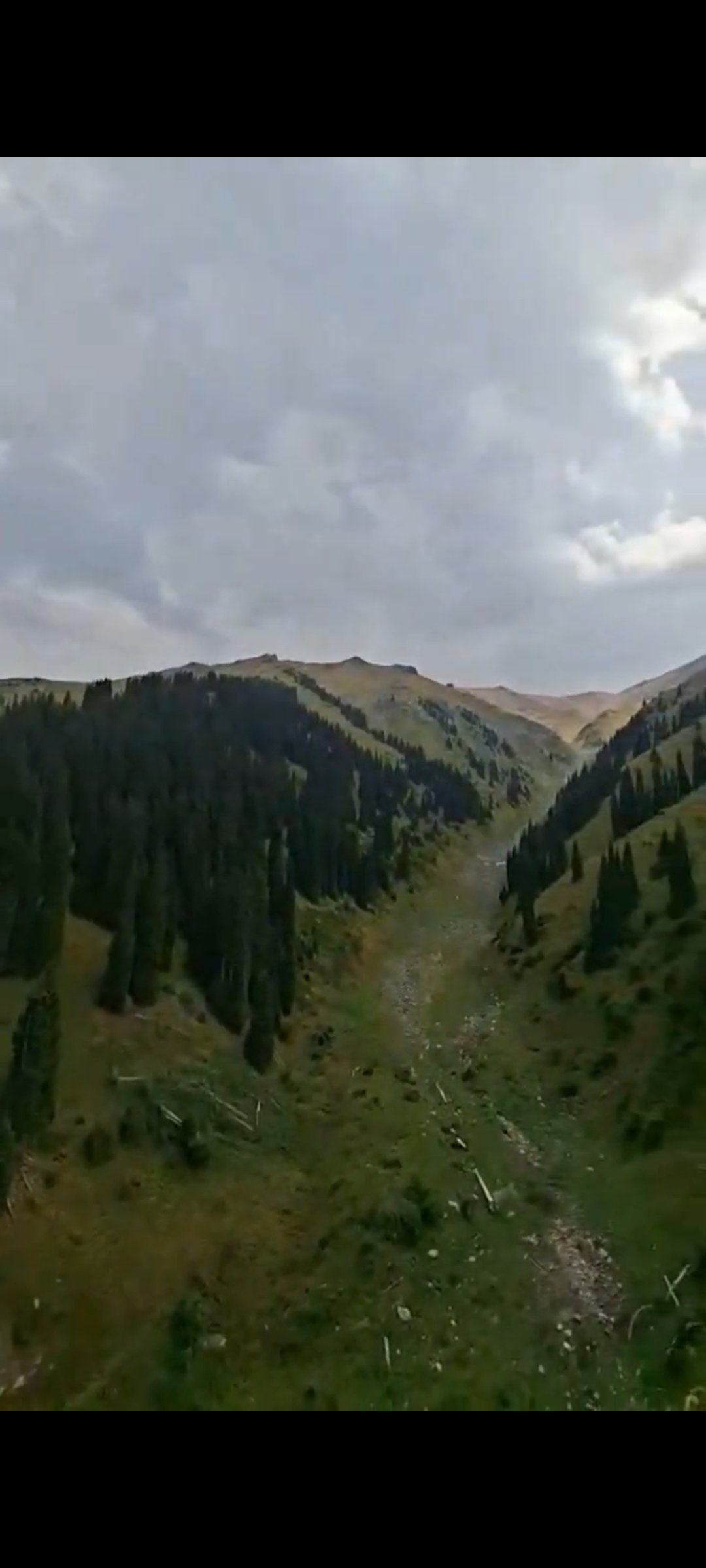

Overview
Is this hike right for you?
Perfect if you…
No experience needed
Description
A half-day guided hike from Almaty through Gorelnik Gorge to the Eagle’s Nest (Orlinnoe Gnezdo) viewpoint at 2,505 m — passing through spruce forest, visiting two waterfalls, and ending at a rocky panoramic overlook above one of the most scenic gorges in the Zailiyskiy Alatau.
What to expect on the Eagle’s Nest hike
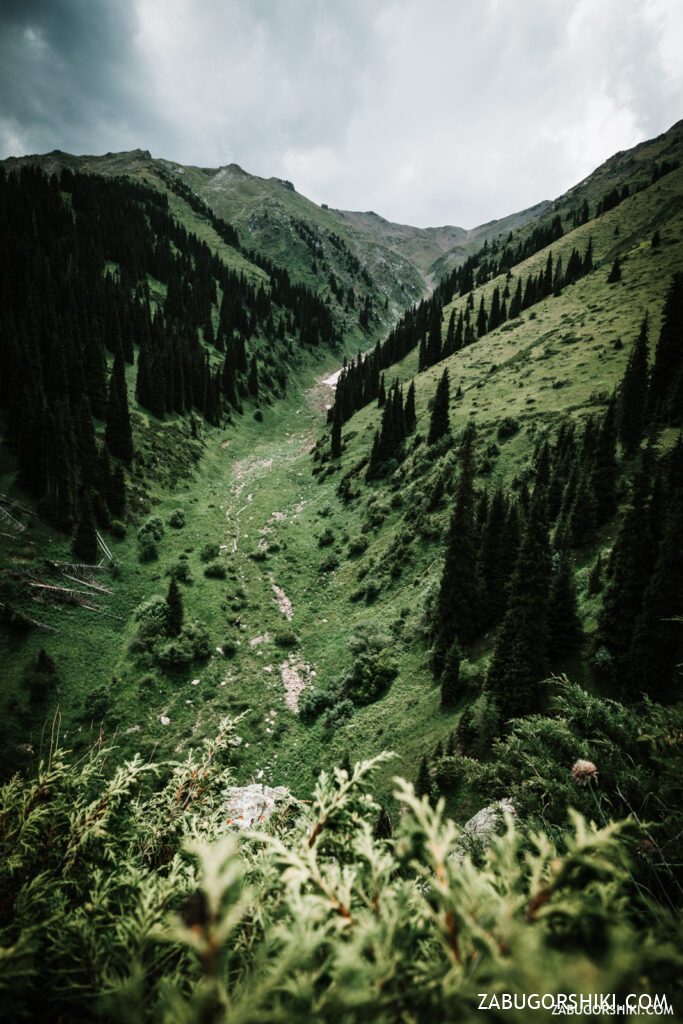
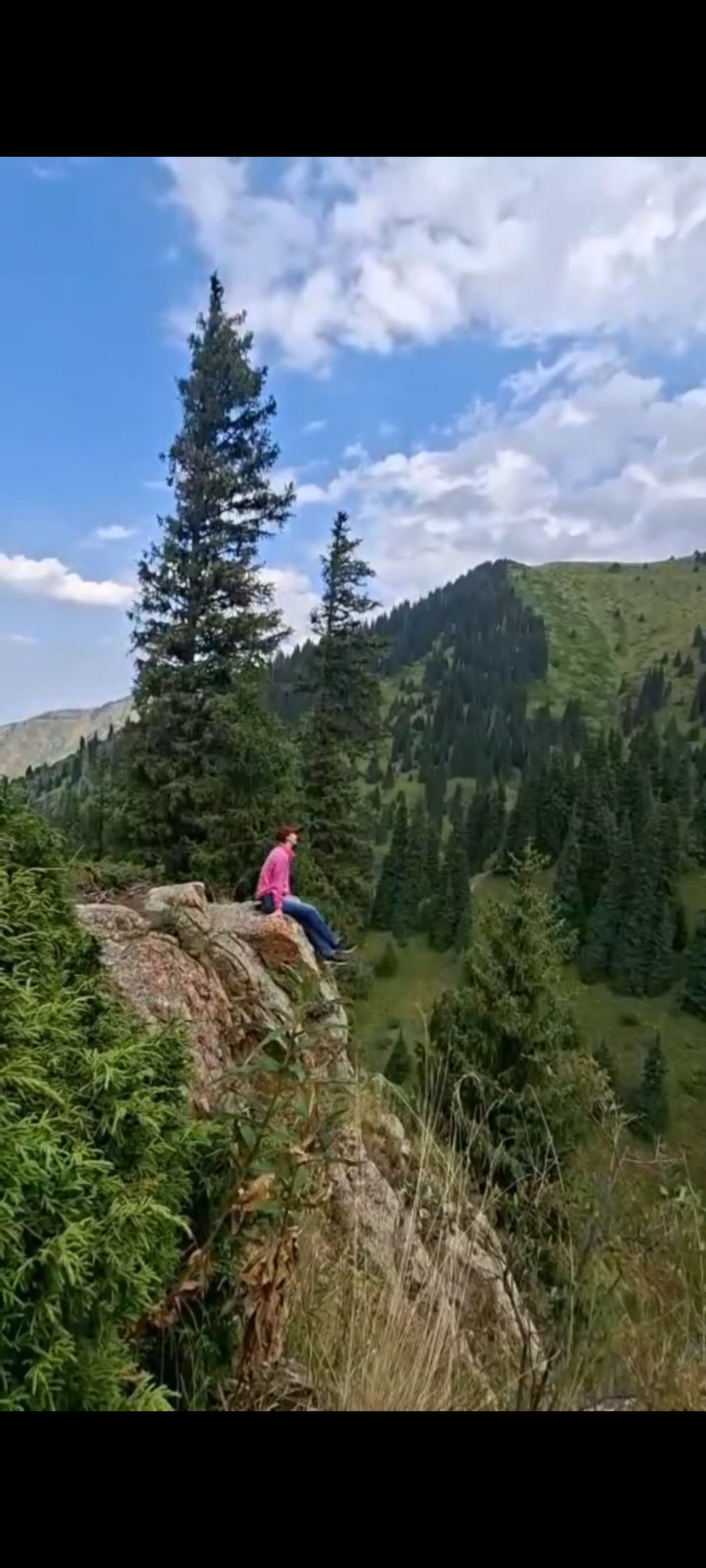
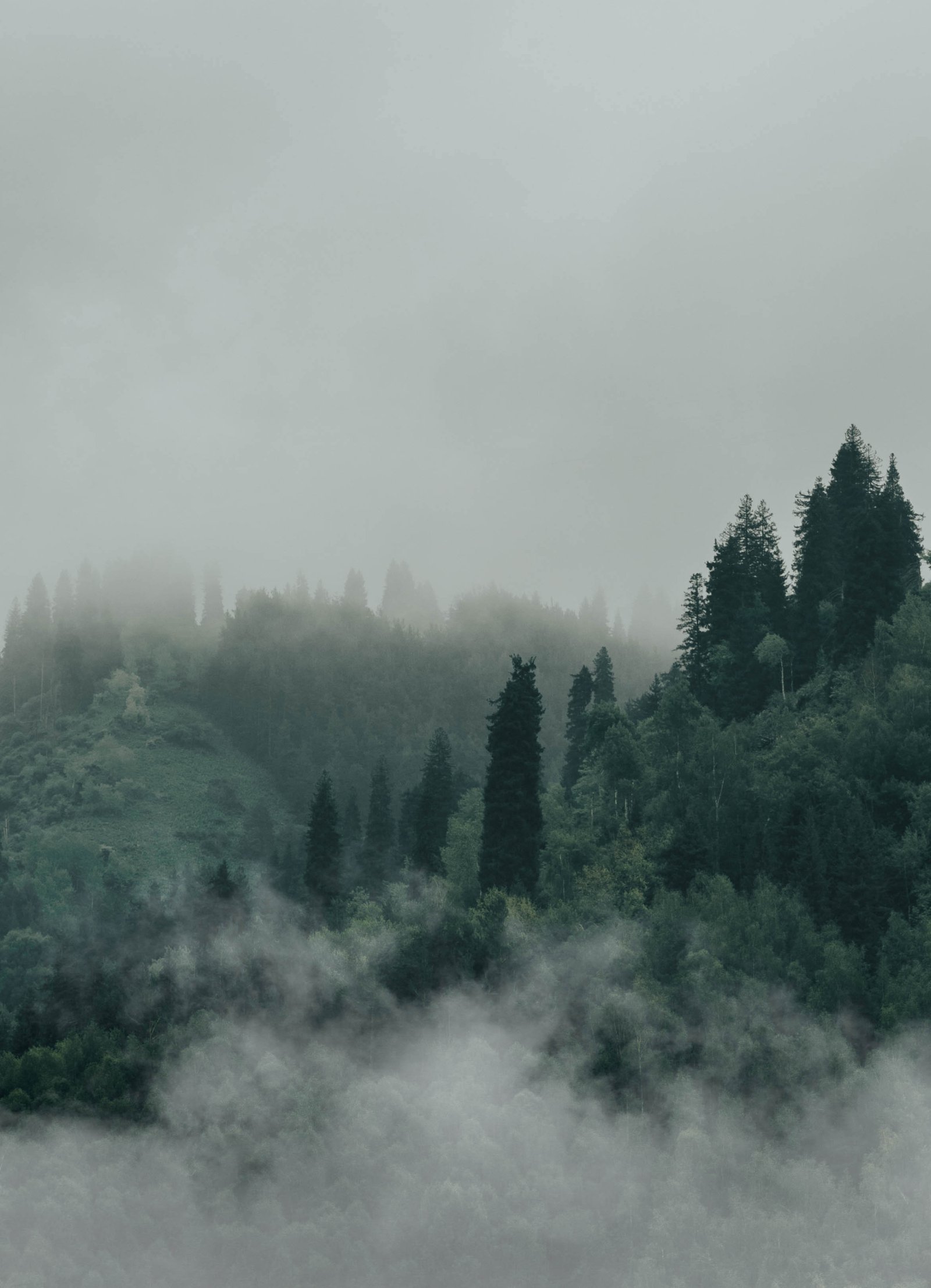
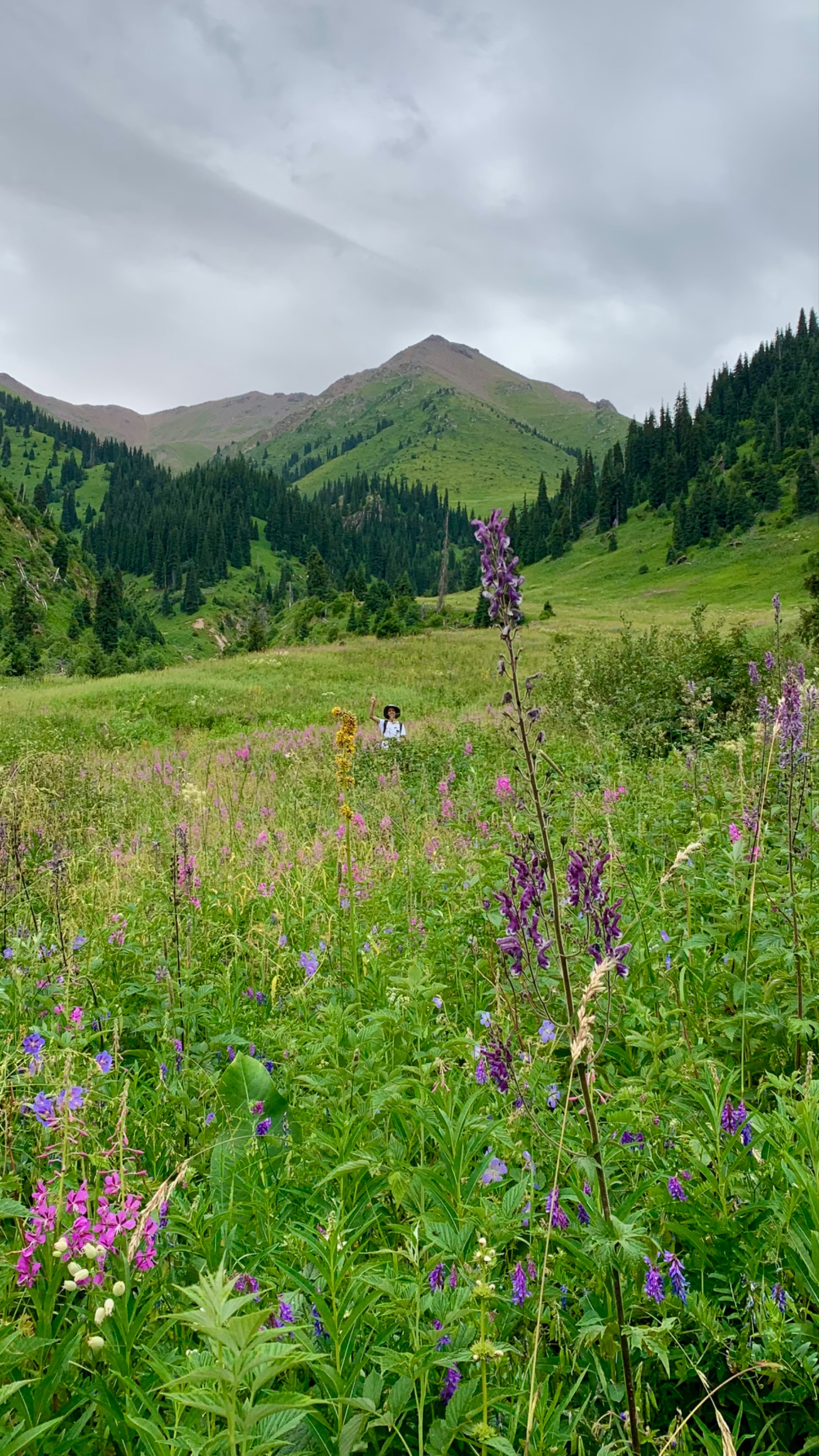
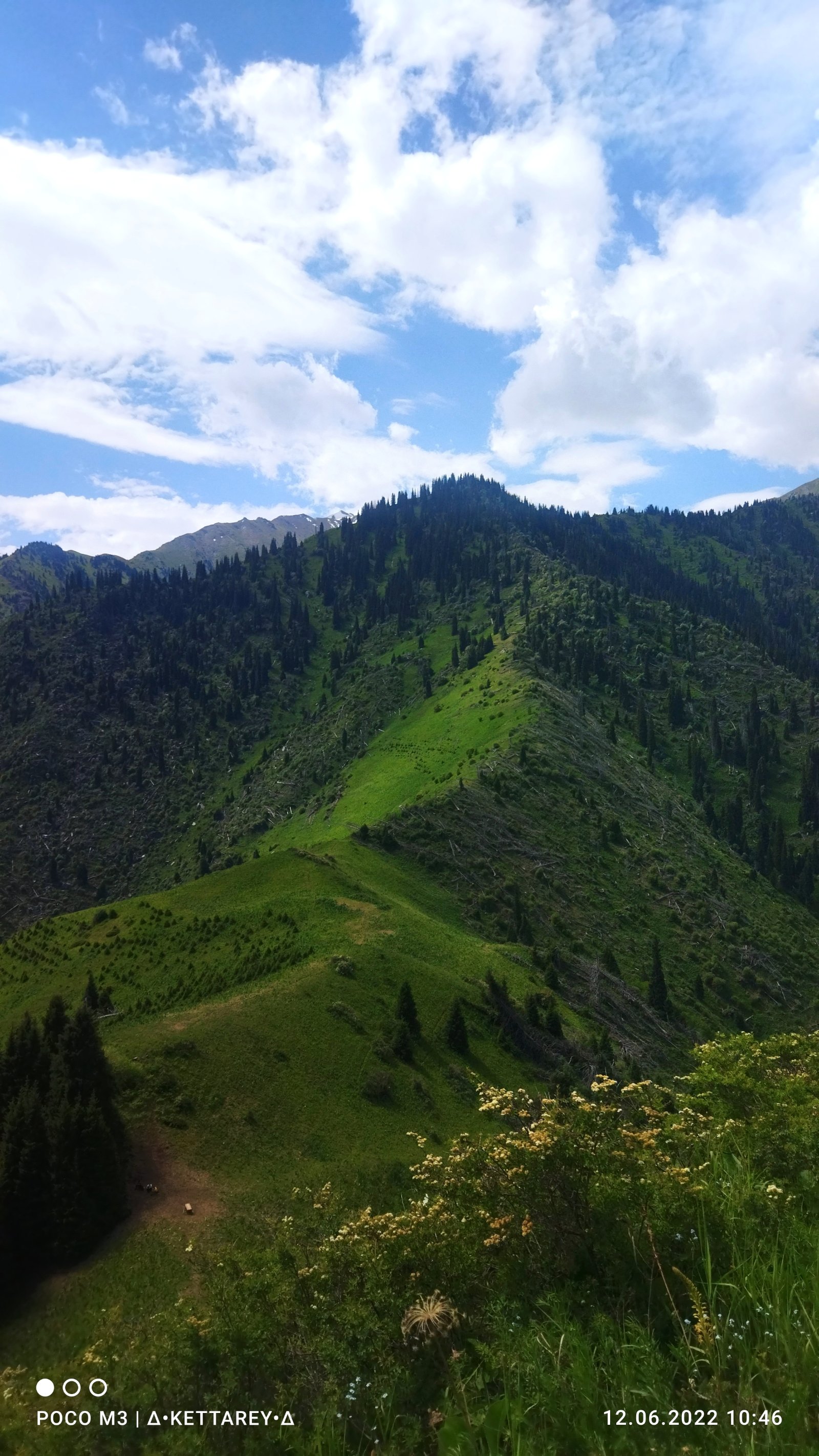
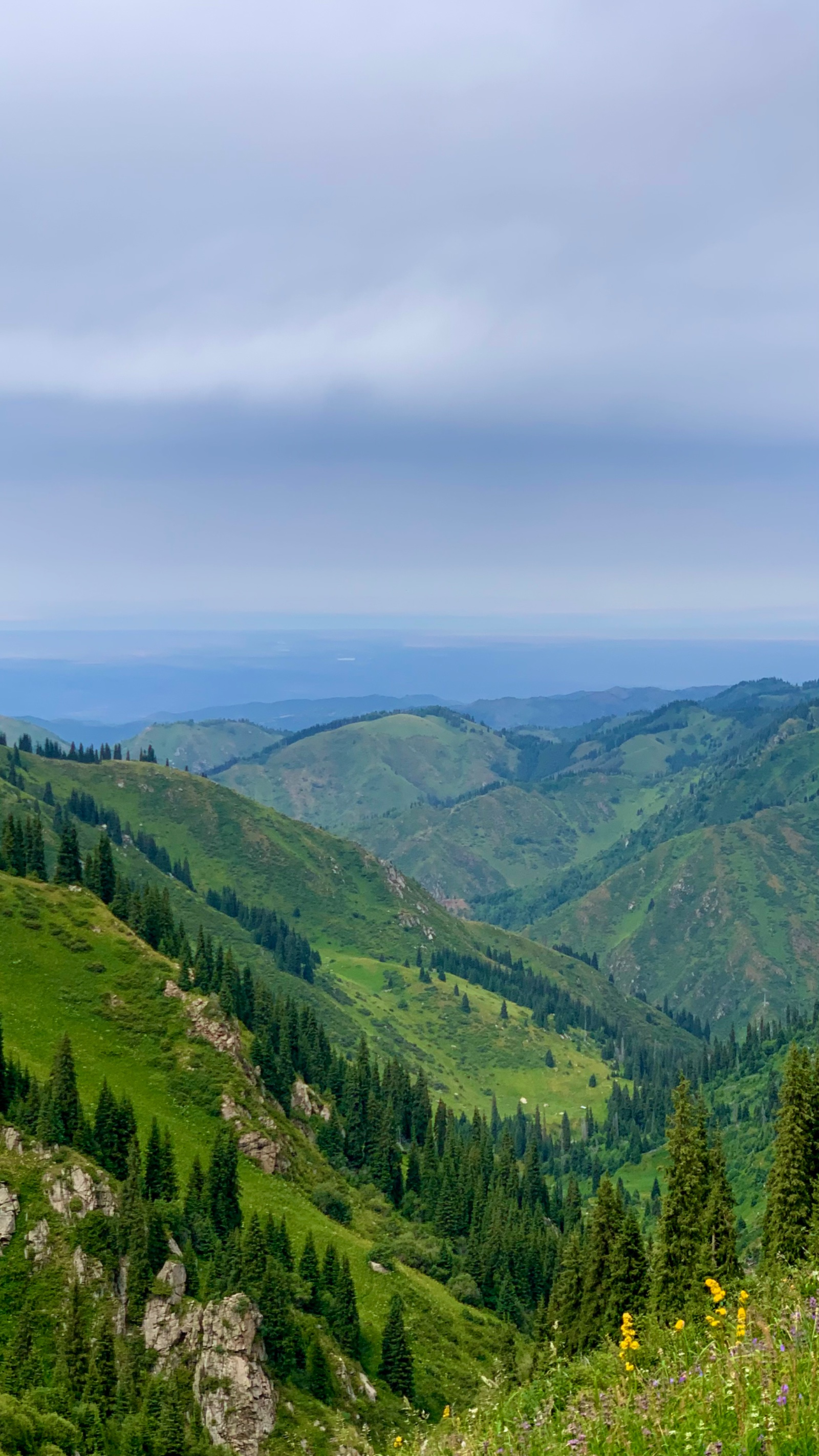
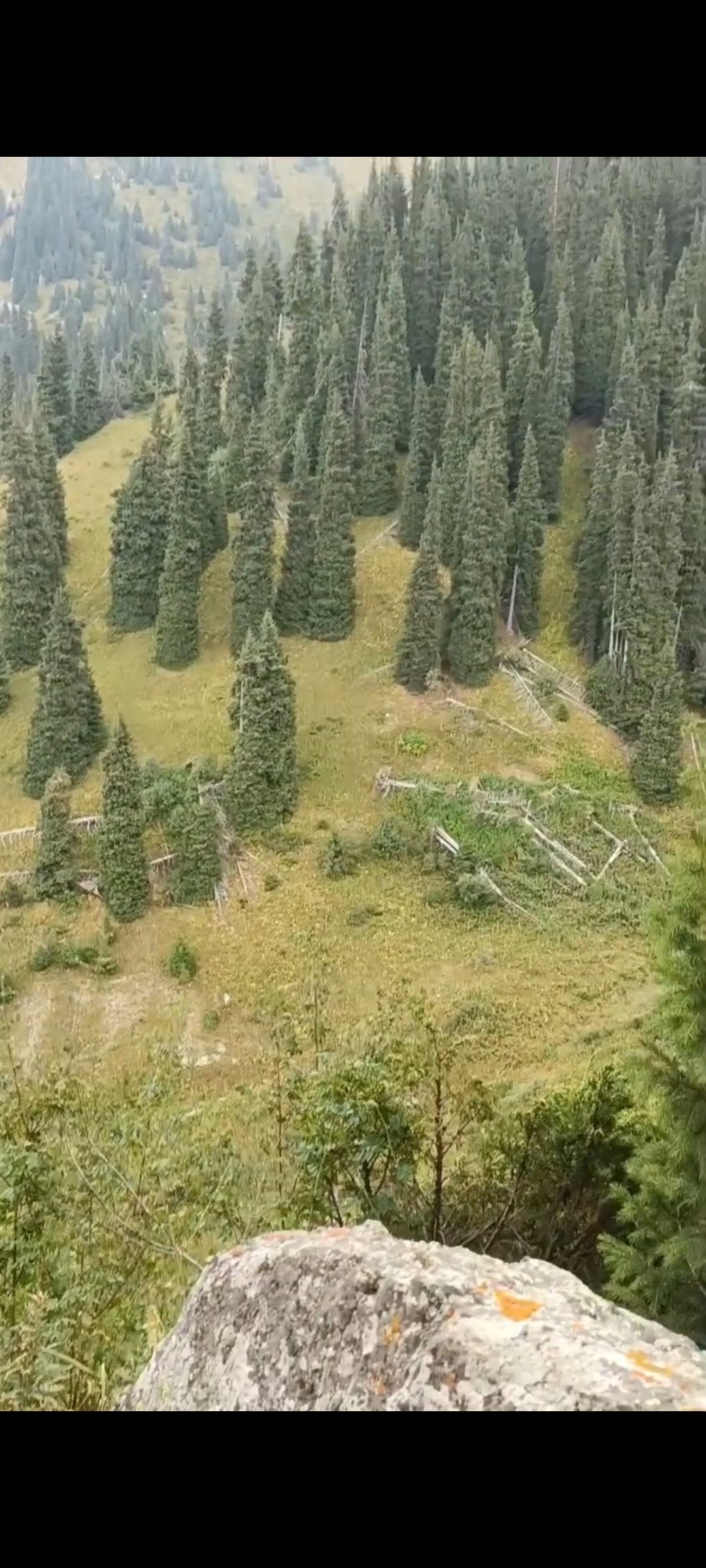
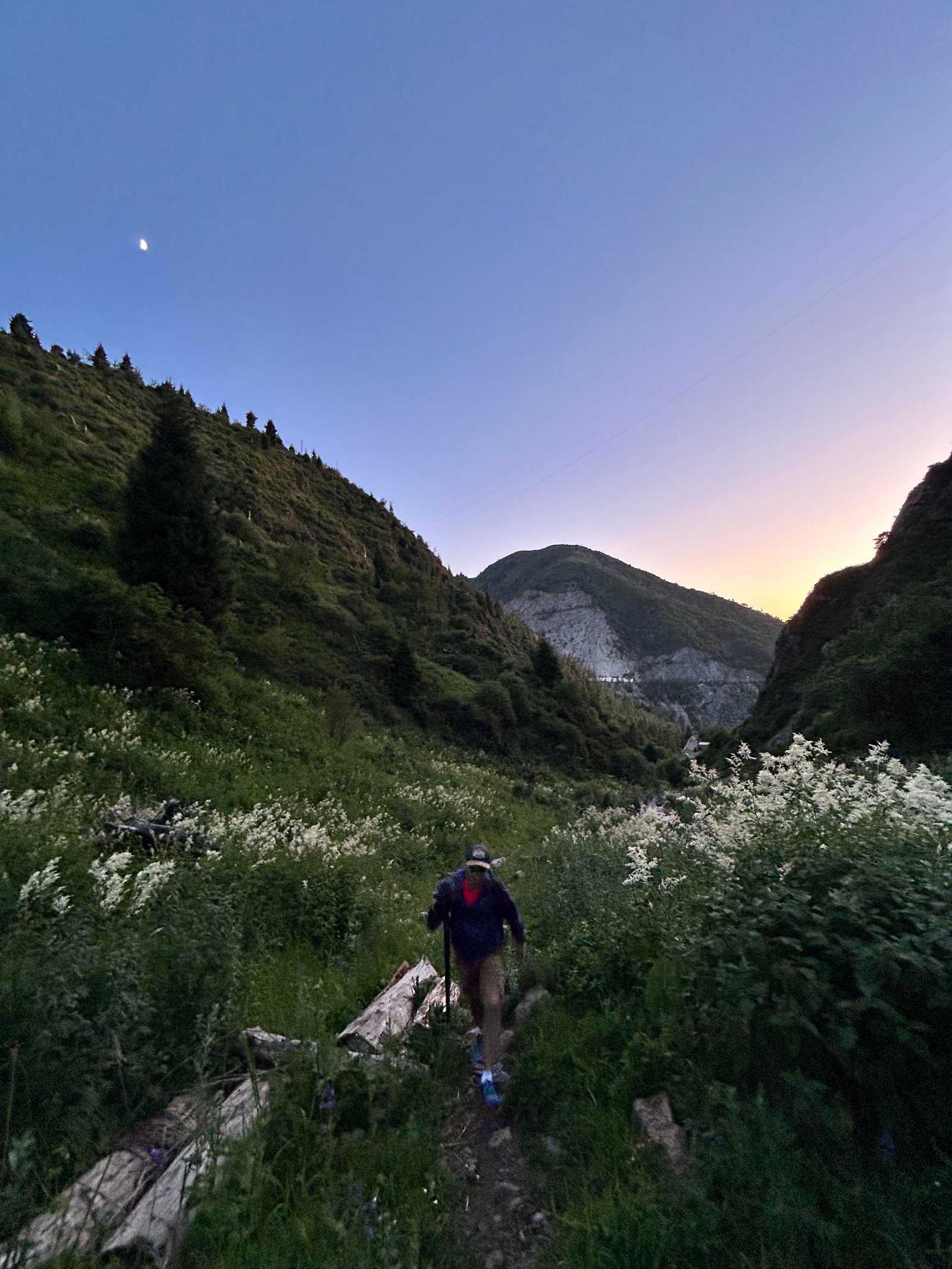
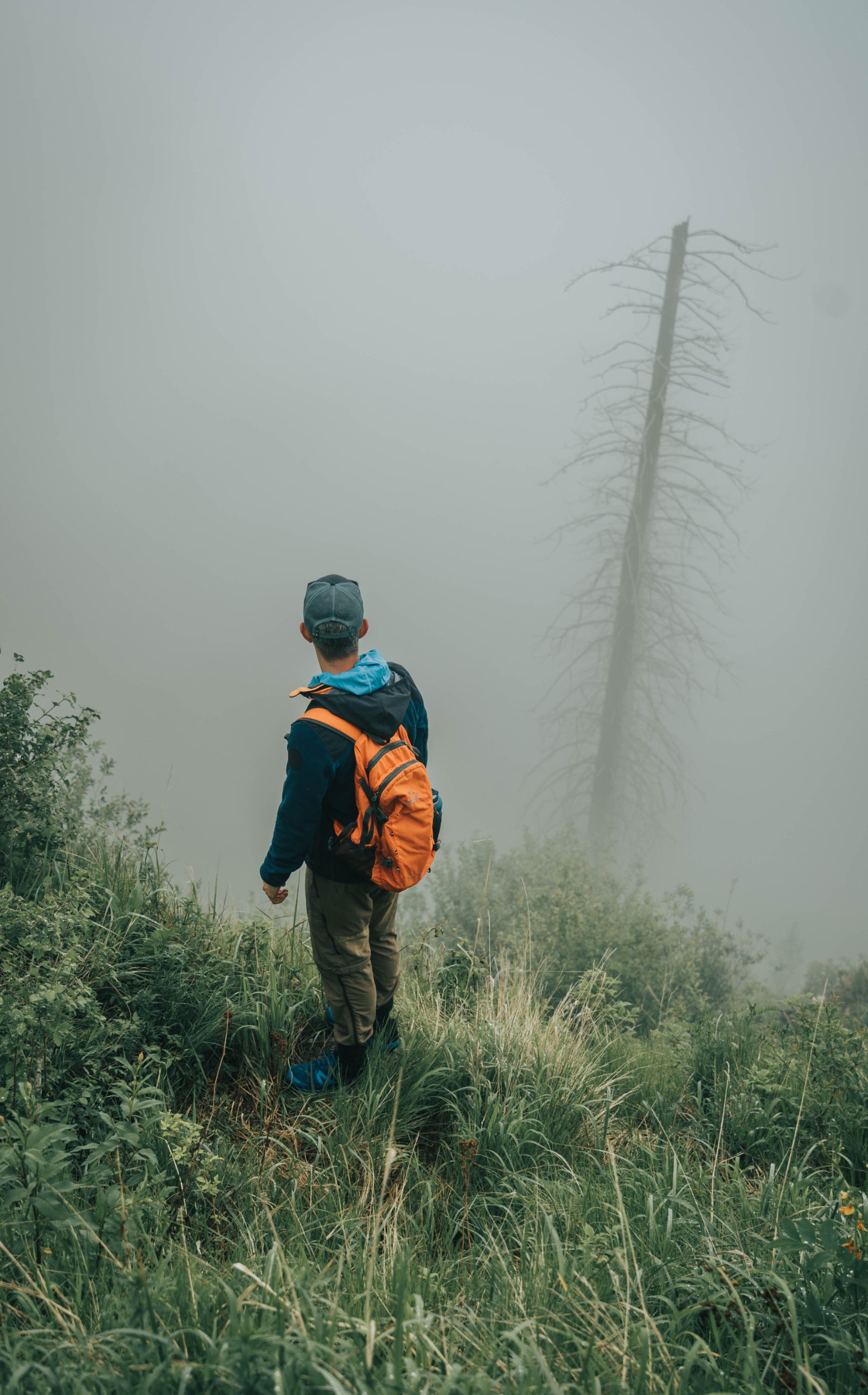
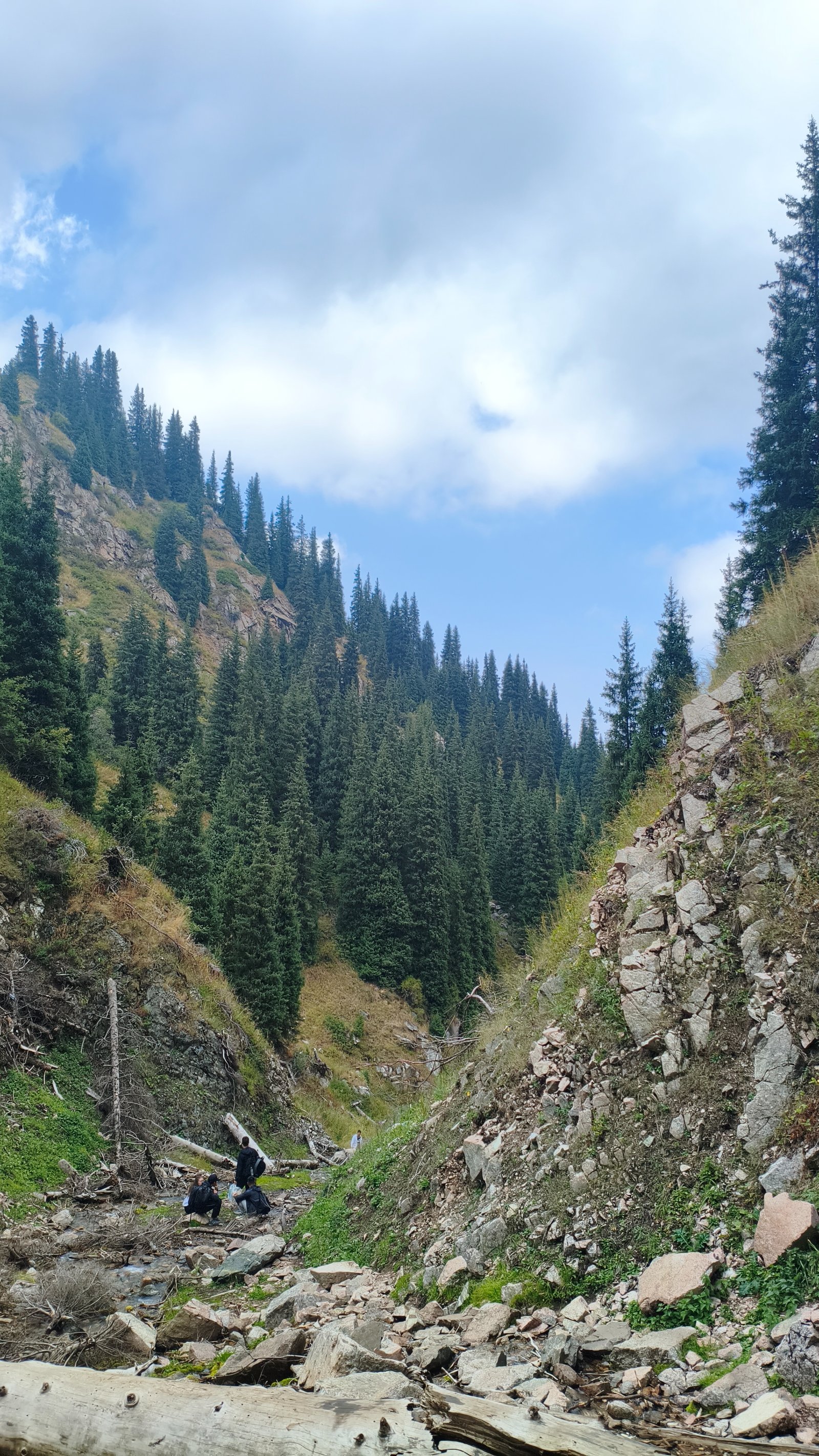
The Eagle’s Nest hike from Almaty is one of the best moderate mountain walks near the city — accessible enough for reasonably fit beginners, scenic enough to satisfy experienced hikers, and short enough to fit into a half-day. The trail starts near the famous Gorelnik hot springs, just off the Medeo-to-Shymbulak road, and follows the Gorelnik River through dense Schrenk spruce forest to two waterfalls: the Lower Gorelnik Waterfall (5 m) and the impressive Upper Gorelnik Waterfall, a three-tiered cascade standing roughly 20 meters high. Above the waterfalls, the trail climbs a short steep section to the Eagle’s Nest — a rocky clearing at approximately 2,505 meters above sea level with open views stretching down the entire gorge toward Almaty.
The name Gorelnik comes from the Russian for “burned area” — a forest fire swept through here in the 1930s. Before and after that fire, this gorge played an outsized role in Kazakh outdoor history: the country’s first tourist camp operated here from 1932 to 1973, training generations of mountaineers and, during World War II, preparing alpine troops for the Soviet army. Today the gorge has regrown into a lush valley of spruce, wildflowers, and crystal-clear streams, and the trail to the waterfalls and Eagle’s Nest is one of the most popular walks in the Almaty mountains.
Detailed Itinerary
Transfer to Medeo and Gorelnik Gorge entrance (30–40 minutes)
We pick you up from your accommodation in Almaty and drive to Medeo (1,691 m). From the skating rink, we take the eco-bus or walk along the road toward Shymbulak ski resort for about 1.5 km. At a sharp bend in the road, we leave the asphalt and head straight toward the Gorelnik Visitor Center. The trail entrance is just past the benches where the path veers right off the road — easy to miss if you don’t know it.
Before starting the hike, you can stop at the Gorelnik hot springs, located right at the gorge entrance at approximately 1,900 m. These are open wooden pools fed by radon-rich mineral water pumped from a 320-meter-deep well. The water stays at around 20°C year-round and is believed to have therapeutic properties for skin and joints. The springs are free and open to the public — many hikers save them for after the walk.
Through the spruce forest (30–45 minutes)
From the visitor center area, the trail enters a dense Schrenk spruce forest — the quintessential Tien Shan mountain forest. The path climbs in gentle switchbacks (serpentines) along the right bank of the Gorelnik River, then crosses glades with views opening up the valley, before crossing the stream from right to left. The air here is noticeably cleaner and cooler than in the city, even on hot summer days, and the sound of the river is constant.
This is the easiest and most pleasant section — the gradient is gentle, the trail is well-maintained, and the forest provides continuous shade. You’ll hear birds and, if you’re lucky, might spot a golden eagle circling above the gorge (they nest in the rocky walls, which is how the viewpoint got its name).
Lower and Upper Gorelnik Waterfalls (30–45 minutes)
After crossing the Gorelnik River and following the trail along a rocky streambed, you reach a fork. Going straight for about 100 meters brings you to the Lower Waterfall — a compact 5-meter cascade where the water tumbles over moss-covered rocks. It’s small but atmospheric, especially with morning light filtering through the trees.
Returning to the fork, you take the trail equipped with a metal handrail and climb about 100 meters to another junction with a signpost. Turning left leads to the Upper Waterfall — the main attraction. This three-tiered cascade drops roughly 20 meters through a rocky channel, fed not by the main Gorelnik River but by a left tributary that springs from the western slopes of the Kumbel ridge. The sound is powerful, the mist is constant, and in early summer when snowmelt is strong, the flow is impressive. In winter, the waterfall freezes into dramatic ice formations.
We stop here for photos and a rest. The area around the Upper Waterfall is a natural picnic spot with flat rocks for sitting.
Eagle’s Nest viewpoint (20–30 minutes from the waterfall)
From the Upper Waterfall, we return to the trail junction and take the path upward. This is the steepest section of the hike — a short but sustained climb of about 200 meters distance through thinning forest. The trail passes a fallen old spruce (a local landmark) and emerges onto the Eagle’s Nest clearing at approximately 2,505 meters above sea level.
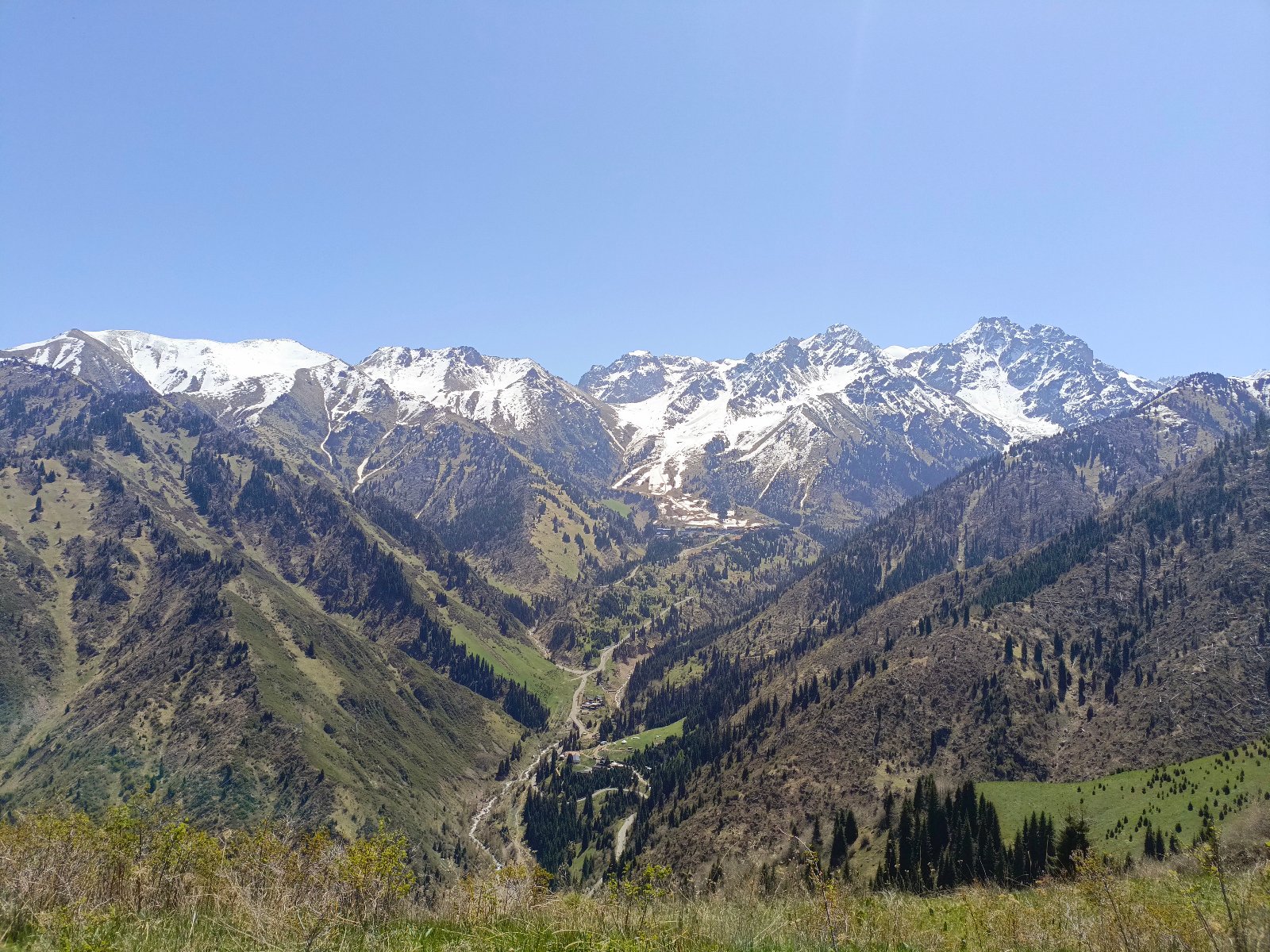
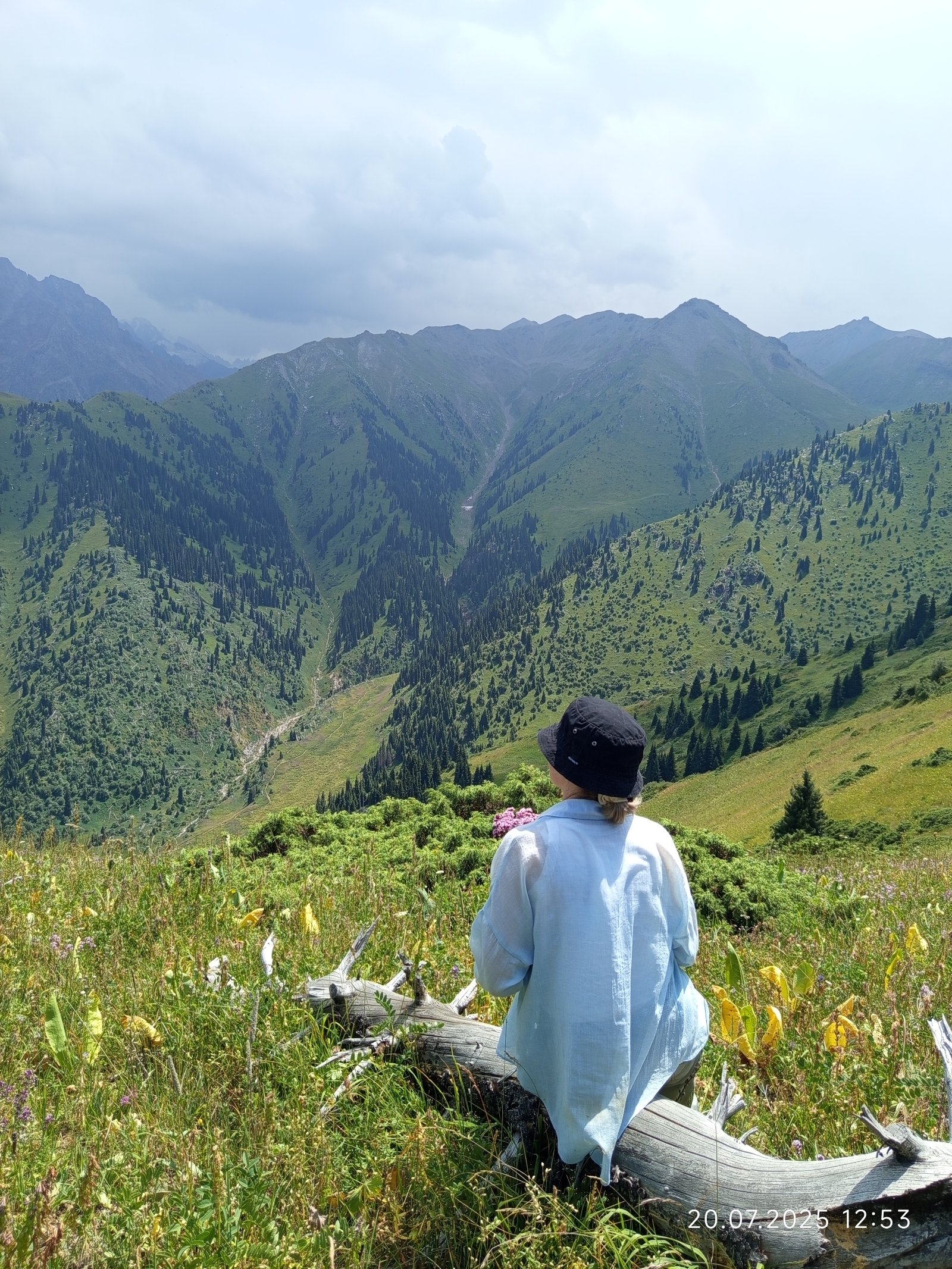
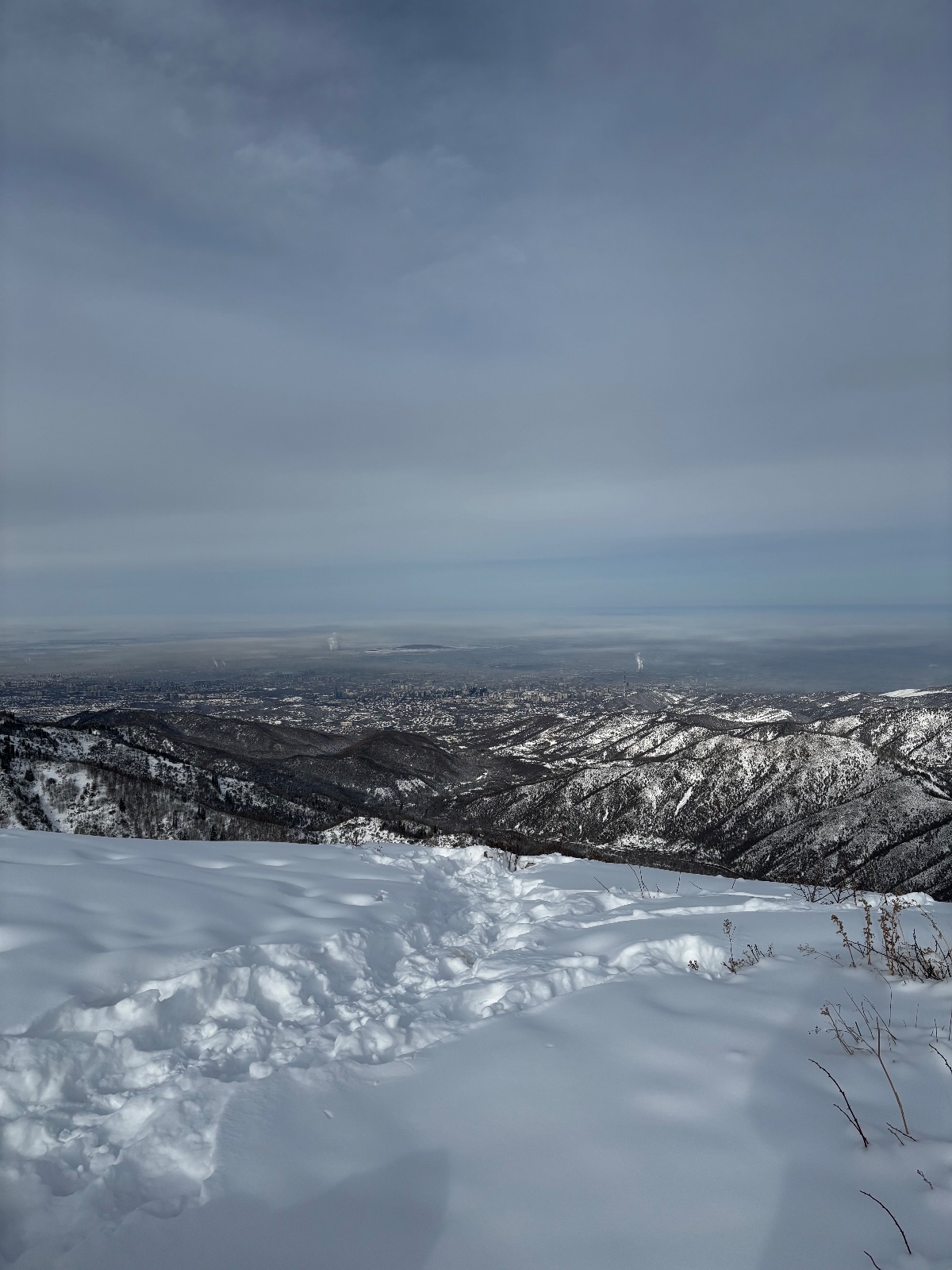
The view opens up suddenly. You’re standing on a rocky outcrop above the gorge with an unobstructed panorama: the entire Gorelnik valley stretches below you, the Gorelnik River visible as a silver thread through the dark spruce, Kumbel Peak (3,600 m) rises to the southwest, and the upper reaches of the gorge point toward the Titov Lakes and the high peaks beyond. On a clear day, you can see across to the Medeo dam and the ridgeline above Shymbulak. It’s a perfect spot for a picnic lunch and some contemplation.
For those with energy and experience, the trail continues beyond Eagle’s Nest deeper into the upper gorge toward the Titov Lakes (an additional 5+ hours round trip — a separate, much harder expedition). For this tour, Eagle’s Nest is our turnaround point.
Descent and optional hot springs (1–1.5 hours)
The return follows the same trail back through the forest to the gorge entrance. Descending takes roughly half the time of the ascent. At the bottom, if you’d like, we can stop at the Gorelnik hot springs for a soak — having warm mineral water waiting for you after a mountain hike is a luxury that most trails can’t offer.
Transfer back to Almaty (30 minutes)
Eco-bus or walk back to Medeo, then drive to Almaty.
When to go: best time for the Eagle’s Nest hike
This trail works in every season, and each has its character.
Spring (April–May): Snowmelt fills the waterfalls to their most powerful flow. The lower trail is clear, but snow may linger above the waterfalls and around Eagle’s Nest. Wildflowers start blooming in May.
Summer (June–September): The most popular season. The trail is dry and easy, wildflowers fill the glades, and the forest is lush. July and August are warmest but afternoon thunderstorms can develop. Start early.
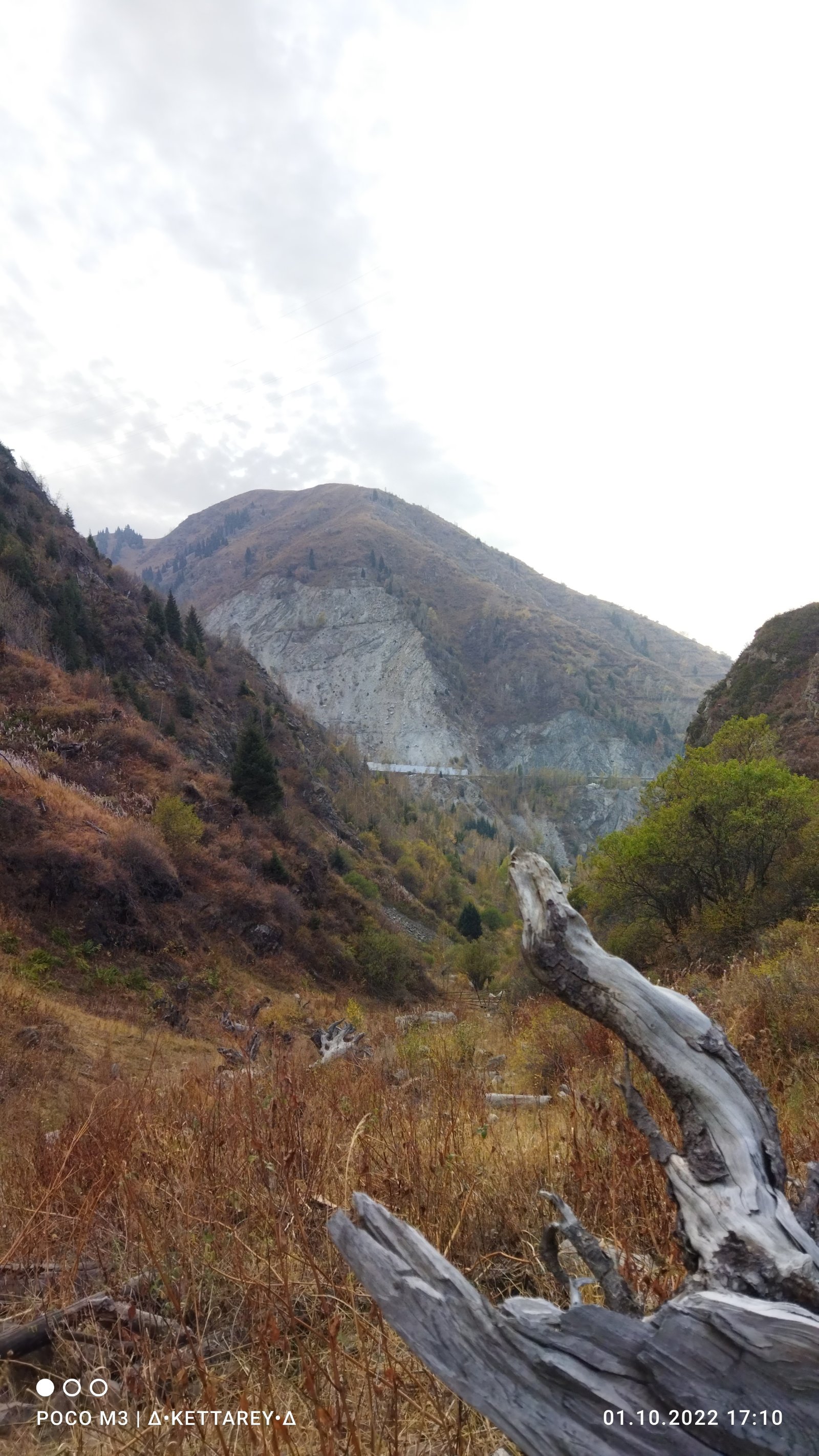
Autumn (September–October): The spruce stays green, but the occasional birch and shrub turn gold. Fewer hikers, crisper air, and the waterfalls are gentler.
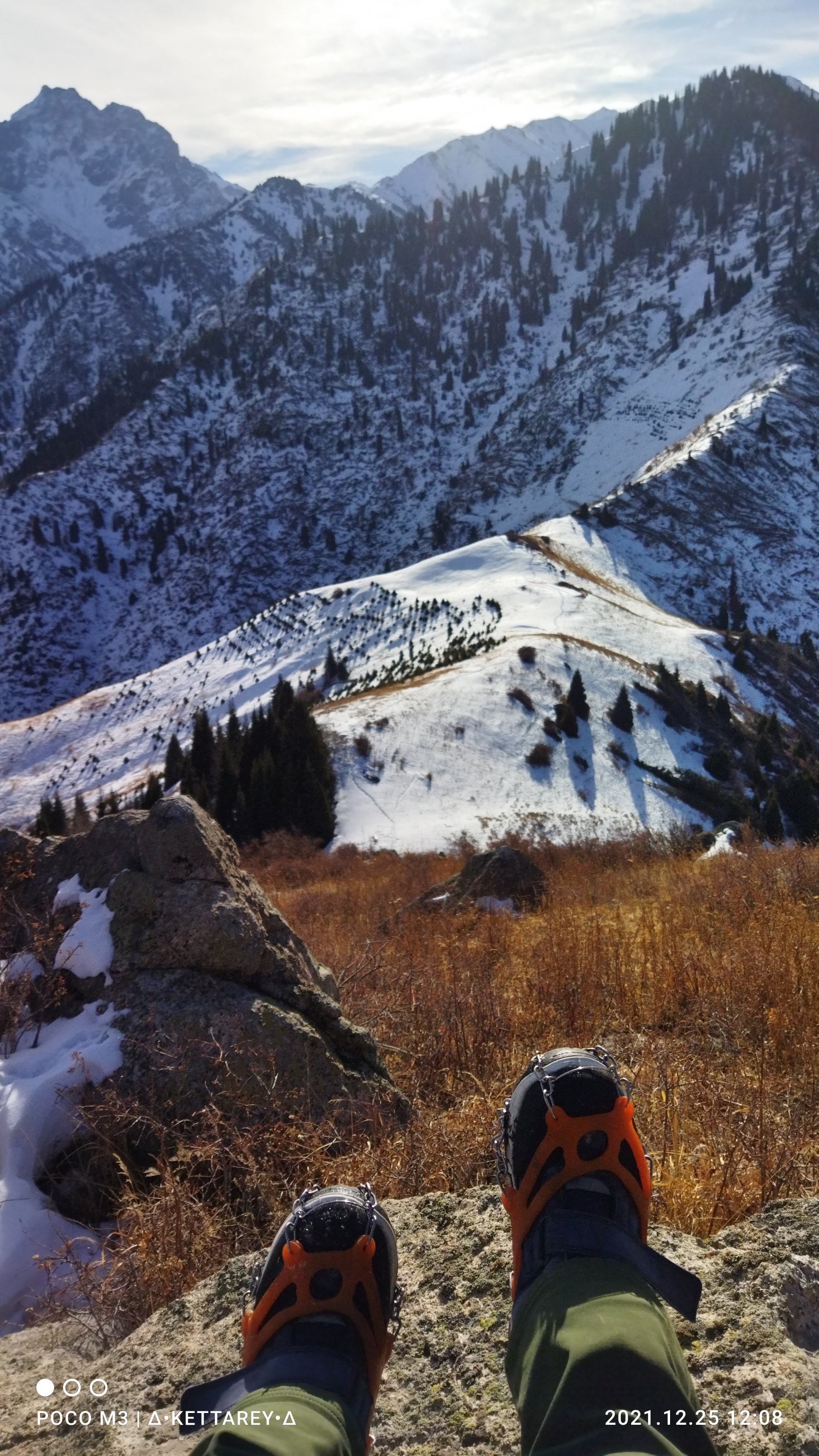
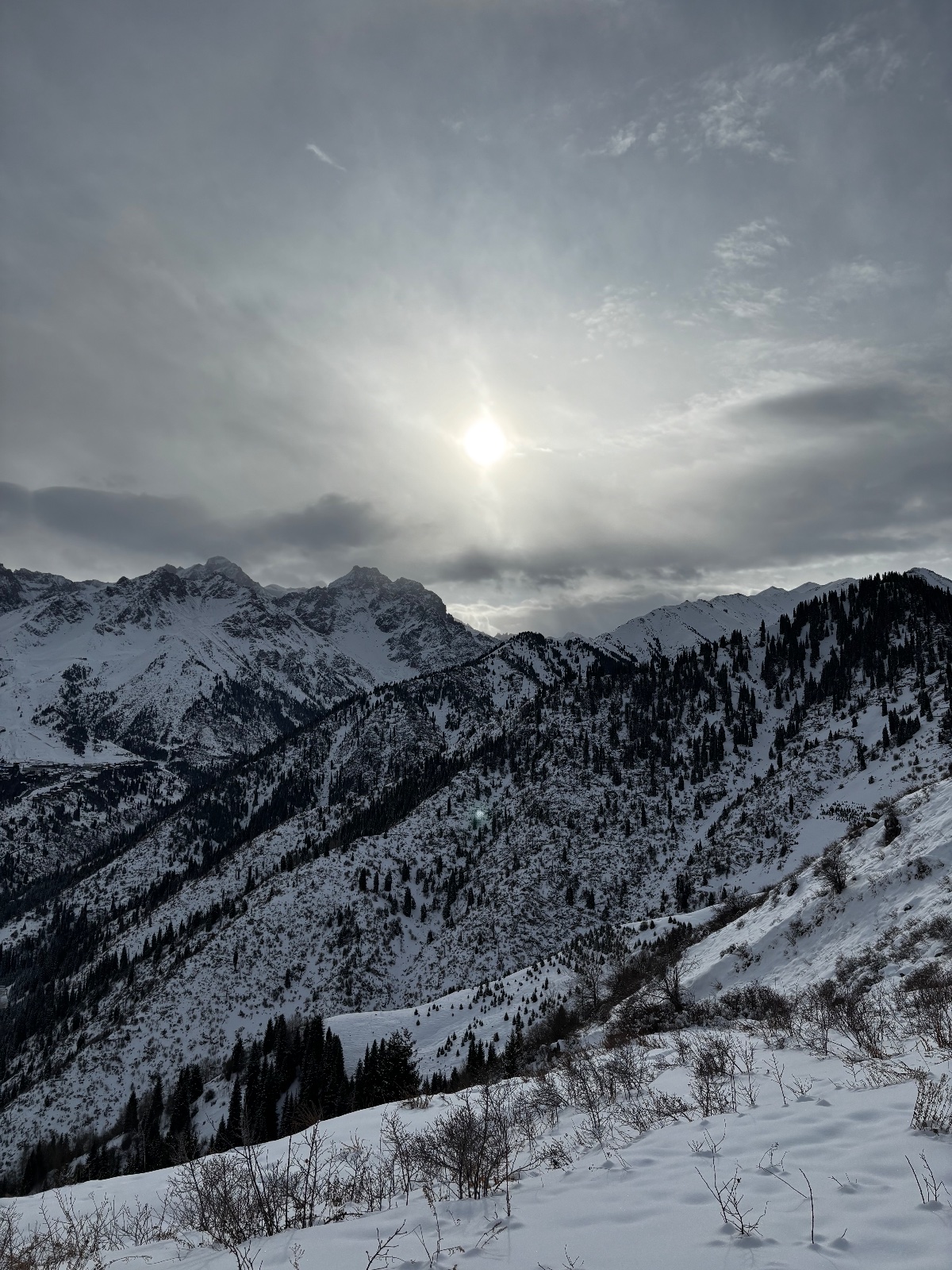
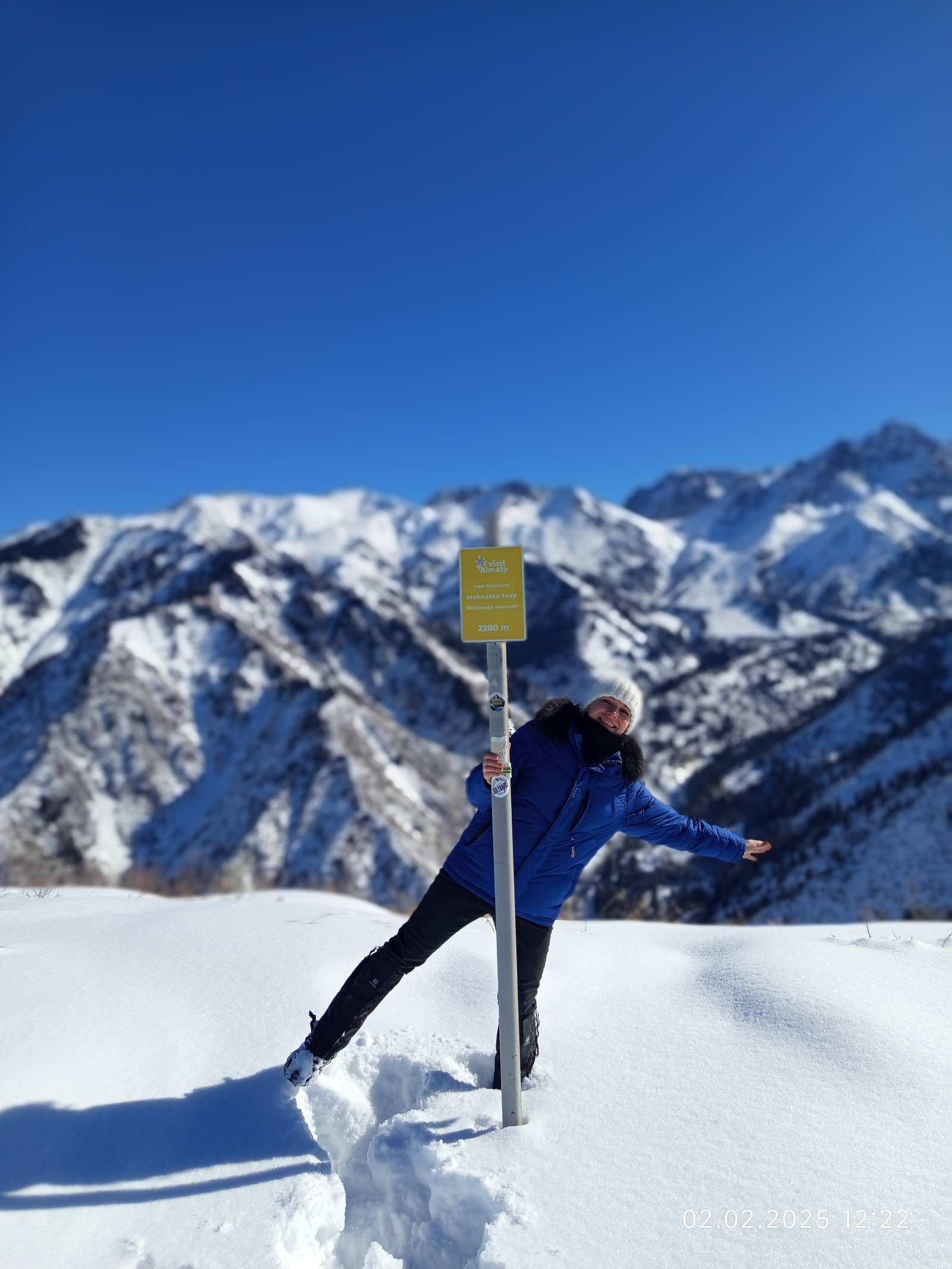
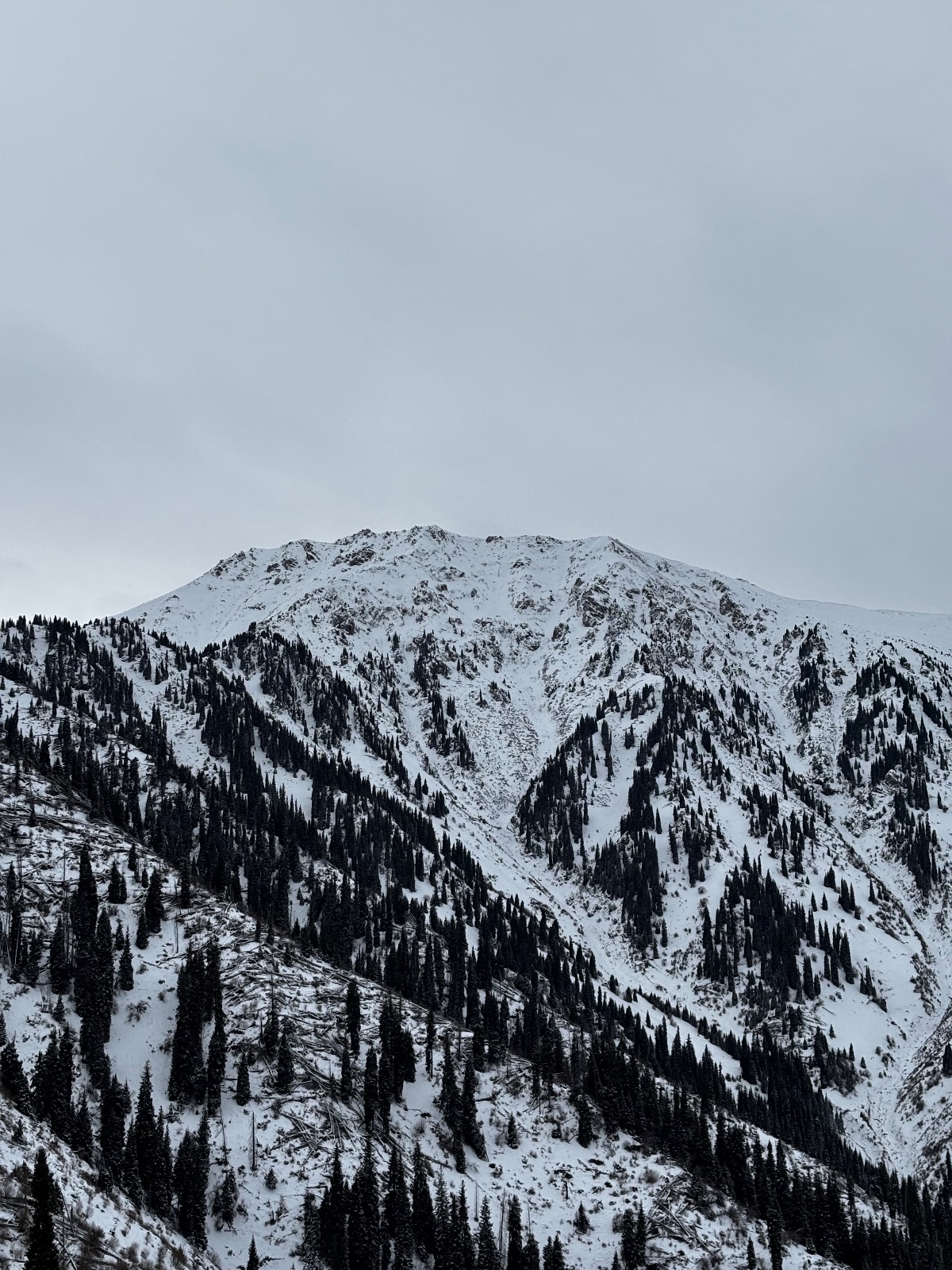
Winter (November–March): The waterfalls freeze into blue-white ice formations — a spectacular sight for photography. The trail is snow-covered and requires warm gear and good boots. Above the waterfalls, snow can be deep and conditions may prevent reaching Eagle’s Nest. The hot springs at the gorge entrance are especially welcome in cold weather.
A note on the gorge’s history
Gorelnik Gorge is woven into the history of outdoor recreation in Kazakhstan. The country’s first organized tourist camp was established here in 1932, and by the 1950s and 1960s, “Camp Gorelnik” was considered one of the best mountain camps in the entire Soviet Union. During World War II, the camp trained mountain troops for the Soviet Army. The camp closed in 1973, but the trail infrastructure it created — the paths, river crossings, and camping clearings — still forms the backbone of the routes used today. Walking to Eagle’s Nest, you’re literally following in the footsteps of three generations of Kazakh mountaineers.
Why book this guided Eagle’s Nest hike?
The trail is well-established, but the gorge entrance is confusingly located (it’s easy to walk past it on the Shymbulak road), the path splits at several unmarked junctions near the waterfalls, and trail signs have been known to get turned the wrong direction by “helpful” passersby. A guide ensures you don’t waste time on wrong turns, shares the natural and cultural history of the gorge, and handles the logistics of transport between Almaty, Medeo, and the trailhead. This hike is also an excellent warm-up and acclimatization day before harder routes like Titov Lakes, Peak of Memory, or Kumbel Peak.
FAQ: Eagle’s Nest Hike
How hard is this hike? Rated 2 out of 5 — moderate. The trail to the waterfalls is gentle and well-maintained, suitable for most fitness levels. The final section up to Eagle’s Nest is steeper and adds a meaningful climb, but it’s short. Total elevation gain from the gorge entrance is about 600 meters.
Is this hike suitable for children? Yes, for children who can manage 3–4 hours of walking. The waterfalls are a great motivating destination. The section to Eagle’s Nest is steeper and longer — younger children might be happiest turning around at the Upper Waterfall.
Can I visit the hot springs? Absolutely. The Gorelnik hot springs at the gorge entrance are free, open year-round, and fed by mineral water at around 20°C. Bring a swimsuit and towel if you’d like to soak before or after the hike.
What’s the connection between Eagle’s Nest and Titov Lakes? Eagle’s Nest sits along the main trail through Gorelnik Gorge. Beyond it, the trail continues another 5+ km and 900 m of elevation gain to the Titov moraine lakes at 3,370 m. The Eagle’s Nest hike covers the first, easier portion of this longer route. If you’re interested in Titov Lakes, see our dedicated tour.
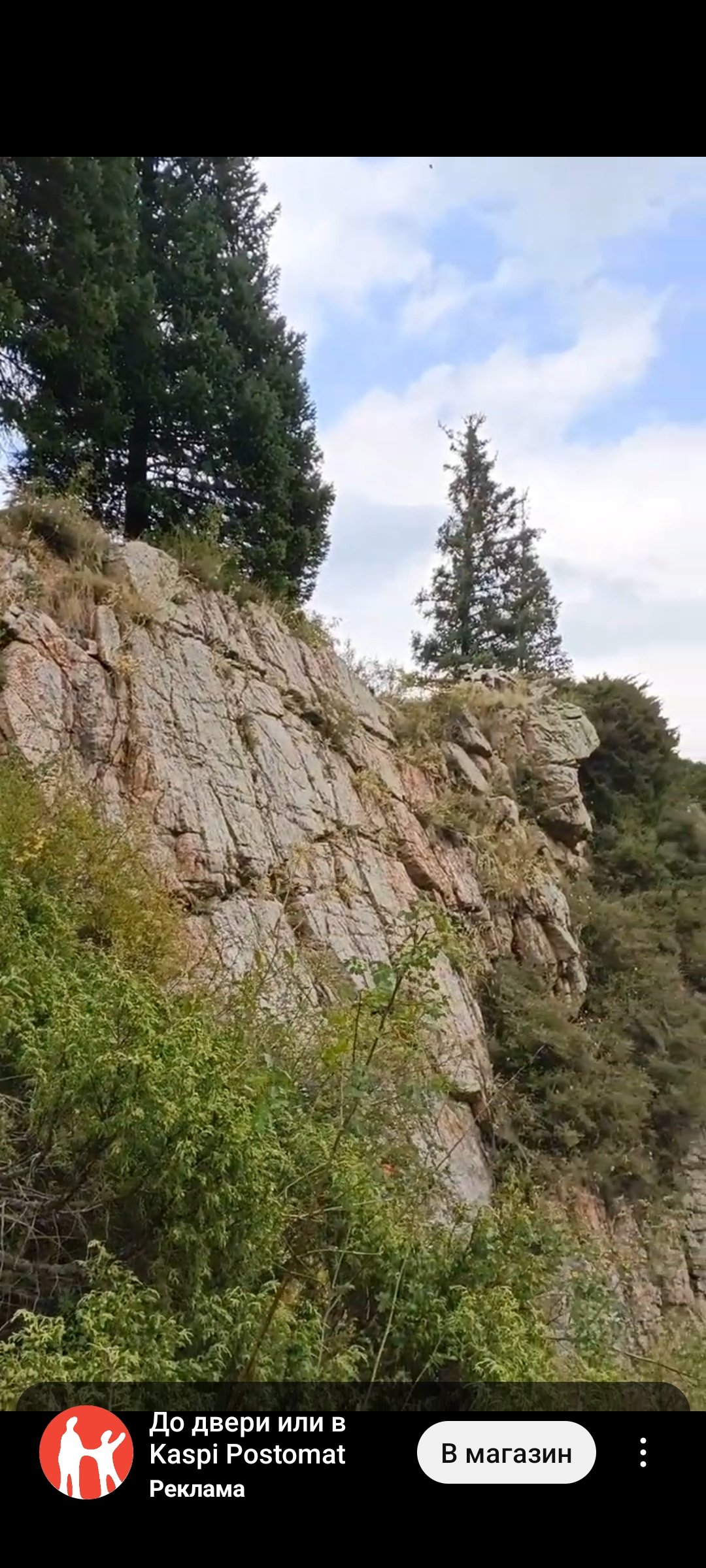
Why is it called Eagle’s Nest? Golden eagles (Aquila chrysaetos) nest in the rocky cliffs of the gorge. The viewpoint is a rocky outcrop where these nesting sites can sometimes be observed from a distance.
Can I do this hike independently? The trail is possible to do independently, but the gorge entrance is easily missed from the Shymbulak road, and junctions near the waterfalls are not always clearly signed. There’s no cell phone reception in most of the gorge. We recommend a guide for first-time visitors, especially in winter when trail conditions change.
Is this a good acclimatization hike? Yes. The moderate altitude (2,000–2,500 m) and reasonable difficulty make this an excellent day-one hike for visitors who plan to attempt higher routes like Titov Lakes, Peak of Memory, or Bogdanovich Glacier during their stay.
How does this compare to Kok-Zhailau? Similar difficulty and duration, different landscape. Kok-Zhailau is an open alpine plateau with broad views; Eagle’s Nest is a forested gorge with waterfalls and a viewpoint. Both are excellent half-day options. Some visitors do one on each of consecutive days.
What is the gorge’s name about? “Gorelnik” comes from Russian and means “burned area.” A forest fire swept through the gorge in the 1930s. The forest has since regrown completely.
Itinerary
Detailed itinerary will be provided upon booking. Our typical tour includes daily hikes through diverse terrains and cultural experiences.
Pricing
| Group Size | 1 person | 2 people | 3 people | 4 people | 5 people | 6 people Best value |
|---|---|---|---|---|---|---|
| Standard | $172 $172 total | $115 $230 total | $96 $288 total | $86 $344 total | $80 $400 total | $77 $462 total |
100% private tour — prices are per person based on group size. The more friends you bring, the less everyone pays!
What's Included
Included
Not Included
Our Guarantee
If weather forces a cancellation, we reschedule at no cost. If you're not satisfied with your experience, we'll work with you to make it right. No questions, no hassle.
Private tours only (max 6) · Free cancellation up to 48 hours before · No upfront payment
Traveler Stories
Sarah K.
Our guide was incredible - he adjusted the pace perfectly for our group and knew exactly where to stop for the best photos. The whole experience felt effortless, like everything was taken care of before we even thought to ask.
Marco T.
We were a group of 4 friends and the per-person price made it a no-brainer. Private 4x4, lunch included, and the canyon was breathtaking. Way better than the big bus tours we saw there.
Anna W.
Solo traveler here. I was nervous about hiking alone in a foreign country but the guide made me feel completely safe. The trail to Kok-Zhailau was beautiful and the photos he took of me were amazing. Only wish the hike was longer!
David R.
Third time booking with these guys. Butakovka, Big Almaty Lake, and now Titov Peak. Every single time the service is flawless. The fact that it's always private and max 6 people makes such a difference compared to other operators.
Share Your Experience
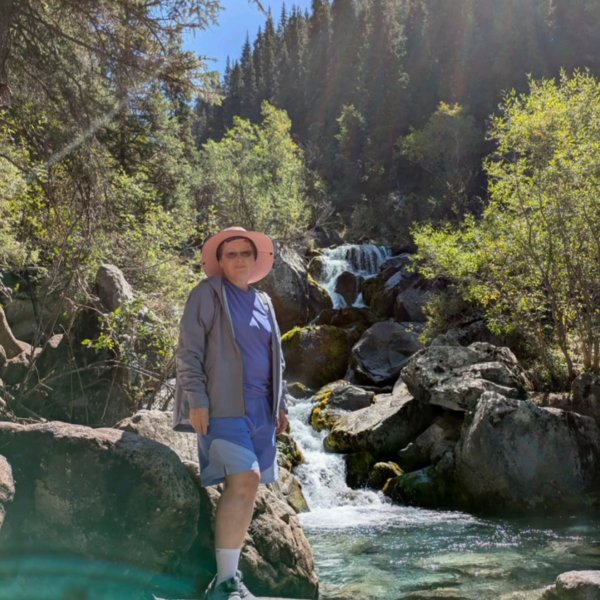



6+ hikers
completed this trail
Tour At A Glance
Book This Tour
Weekend slots fill up fast — book early to get your preferred date
Pay securely after confirmation




Weather Forecast
overcast clouds
H: 2°C
L: 2°C
Tue, Mar 31
overcast clouds
8°C
1° / 15°
Wed, Apr 1
overcast clouds
8°C
6° / 11°
Thu, Apr 2
few clouds
10°C
6° / 14°
Tour Location
Similar trails
Day Hiking Tour to Butakovka Waterfalls from Almaty
From $72/person
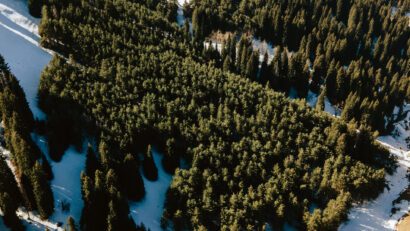
From Medeo to Almatau
From $65/person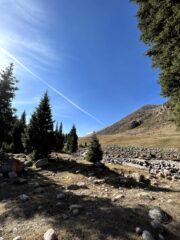
Day Hiking Tour to Kaskelen Gorge from Almaty
From $73/personFrom $77
per person · free cancellation
Complete Your Booking
Tour:
Date:
Participants:
Price:
You're Almost There!
We'll contact you within 24 hours to confirm your spot and share everything you need to prepare for your adventure.
165
Videos on the channel

13,000+

16,000+

59
Hikes Filmed

704,000 m
Total Distance

44,439 m
Total Elevation Gain

812 cups
Grand Cru Tea Cups

27
Countries Visited

83 hours
Drone Flight Hours

10 videos
Sports: Running, Snowboard

3 videos
Healthy Eating

1
Living on the Edge