
Day Hiking Tour to Kaskelen Gorge from Almaty
From $73 per person
Overview
Is this hike right for you?
Perfect if you…
No experience needed
Description
A guided day hike through Kaskelen Gorge — the quietest and least crowded mountain valley near Almaty — following the Kaskelen River through spruce forests and alpine meadows to the famous 500-ton Uy-Tas glacial boulder and beyond.
What to expect on the Kaskelen Gorge hike
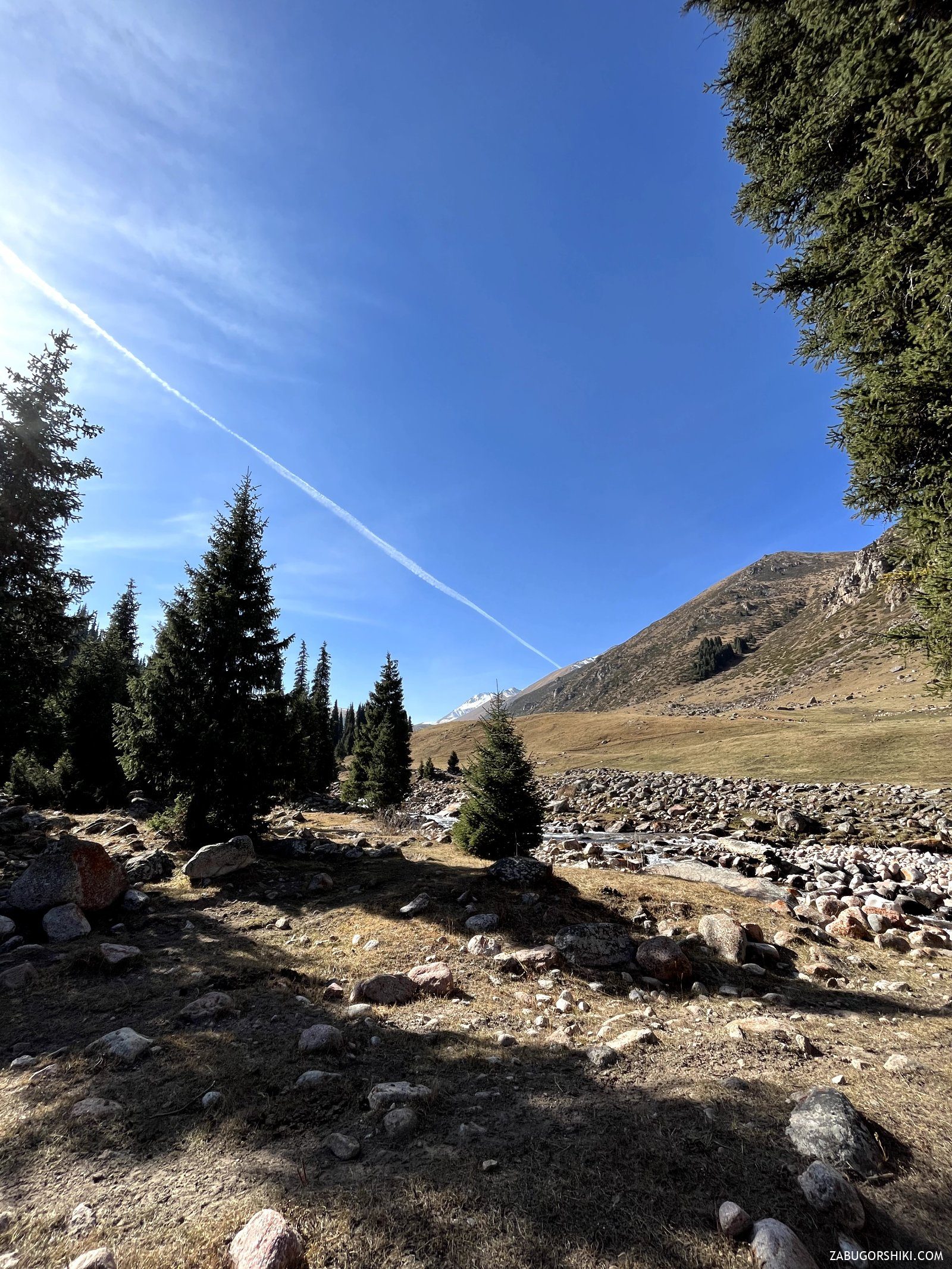
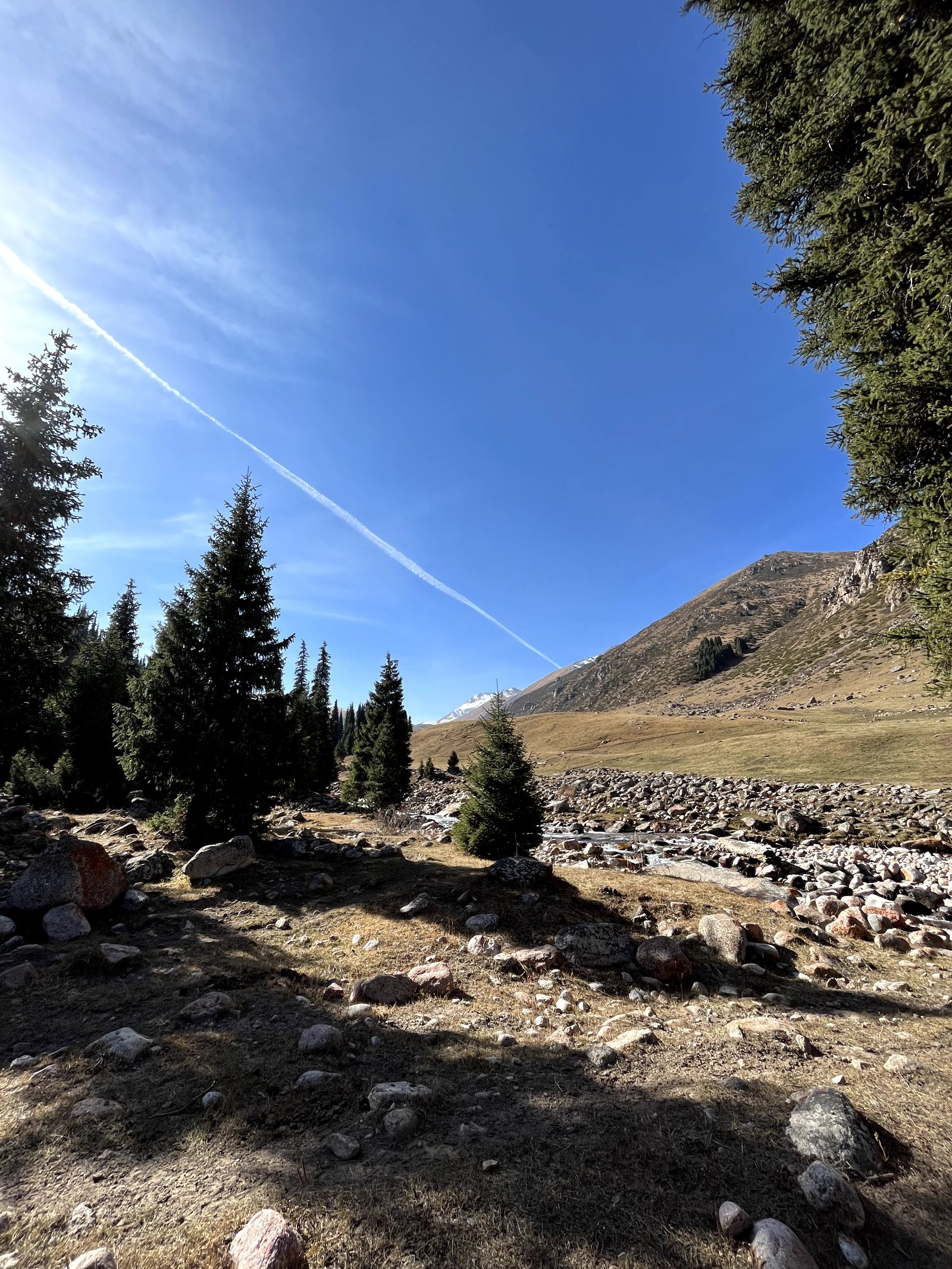
The Kaskelen Gorge hike from Almaty takes you to the western end of the Zailiyskiy Alatau — past the city’s well-known gorges, past the weekend crowds, and into a valley that most tourists never hear about. While Big Almaty Gorge, Butakovka, and Kok-Zhailau draw hundreds of hikers every summer weekend, Kaskelen remains genuinely quiet. That’s its appeal: real mountain landscape without the traffic.
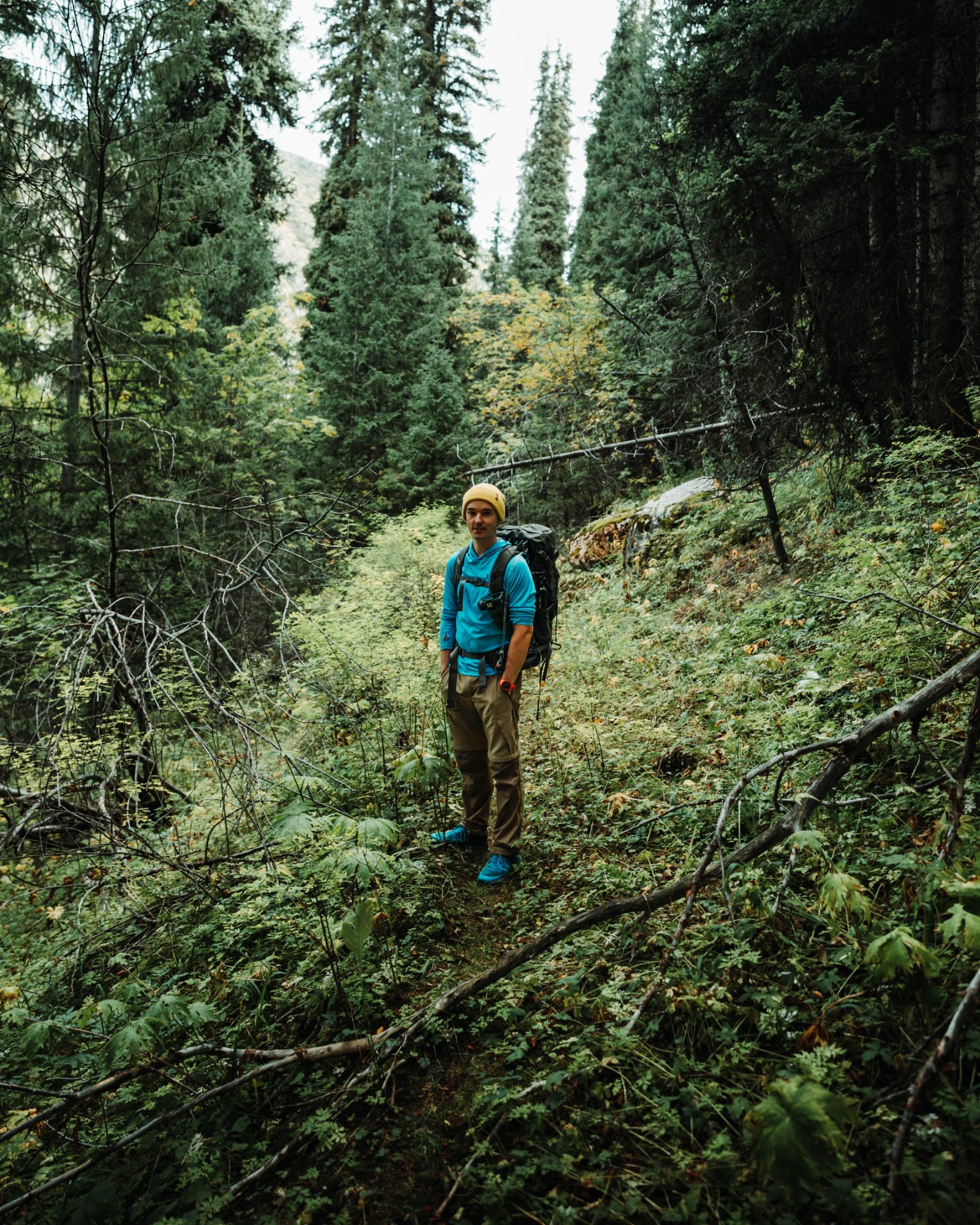
The gorge sits about 40 km west of Almaty’s center, within the Ile-Alatau National Park. The Kaskelen River — 177 km long, one of the significant waterways of the Trans-Ili Alatau — carved this valley on its way north to the Kapchagai reservoir. The hiking follows the river upstream through a sequence of landscape zones: deciduous forest and wild fruit trees in the lower gorge (apricot, barberry, wild apple), transitioning to dense Schrenk spruce as you climb, and eventually opening into alpine meadows above 2,000 m. On a clear day, the snow-capped ridgeline of the main Zailiyskiy Alatau crest is visible from the upper reaches.
The centrepiece of the gorge — and the single feature that makes Kaskelen unique among Almaty’s hiking destinations — is Uy-Tas, a colossal glacial erratic boulder sitting alone on a mountain slope. The name translates from Kazakh as “stone-house” (sometimes rendered “Yurt Stone”) because its near-perfect rounded shape resembles a traditional yurt. It’s hard to overstate the scale: 5 metres high, 6 metres across, roughly 500 tons of monolithic grey granite without a single crack. It sits alone — no other large stones nearby — deposited here by an ancient glacier that retreated thousands of years ago. Some local traditions hold that spiritual rituals were once performed at the stone; the most likely explanation is geological, but the mystery of a solitary 500-ton sphere sitting on a mountainside is genuinely striking.
Beyond the Uy-Tas, the gorge is also home to several unusual attractions rarely found near Almaty hiking trails: a maral (Altai wapiti) farm offering pantotherapy treatments from velvet antlers, a trout farm, a nursery of rare mountain plants, and a traditional Scythian-style sauna where herbal-infused river water is poured over heated stones in a tent structure.
Detailed itinerary
Pickup and drive to Kaskelen Gorge (1–1.5 hours)
We pick you up from your Almaty hotel at 8:00 AM and drive west on the Upper Kaskelen highway. The route passes through the town of Kaskelen — a settlement with ancient roots, founded during the Karluk period (7th–9th centuries) when nomadic tribes settled in the Zhetysu region on fertile pastures suitable for irrigated agriculture. The town recently graduated from village to city status, a sign of the area’s growth.
After crossing the Kaskelen River bridge, the road turns south into the mountains. The last section is unpaved (a high-clearance vehicle is recommended, which we provide), winding through the foothills until we reach the eco-post at the national park boundary.
Lower gorge: riverside forest walk (1.5–2 hours)
From the trailhead, we follow the Kaskelen River upstream. The lower gorge is characterized by deciduous forest — wild apple and apricot trees, barberry bushes, and birch groves. In autumn, this section turns vivid gold and crimson. In summer, the fruit trees bear fruit (wild apples are small and tart — the Sievers apple ancestor grows in these western gorges too, though it’s less documented here than in the eastern valleys).
The river itself is picturesque — clear mountain water rushing over stones, with small pools and beaches where locals picnic. In summer, some side creeks are calm enough for wading, though the main river can be fast and cold.
As we gain elevation, the deciduous forest transitions to dense Schrenk spruce — the iconic Tien Shan conifer with its narrow, dark-green silhouette. The air changes character noticeably: resinous, cool, quiet. The trail is mostly gentle through this section, following the river valley without steep climbs.
Uy-Tas: the 500-ton glacial boulder (30 minutes stop)
The trail reaches Uy-Tas — the gorge’s landmark and one of the most unusual geological features in the Almaty mountains. The boulder appears suddenly: a massive grey sphere sitting alone on the slope, incongruously smooth and perfectly rounded among the rugged mountain terrain.
Geologically, Uy-Tas is a glacial erratic — a boulder transported and deposited by a glacier, then left behind when the ice retreated. What makes this one remarkable is its size (the largest known erratic in the Tien Shan, according to multiple sources), its near-perfect round shape, and the complete absence of cracks in the monolithic granite. It’s 5 metres tall and 6 metres in diameter — roughly the size of a small building.
We spend time here exploring, photographing, and discussing the geology. Your guide explains how ancient glaciers shaped this entire valley system and deposited Uy-Tas in its current position thousands of years ago.
Upper gorge: alpine meadows and viewpoints (1.5–2 hours)
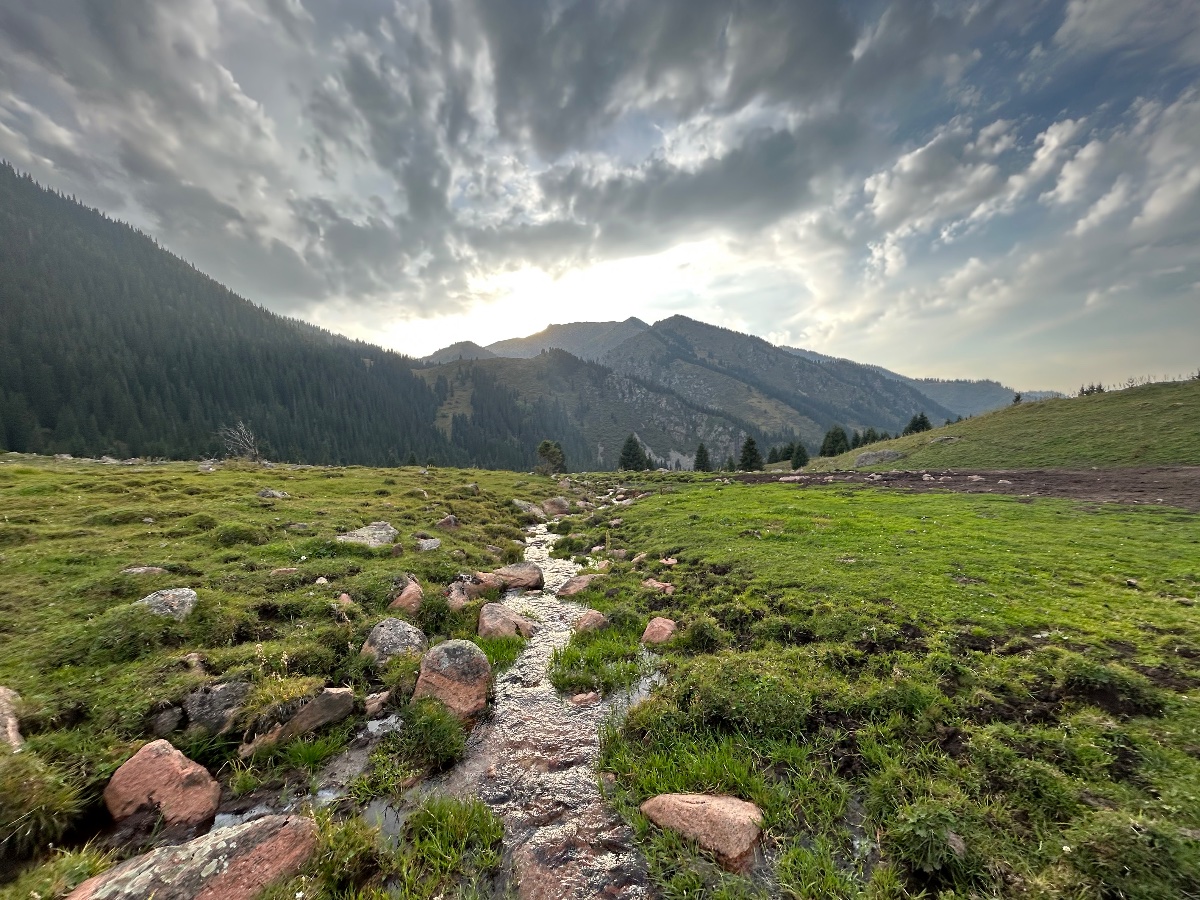
Beyond Uy-Tas, the trail continues into the upper gorge. The spruce forest thins, giving way to alpine meadows — jailau — with wildflowers in June and July. The elevation reaches approximately 2,200–2,260 m at the turnaround point, where the views open up to the snow-capped main ridge of the Zailiyskiy Alatau to the south.
This section is the quietest part of the hike. It’s rare to encounter other groups in the upper Kaskelen Gorge, even in peak season. The sense of solitude is genuine — a marked contrast to the busy trails in the eastern gorges closer to Almaty.
We have a picnic lunch here with mountain views, then begin the descent.
Descent and optional stops (2–2.5 hours)
The return follows the same trail downhill — easier and faster. On the way down, we can make optional stops at:
Maral (wapiti) farm: The Alatau Marals farm breeds Altai wapiti deer, which have been introduced to the Ile-Alatau despite naturally inhabiting the Altai Mountains. The farm offers pantotherapy — therapeutic treatments using velvet antlers from young male deer. This is a traditional Central Asian practice, though the facilities here are rustic rather than spa-like. An interesting cultural experience if you’re curious.
Trout farm: A small-scale fish farm where locally raised trout can sometimes be purchased. Worth a brief stop.
Scythian sauna: A primitive but atmospheric experience — a tent structure over heated stones, with river water infused with mountain herbs poured to create steam. Not a luxury spa, but an authentic tradition with ancient roots.
These stops are optional and depend on the group’s interest and time. We return to Almaty by late afternoon (17:00–18:00).
Why book this guided Kaskelen Gorge hike?
Three reasons Kaskelen makes more sense with a guide than independently:
Access and transport: The gorge is 40 km from Almaty with the final section on unpaved road. There’s no public transport to the trailhead. You need a high-clearance vehicle and a driver who knows where the road ends and the trail begins. Our tour includes this.
No crowds, no infrastructure: Kaskelen’s appeal is its emptiness — but that also means no signage in the upper gorge, no marked trails above the Uy-Tas, and no cell reception in much of the valley. A guide provides navigation and safety.
Local knowledge: The Uy-Tas boulder, the Karluk history of Kaskelen town, the transition from Sievers apple to Schrenk spruce, the pantotherapy tradition at the maral farm — these stories transform a forest walk into something much richer.
When to visit Kaskelen Gorge
May–June: Wildflowers in the alpine meadows, fruit trees blossoming in the lower gorge. River runs high with snowmelt — photogenic but some crossings may be tricky.
July–August: Peak season. Warm days, full foliage. Wild fruits ripening (apricot, apple, barberry). Best overall conditions. Even in peak summer, the gorge is far less crowded than Almaty’s eastern valleys.
September–October: Autumn colours — the deciduous lower gorge turns gold and crimson while the spruce stays dark green. This contrast is spectacular and less photographed than the famous Ak-Kayin birch grove. Cooler temperatures, excellent visibility.
November–April: Snow covers the upper gorge. The lower sections are accessible for winter walks, and the Scythian sauna is arguably more appealing in cold weather. Not a standard hiking season, but the gorge has a quiet winter beauty.
Frequently asked questions
How hard is the Kaskelen Gorge hike? Rated 2/5 — moderate-easy. The trail follows the river valley with gradual elevation gain (500–700 m over the full route). No scrambling, no exposed sections, no technical terrain. Suitable for anyone with reasonable fitness and comfortable walking shoes. Children over 8–10 can manage it comfortably.
What is the Uy-Tas stone? Uy-Tas (also written “Uytas”) is a glacial erratic — a 500-ton boulder of monolithic grey granite deposited by an ancient glacier. It’s 5 metres high, 6 metres in diameter, nearly perfectly round, and has no visible cracks. The name means “stone-house” or “yurt stone” in Kazakh because of its rounded shape. It’s the largest known glacial erratic in the Tien Shan mountains and sits alone on a mountain slope with no other large stones nearby.
How does Kaskelen compare to other gorges near Almaty? Kaskelen is the westernmost of the major gorges and the least visited. Compared to Big Almaty Gorge, Butakovka, or Kok-Zhailau — which can see hundreds of hikers on a summer weekend — Kaskelen offers genuine solitude. The trade-off: it’s further from the city (40 km vs 10–15 km for the eastern gorges), requires a high-clearance vehicle for the final stretch, and has less dramatic high-altitude scenery. The Uy-Tas boulder is a unique feature that none of the eastern gorges can match.
What is pantotherapy at the maral farm? Pantotherapy uses velvet antlers harvested from young male maral (Altai wapiti) deer to create therapeutic treatments. It’s a traditional practice in Central Asian and Russian folk medicine, claimed to help with joint pain, immune function, and general wellness. The Kaskelen farm offers basic pantotherapy sessions — don’t expect a luxury spa, but it’s an authentic cultural experience. The marals themselves are impressive animals, originally from the Altai Mountains.
What is the Scythian sauna? A traditional steam bath using a tent structure over heated stones. River water infused with local mountain herbs is poured over the hot stones to generate aromatic steam. It’s a primitive, rustic experience — essentially a tent pitched over beams with wooden benches — but it connects to ancient bathing traditions of the steppe peoples. Interesting as a cultural experience, especially after a day of hiking.
Is Kaskelen Gorge good for families? Yes — the lower gorge (to Uy-Tas and back) is flat to gently rising, about 8–10 km round trip, and suitable for children over 6–8. The river has calm side pools for wading in summer. The Uy-Tas boulder is a natural playground and fascination for kids. The maral farm adds an animal-watching element. It’s a less demanding alternative to the mountain hikes closer to Almaty.
Can I camp in Kaskelen Gorge? Camping is permitted within the national park. The alpine meadows above Uy-Tas are ideal camping spots with flat ground and stream access. For a more ambitious trip, the gorge is the starting point for multi-day treks to the Cossack Lakes (Kazachye Ozera) — beautiful moraine lakes at 3,300 m in the upper reaches of the Yuzhnaya Kazachka tributary. This is a serious 2-day backpacking trip (Day 1: 14 km, +1,800 m; Day 2: 17 km descent) requiring full camping gear.
What does “Kaskelen” mean? The town of Kaskelen is one of the oldest settlements in the Zhetysu (Seven Rivers) region, dating to the Karluk period (7th–9th centuries). The name has ancient Turkic roots, though its exact etymology is debated. The Karluk tribes settled here for the fertile pastures and irrigation potential of the river valley.
Is a 4×4 vehicle needed? The road is paved to about halfway into the gorge, then becomes unpaved. A standard sedan can make it in dry conditions but may struggle after rain or in spring when the road is soft. A high-clearance vehicle is recommended, and our tour always uses one.
Itinerary
Detailed itinerary will be provided upon booking. Our typical tour includes daily hikes through diverse terrains and cultural experiences.
Pricing
| Group Size | 1 person | 2 people | 3 people | 4 people | 5 people | 6 people Best value |
|---|---|---|---|---|---|---|
| Standard | $189 $189 total | $119 $238 total | $96 $288 total | $84 $336 total | $77 $385 total | $73 $438 total |
100% private tour — prices are per person based on group size. The more friends you bring, the less everyone pays!
What's Included
Included
Not Included
Our Guarantee
If weather forces a cancellation, we reschedule at no cost. If you're not satisfied with your experience, we'll work with you to make it right. No questions, no hassle.
Private tours only (max 6) · Free cancellation up to 48 hours before · No upfront payment
Traveler Stories
Sarah K.
Our guide was incredible - he adjusted the pace perfectly for our group and knew exactly where to stop for the best photos. The whole experience felt effortless, like everything was taken care of before we even thought to ask.
Marco T.
We were a group of 4 friends and the per-person price made it a no-brainer. Private 4x4, lunch included, and the canyon was breathtaking. Way better than the big bus tours we saw there.
Anna W.
Solo traveler here. I was nervous about hiking alone in a foreign country but the guide made me feel completely safe. The trail to Kok-Zhailau was beautiful and the photos he took of me were amazing. Only wish the hike was longer!
David R.
Third time booking with these guys. Butakovka, Big Almaty Lake, and now Titov Peak. Every single time the service is flawless. The fact that it's always private and max 6 people makes such a difference compared to other operators.
Share Your Experience
2 hikers
completed this trail
Tour At A Glance
Book This Tour
Weekend slots fill up fast — book early to get your preferred date
Pay securely after confirmation




Weather Forecast
overcast clouds
H: 5°C
L: 4°C
Tue, Mar 31
overcast clouds
9°C
4° / 12°
Wed, Apr 1
overcast clouds
10°C
7° / 13°
Thu, Apr 2
broken clouds
11°C
8° / 15°
Tour Location
Similar trails
Day Hiking Tour to Kim Asar Gorge from Almaty
From $60/person
Day Hiking Tour to Serkebay Mountain from Almaty
From $60/personFrom $73
per person · free cancellation
Complete Your Booking
Tour:
Date:
Participants:
Price:
You're Almost There!
We'll contact you within 24 hours to confirm your spot and share everything you need to prepare for your adventure.
165
Videos on the channel

13,000+

16,000+

59
Hikes Filmed

704,000 m
Total Distance

44,439 m
Total Elevation Gain

812 cups
Grand Cru Tea Cups

27
Countries Visited

83 hours
Drone Flight Hours

10 videos
Sports: Running, Snowboard

3 videos
Healthy Eating

1
Living on the Edge