
Overview
Is this hike right for you?
Perfect if you…
No experience needed
Description
A full-day guided tour from Almaty to Kastek Gorge — a 30-kilometer valley in the western Zailiysky Alatau with Silk Road ruins, abandoned Soviet mining tunnels, open steppe landscapes, and almost no tourists.
What to expect on the Kastek Gorge tour from Almaty
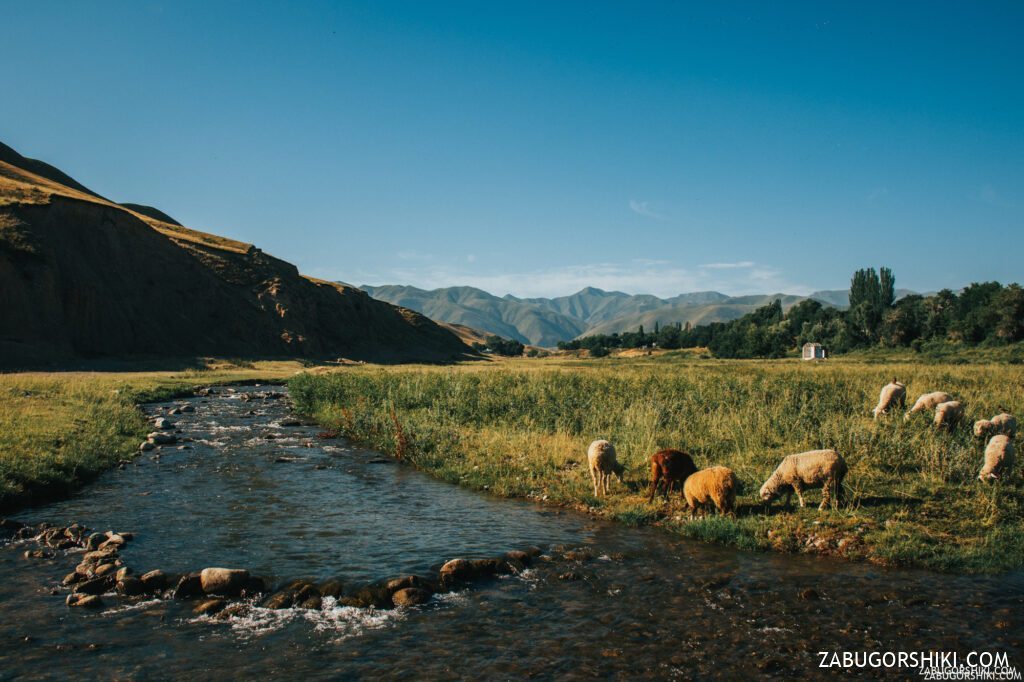
Kastek Gorge is the most unusual day trip from Almaty — and the least likely to appear on any tourist itinerary. Located about 100 km west of the city, this wide, treeless valley cuts through the western end of the Zailiysky Alatau range toward the Kyrgyz border. Everything about Kastek is different from the forested gorges closer to Almaty. There are no spruce forests, no alpine lakes, no well-marked trails. Instead, you get rolling green hills, open steppe grasslands, a quiet river, abandoned Soviet-era mining tunnels carved into the mountainside, and a history that stretches back to the Silk Road.
For over a thousand years, Kastek Gorge was a major trade and migration corridor. Caravans used the Kastek Pass to cross from the Ili Valley (where Almaty now stands) to the Chui Valley and the city of Balasagun — the capital of the Karakhanid Khanate, near modern-day Tokmok in Kyrgyzstan. A fortified town guarded the gorge entrance from at least the 7th century. Archaeologists have been excavating the Kastek settlement since 2011, uncovering a 30-hectare medieval urban site.
In the 1960s, Soviet Geological Survey Party No. 157 arrived and punched exploration tunnels into the hillsides, finding deposits of lead, zinc, copper, silver, and even gold. The geologists eventually left, but their tunnels — some stretching 300 meters deep into the mountain — remain open and explorable.
Today, Kastek is completely off the radar. You will almost certainly be the only visitors in the gorge. That’s the point.
Detailed Itinerary
Drive from Almaty to Kastek village (2–2.5 hours)
We pick you up in Almaty and drive west, passing through Kaskelen and the town of Uzunagash (Uzyn-Agash) — the capital of Zhambyl District, with a population of about 30,000. From Uzunagash, we take a secondary road south through the village of Karakastek and on to Kastek village, which sits at the entrance to the gorge.
The drive is about 100 km and takes you from Almaty’s urban edge into a completely different landscape: the western Zailiysky Alatau, where the mountains are lower, drier, and covered in grass rather than forest. The transition from Almaty’s lush southern valleys to Kastek’s open steppe is striking.
Important: Kastek village has a border guard post, as the gorge leads toward the Kyrgyz border. Bring your passport or ID. Border guards may check documents.
Kastek settlement and gorge entrance (30–60 minutes)
At the entrance to the gorge, on the left bank of the Kastek River, lie the ruins of a medieval Silk Road settlement. This fortress-town controlled caravan traffic through the pass for centuries, connecting the cities of the Ili Valley foothills — Kastek, Kaskelen, and the settlement that became Almaty — with Navaket and Balasagun in the Chui Valley to the south.
Archaeological excavations led by the Margulan Institute of Archaeology since 2011 have revealed layers dating to the late 7th century (around 660 CE). The settlement grew into a substantial city of about 30 hectares with fortified walls and towers, flourishing until the early 13th century. Whether it was abandoned before or during the Mongol conquests is still debated, but by the 14th century the entire Zhetysu (Semirechye) region had reverted to nomadic pastoralism.
The explorer Pyotr Semenov-Tyan-Shansky described camping at the foot of Mount Suyk-Tobe near Kastek during his 1856 expedition to the Tien Shan — one of the earliest European accounts of this route.
Driving through the gorge (1–1.5 hours)
The gorge stretches approximately 30 km, with the Kastek River flowing along its bottom. The elevation ranges from about 1,000 m at the entrance to 2,300 m at the upper reaches. The valley is wide in the middle section — up to a kilometer across — then narrows again as you climb higher.
The landscape is unlike anything near Almaty. The hills are green and rolling, covered in grass and low shrubs. There is essentially no tree cover — the forest belt that defines the eastern Zailiysky Alatau gorges simply doesn’t exist here. This creates open, panoramic views in every direction.
Wildlife thrives despite the sparse vegetation. Deer, wild goats, foxes, and wolves inhabit the area. Birdlife is varied — keep an eye out for the red-headed bunting (a striking yellow bird common in the Kazakh steppe) and raptors riding the thermals above the ridgeline.
We drive as far as road conditions allow, stopping for photography and exploration along the way. The road is unpaved and deteriorates progressively — a proper vehicle is essential.
Soviet mining tunnels / shtolni (1–2 hours)
About 12 km into the gorge, a side valley called Kishisay branches off to the south. A rough track leads into this side canyon toward the abandoned mining tunnels left by Geological Survey Party No. 157, which operated here in the 1960s.
The geologists were prospecting for mineral deposits and discovered ore-bearing layers containing lead, zinc, gold, cadmium, copper, and silver. They drove multiple exploration tunnels (shtolni) into the hillside at various elevations. The first tunnels appear about 3.5 km into the Kishisay valley, at approximately 2,070 m elevation.
Several tunnels remain accessible:
- The largest has a central passage approximately 300 m long with three side tunnels of about 100 m each
- Another accessible tunnel is about 60 m deep with a high, wide entrance (roughly 3 m tall, 5 m wide)
- A third is shallower, about 40 m, with a floor covered in rock debris
The tunnels are dark, cool, and home to bats. They contain visible cross-sections of the mineral-bearing rock formations. Exploring them is an unusual experience — somewhere between spelunking and industrial archaeology.
Safety note: Entering abandoned mining tunnels carries inherent risks including unstable rock, poor air quality, standing water, and total darkness. We bring headlamps and assess each tunnel entrance before entering. Some tunnel entrances are collapsed and inaccessible. This is not a casual walk — proper footwear and a willingness to get dirty are required.
Picnic lunch in the gorge
We stop for lunch at a scenic spot in the gorge — typically near the river or at one of the wider meadow sections. The total absence of other visitors, the silence, and the wide-open landscape make for a memorable lunch.
Return drive to Almaty (2–2.5 hours)
We retrace the route back to Almaty, arriving in the late afternoon or early evening.
The Silk Road through Kastek
Kastek Gorge wasn’t just a pretty valley — it was one of the main corridors of the Silk Road in the Zhetysu (Semirechye) region. In the 10th–12th centuries, a branch of the Silk Road crossed the entire Ili Valley from southwest to northeast, passing through Kastek on its way from the Chui Valley cities to the foothills settlements that would eventually become Almaty and Talgar.
The route worked like this: caravans coming from Navaket or Balasagun in the Chui Valley would cross the Kastek Pass through the Zailiysky Alatau, descend through the gorge, and arrive at the fortified settlement at its northern entrance. From there, the route continued northeast through present-day Kaskelen and Almaty to the major trading city of Talkhiz (Talgar), where it forked toward Issyk-Kul or the Ili River.
The Kastek settlement itself was a walled city of about 30 hectares — comparable to a substantial medieval town. Its fortified shahristan (central citadel) covered about 4 hectares, surrounded by high walls with towers. The city’s primary function was protecting and servicing the caravans crossing the pass.
The gorge even appears in accounts of Timur’s campaigns: in 1375, his army marched from the Ili Valley to Atbash through what the sources call the “Kara-Kasman (Kastek) pass.” By that time, however, the city had already been abandoned.
Today, the archaeological site is visible as earthworks and low mounds near the gorge entrance. Excavations are ongoing but not open as a formal tourist site. Your guide can point out the settlement layout and explain its Silk Road context.
Soviet mining heritage
The mining tunnels add a completely different layer to the Kastek experience. In the 1960s, Soviet geological teams systematically explored the mineral potential of the western Zailiysky Alatau. Geological Survey Party No. 157 established a base in one of the side valleys branching off the main Kastek gorge and drove multiple exploration tunnels into the hillside.
Their findings were significant: the ore deposits contained lead, zinc, copper, silver, gold, and cadmium in complex combinations. However, the deposits apparently weren’t considered commercially viable enough for full-scale mining, and the geologists moved on. They left behind the tunnels, spoil heaps of excavated rock at each entrance, and scattered remnants of their camp.
The tunnels themselves are impressive in scale. The largest one — with its 300-meter central passage and three 100-meter side tunnels — represents an enormous amount of manual labor and engineering. Inside, you can see the raw rock faces where the geologists were sampling, mineral veins visible in the tunnel walls, and in some cases, standing water and resident bat colonies.
Why book a guided Kastek tour?
Kastek is not a hike you can do independently unless you have a 4WD vehicle, solid navigation skills, and comfort with remote terrain. Here’s why a guide matters:
Access: The road into the gorge is unpaved and deteriorates significantly. The side valley to the mines requires a capable vehicle. Getting stuck here means a very long walk back.
Navigation: There is no cell service in the gorge. The mining tunnels are spread across multiple side valleys. Finding them without local knowledge or GPS tracks is genuinely difficult — even your own trip to Kastek required a drone to locate the tunnels after the road ran out.
Border zone: The gorge leads toward the Kyrgyz border. Border guard patrols are common, and having an organized group with a guide avoids potential complications.
Safety in the tunnels: Entering abandoned mining tunnels without proper lights, knowledge of the specific tunnel conditions, and someone who knows which tunnels are safe is not advisable.
Context: Without the Silk Road history and mining backstory, Kastek is just a green valley with some holes in the hillside. With context, it becomes a fascinating layered landscape where medieval trade routes and Cold War geology overlap.
FAQ: Kastek Gorge Tour
How far is Kastek Gorge from Almaty? About 100 km west, a 2–2.5 hour drive. The route goes through Kaskelen and Uzunagash before turning south toward Kastek village. The road is paved until the gorge entrance, then unpaved and increasingly rough.
Is this a hiking tour or a driving tour? Both. The tour involves significant driving (the gorge is 30 km long, and the mining tunnels are deep inside it), combined with hiking and walking segments to explore the tunnels, the archaeological site, and viewpoints. Total walking varies depending on road conditions — if the road becomes impassable, more hiking is required to reach the tunnels.
Do I need a 4WD vehicle? Yes. The road deteriorates beyond Kastek village, and the track to the mining tunnels in the Kishisay side valley is rough off-road. We provide an appropriate vehicle.
Will I need my passport? Yes. Kastek Gorge leads toward the Kyrgyz border, and there is a border guard post at or near Kastek village. Border patrols also operate within the gorge. Carry your passport or ID at all times.
Are the mining tunnels safe to enter? Some are, with proper equipment and precautions. The tunnels are not maintained — there is no lighting, some have standing water, floors are covered in rock debris, and sections may be unstable. We assess each tunnel before entry and carry headlamps. We do not enter tunnels that show signs of collapse. This is adventure exploration, not a polished tourist attraction.
What will I see in the tunnels? Dark passages carved through solid rock, cross-sections of mineral-bearing ore deposits, spoil rock formations, and in some tunnels, bat colonies. The largest accessible tunnel is approximately 300 m long with side passages. The experience is more about atmosphere and industrial archaeology than visual spectacle.
Is Kastek Gorge good for photography? Excellent. The wide, treeless landscape creates dramatic compositions — especially in the golden light of early morning or late afternoon. The contrast with Almaty’s forested gorges makes it a unique portfolio addition. The mining tunnel entrances and Silk Road settlement ruins add interest.
What wildlife might I see? The area supports deer, wild goats, foxes, wolves, and diverse birdlife. The red-headed bunting — a striking yellow bird — is common. Raptors (eagles, hawks) are often visible soaring above the ridgeline. The lack of trees makes wildlife more visible than in forested gorges.
What’s the best season? May through October. The gorge is at its greenest in May–June. Summer (July–August) can be hot in the lower sections with no shade. Early autumn (September) offers golden grass and comfortable temperatures. The unpaved road becomes difficult or impassable after heavy rain.
Can I combine Kastek with other destinations? Kastek is in the opposite direction from most popular Almaty destinations (which are south or east). The City of Nomads / Tamgaly Tas is roughly in the same western direction and could theoretically be combined, but this would make for an extremely long day. Kastek is best as a standalone full-day trip.
How is Kastek different from other gorges near Almaty? Completely different. Most gorges near Almaty (Gorelnik, Kim Asar, Butakovsky, Big Almaty) are forested, steep-sided, and relatively narrow. Kastek is wide, treeless, and steppe-like — it feels like a different country. The Silk Road history and Soviet mining ruins add layers that no other Almaty day trip offers.
Itinerary
Detailed itinerary will be provided upon booking. Our typical tour includes daily hikes through diverse terrains and cultural experiences.
Pricing
| Group Size | 1 person | 2 people | 3 people | 4 people | 5 people | 6 people Best value |
|---|---|---|---|---|---|---|
| Standard | $219 $219 total | $137 $274 total | $109 $327 total | $96 $384 total | $87 $435 total | $82 $492 total |
100% private tour — prices are per person based on group size. The more friends you bring, the less everyone pays!
What's Included
Included
Not Included
Our Guarantee
If weather forces a cancellation, we reschedule at no cost. If you're not satisfied with your experience, we'll work with you to make it right. No questions, no hassle.
Private tours only (max 6) · Free cancellation up to 48 hours before · No upfront payment
Traveler Stories
Sarah K.
Our guide was incredible - he adjusted the pace perfectly for our group and knew exactly where to stop for the best photos. The whole experience felt effortless, like everything was taken care of before we even thought to ask.
Marco T.
We were a group of 4 friends and the per-person price made it a no-brainer. Private 4x4, lunch included, and the canyon was breathtaking. Way better than the big bus tours we saw there.
Anna W.
Solo traveler here. I was nervous about hiking alone in a foreign country but the guide made me feel completely safe. The trail to Kok-Zhailau was beautiful and the photos he took of me were amazing. Only wish the hike was longer!
David R.
Third time booking with these guys. Butakovka, Big Almaty Lake, and now Titov Peak. Every single time the service is flawless. The fact that it's always private and max 6 people makes such a difference compared to other operators.
Share Your Experience
Tour At A Glance
Book This Tour
Weekend slots fill up fast — book early to get your preferred date
Pay securely after confirmation




Weather Forecast
broken clouds
H: 2°C
L: 1°C
Tue, Mar 31
overcast clouds
5°C
0° / 9°
Wed, Apr 1
overcast clouds
5°C
2° / 10°
Thu, Apr 2
few clouds
7°C
2° / 11°
Tour Location
Similar trails
Day Hiking Tour on the Old Japanese Road from Almaty
From $65/person
Day Hiking Tour to Kok-Zhailau from Almaty
From $72/person
Alma-Arasan Hot Springs in Almaty Mountains
From $60/person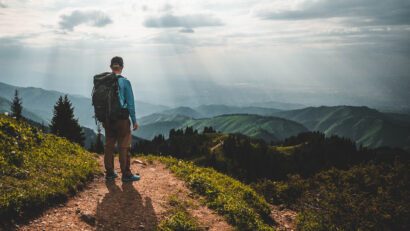
From $82
per person · free cancellation
Complete Your Booking
Tour:
Date:
Participants:
Price:
You're Almost There!
We'll contact you within 24 hours to confirm your spot and share everything you need to prepare for your adventure.
165
Videos on the channel

13,000+

16,000+

59
Hikes Filmed
704,000 m
Total Distance

44,439 m
Total Elevation Gain

812 cups
Grand Cru Tea Cups

27
Countries Visited

83 hours
Drone Flight Hours

10 videos
Sports: Running, Snowboard

3 videos
Healthy Eating

1
Living on the Edge