
What to Wear and Pack for Hiking near Almaty
Overview
Is this tour right for you?
Perfect if you…
No experience needed
Description
Mountain weather around Almaty is a fast-moving, unreliable thing – which is exactly why gear matters. The right kit adapts as conditions change, protects you from cold, heat and rain, and makes rough ground comfortable. The wrong kit is how a pleasant day hike becomes a story. Here is what actually works in the Zailiysky Alatau, whether you are walking for a weekend or heading higher.
Two principles before any shopping list
Light and compact wins. An unnecessary half-kilo in the pack genuinely changes how a long day feels. Layers, always. Activity levels in the mountains swing constantly – steep climb, windy ridge, lunch stop – and the layer system lets you add and shed as you go. The goal is never “warm”: it is never too cold and never overheating.
The three-layer system
Base layer: thermal underwear
Its one job is moving sweat off your skin – dry skin is warm skin. Models split into high-activity (prioritising moisture transport – what you want for hiking) and low-activity (prioritising warmth), and into synthetics versus natural fibres. Cotton is neither: it soaks and chills, and has no place on a mountain.
Insulation layer: the materials compared
This layer traps the warmth your body produces – fleece, light down, or synthetic fill – and it must breathe, or it sabotages the base layer under it.
| Material | Strengths | Weaknesses | Use it for |
|---|---|---|---|
| Fleece | Light, breathable, warm even damp, dries fast | No wind protection, bulkier than down | Active movement in cold weather |
| Down | Best warmth-to-weight, packs tiny | Useless when wet, needs care | Winter, dry cold, camps and rest stops |
| Synthetic fill | Insulates even wet, light, dries fast | Less durable than down | The all-rounder, especially in damp weather |
| Merino wool | Natural, comfortable, warm when damp, doesn’t hold odour | Heavier than synthetics, slow to dry | Multi-day trips in cool conditions |
Match it to your pace: breathable fleece or synthetic while you are moving hard; the down jacket goes on the moment you stop. Watch any climber top out a hard pitch – the puffy is on within a minute, because a sweaty body cools brutally fast at altitude.
Shell layer: membranes, decoded
The shell blocks wind and precipitation while still letting vapour out. Two numbers on the label matter. Waterproofness (mm of water column): 10,000 mm keeps you dry through hours of hard rain; 20,000 mm handles anything sustained. Breathability (g/m²/24h) is honestly the more important figure for hiking – 20,000+ keeps you comfortable even climbing with a pack. And a reality check from wet experience: every membrane eventually wets out, so a simple waterproof rain layer in the pack is never wasted weight.
Footwear – the decision that matters most
For easy walks, trail shoes with a proper tread are fine – but know their limit: ankle support is what they lack, and turned ankles are what rescue calls are made of. For everything else in these mountains – moraine, spring trails of mud and snow, scree, grassy slopes – trekking boots with a stiff sole and a membrane are the answer, and the brands that consistently deliver are the usual suspects: Scarpa, La Sportiva, Salomon, Zamberlan. For alpinism you step up to rigid, crampon-compatible boots, and for high altitude to specialised double boots rated for extreme cold.
Size for a warm sock plus feet that swell on long descents – nothing should press anywhere. And break new boots in on short walks before trusting a mountain day to them.
The backpack
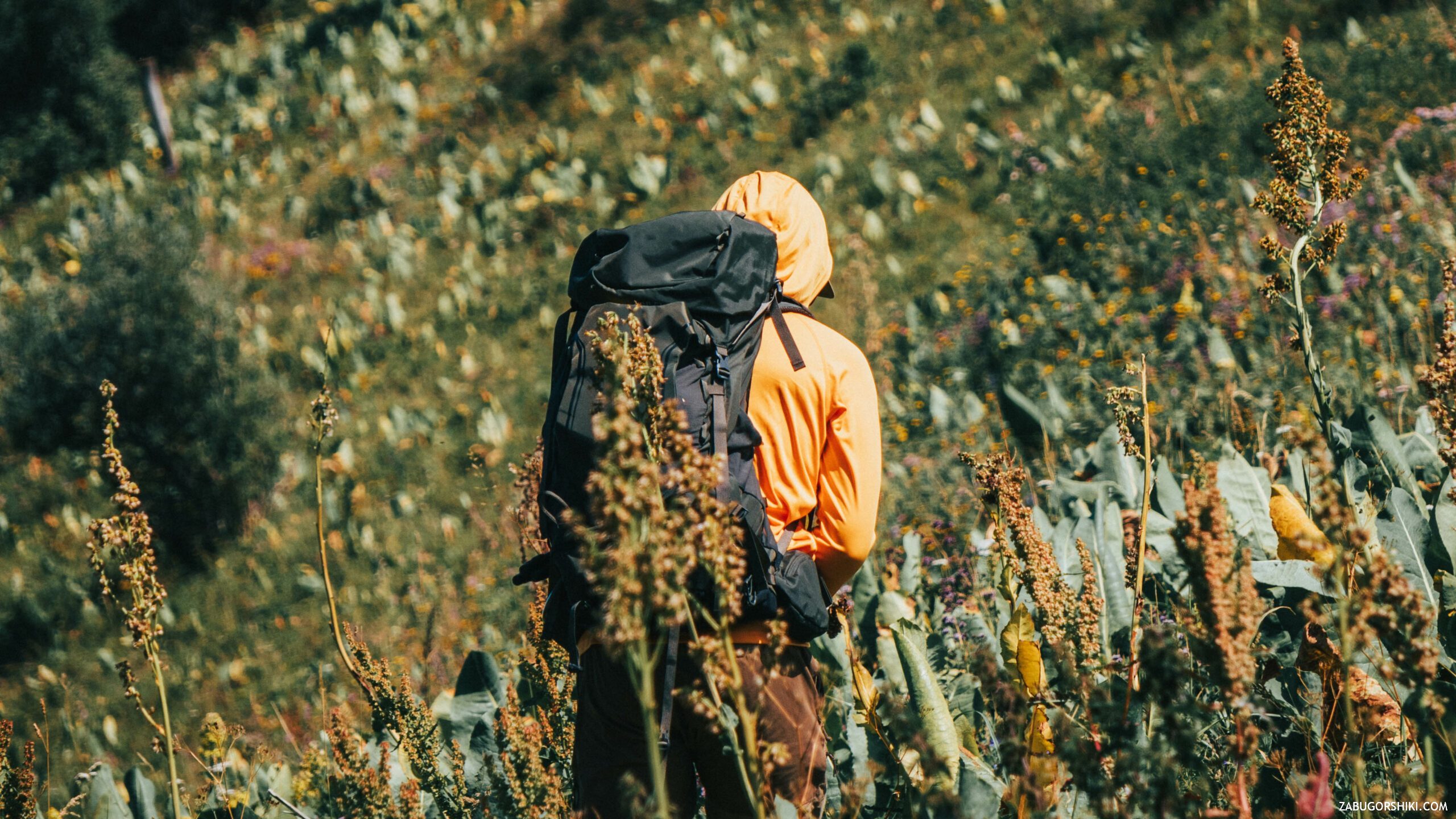
Your house for the day. 20-30 litres covers day hikes; 50-80 litres for multi-day trips. What separates a good pack from a cheap one: a real suspension system and hip belt that move weight off your shoulders, abrasion-resistant fabric, a rain cover, and attachment points that earn their keep. Always try a pack on loaded – an empty pack tells you nothing.
The small things that save the day
- Headwear: a cap against the high-altitude sun in summer, a warm hat the rest of the year.
- Gloves: thin liners in summer, insulated gloves or mitts in winter.
- Trekking poles: knees on the descent will thank you; balance on scree comes free.
- A foam sit-pad: insulation from cold ground at every rest stop, nearly weightless.
The three classic beginner mistakes
- Wrong sizes – boots or clothing that rub or constrict end days early.
- The overloaded pack – every “just in case” item is carried uphill for ten hours.
- No rain protection – the single most common rookie omission in these mountains, where afternoon storms build out of blue mornings.
What you actually need to buy for a guided trip
Less than you think. On our multi-day tours the camping kit – tent, sleeping bag, sleeping mat – is provided, and technical gear like crampons appears when a route requires it. What you bring is the personal layer system this guide describes, broken-in boots, and your own small items. Anything still missing from your bag is cheap to rent locally – see where to rent gear in Almaty. Check the mountain weather before packing, read our safety guide for what goes in the first-aid and navigation pockets, and if you are starting from zero, the first-time hiking page tells you which of all this actually matters on day one.
🎒 Other routes
Itinerary
Detailed itinerary will be provided upon booking.
Traveler Stories
Sarah K.
Our guide was incredible - he adjusted the pace perfectly for our group and knew exactly where to stop for the best photos. The whole experience felt effortless, like everything was taken care of before we even thought to ask.
Marco T.
We were a group of 4 friends and the per-person price made it a no-brainer. Private 4x4, lunch included, and the canyon was breathtaking. Way better than the big bus tours we saw there.
Anna W.
Solo traveler here. I was nervous about hiking alone in a foreign country but the guide made me feel completely safe. The trail to Kok-Zhailau was beautiful and the photos he took of me were amazing. Only wish the hike was longer!
Share Your Experience
Complete Your Booking
Tour:
Date:
Participants
Add-ons
You're Almost There!
We'll contact you within 24 hours to confirm your spot and share everything you need to prepare for your adventure.
Request sent
We confirm your spot
within 24 hours
Summoning perfect weather
Hit the trail
On the channel



83 h
Drone flight hours
What we’ve filmed
59
Hikes filmed

704 km
Kilometers covered

44,439 m
Elevation gained

27
Countries visited

Plan your hike with us
A few quick questions and we will email you a tailored hike plan & quote.
When do you want to hike?
What's your experience?
How many of you?
Where do we send your plan?
Private guided hikes · no obligation.